


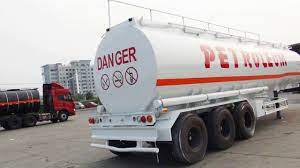
To apply in person
To submit the application, the applicant must go in person to an ERC office.
An Application Form for a Petroleum Road Transportation Business Licence (FORM 1) will be sent to the applicant to complete.
Complete the necessary information.
Send the relevant paperwork with copies attached to the ERC offices for processing. These documents are listed in the section below about Required Documents.
Typically, it takes 30 days for the license to be ready.
Application for a license is free of charge.
Email and text messages will be used to notify recipients of the collection date. The certificate must be picked up from the ERC headquarters. During collection, you must have identification on you.
Step 1: Apply online Sign up with the EPRA site.
- Visit the EPRA website: Website of EPRA
- To access the EPRA licensing portal, select the “online services portal” page.
- To register for the portal as a new user, choose the “Create Account” option. Log in with your user name and password if you’re an existing user.
- To continue with your application, click the “apply for a new licence” option when you reach the following page.
- To submit an application for a license, choose “business/company”.
- Enter your information and that of your company, then click “Save.” Make sure you type in the right email address. Make a username and password that are special.
You will discover a message from EPRA when you open your email. To activate your account, click the link in your inbox and visit our portal.
Step 2: Obtain a driver’s license
- Use the username and password you provided in step 7 above to access the site.
- Click on “Continue with Registration” after selecting “New Application” under the “License Management” tab and “Transport of petroleum products(Except LPG)” under the “Petroleum Sector”
- You will then be sent to the License Application. Oil and Gas Business License (Except for LPG)
transport of petroleum products (apart from LPG), where you must complete out the applicable areas;
Information about the company’s bio (ii) Directors’ Information (iii) Business Location Information (iv) Transport Vehicles (Trucks and Trailers Information)
Place your scanned documents in the appropriate spots, then click next. These documents consist of
- CR12 from the Registrar of companies (Not older than one (1) year) for limited companies (Mandatory)
- Certificate of Incorporation / Business Registration Certificate (Mandatory)
- Valid Tax Compliance Certificate from Kenya Revenue Authority (Mandatory)
- Legible Copies of Identification Documents i.e. IDs/Passports for all the Company directorsbr>
- Single Business Permit to operate business from the respective County Government (Mandatory) )
- A valid Motor Vehicle Inspection Certificate for each prime mover and trailer (Mandatory)
- Log books for each prime mover and trailer (Combined) – Attach lease agreement if not in the name of owner/company (Mandatory)
- A list of vehicles; paired prime movers and trailers where necessary (In Microsoft Excel) (Mandatory)
- A valid certificate of calibration for the tanker mounted on each vehicle (Mandatory)
- Fire Clearance Certificate for the vehicle(s) from the respective County Fire Department (Mandatory)
- Work Permits Class G for foreign directors as per CR12
Check to be sure the information you provided is accurate, then click submit to start processing.
The application for the certificate is free.
After 30 days, an email and text message notification of collection will be sent.
The certificate must be picked up from the EPRA headquarters. During collection, you must have identification on you.
A licensee who operates a petroleum road transportation company must:
- ensure that all vehicles used in the transportation of petroleum have valid petroleum road tanker permits issued by the Commission;
- ensure that the vehicles used in the transportation of petroleum are driven only by persons in possession of valid certificates issued under the Act;
- ensure that there is an emergency preparedness and response plan that meets the criteria set by the Commission;
- implement regular pre-loading vehicle inspection in accordance with a checklist approved by the Commission;
- ensure that petroleum tankers are only driven between 6.30am and 6.30pm;
- ensure petroleum road tankers are only parked in designated parking areas where they exist or at least one hundred meters from any building where designated parking does not exist;
- ensure that the provisions of these Regulations and the conditions of the licence and vehicle permits are known to, and by all persons employed in or about the licensed premises or the petroleum road tankers; and
- ensure that unauthorized persons do not have access to the petroleum road tankers.
- transport only petroleum products that which meet the Kenya Standard;
- ensure that the business complies with the requirements of the Act and all the other applicable laws;
- transport petroleum only for persons who hold a valid petroleum business licence issued under the Act;
- only use transport import route designated or prescribed;
- load petroleum only from petroleum storage facilities that are licenced under the Act;
- discharge petroleum only to a licensed facility, to an end user for own consumption or, in the case of petroleum intended for export, at the destination outside Kenya.