


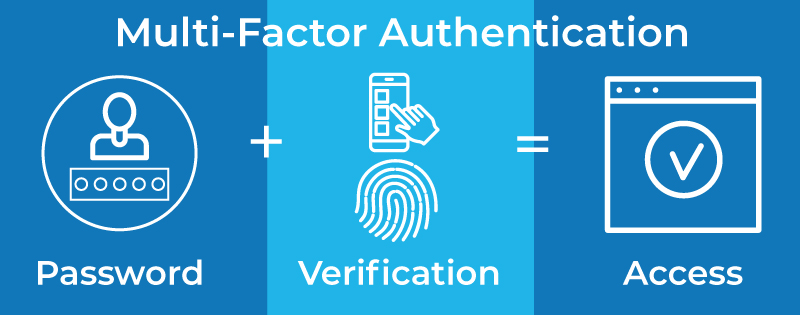
Since it offers an additional layer of security on top of passwords, multi-factor authentication, or MFA, has emerged as a key component of cybersecurity. Nonetheless, attackers persistently innovate, formulating strategies to evade the most resilient multi-factor authentication systems. This article covers methods to strengthen your defenses and explores the various ways attackers can get around MFA.

Comprehending MFA Bypass Methods
Attacks by a Man-in-the-Middle (MitM): When a hacker snoops on user and service communications, they launch these kinds of assaults. Through intermediate placement, the attacker can successfully evade the two-factor verification procedure by obtaining the user’s credentials and MFA code. Typical MitM strategies comprise:
Phishing attacks: When users click on malicious links in emails or texts, they are tricked into visiting phony login sites that are under the attacker’s control.
Watering Hole Attacks: Cybercriminals breach reputable websites that a target firm frequently visits. Malware is inadvertently downloaded onto a user’s device when they visit the compromised website, which may allow MitM assaults.
Wi-Fi spoofing: Cybercriminals fabricate fictitious Wi-Fi networks bearing names that closely mimic real ones. Users’ communications via these networks may be intercepted.
Social engineering: A key component is deception. Attackers may pose as reputable companies (such bank employees or IT support) over the phone, via email, or even through SMS messaging in an attempt to trick victims into disclosing their MFA codes and login information.
Spyware and malicious software can record keystrokes, including MFA codes and login credentials, when it is installed on a user’s device. Attackers can then obtain illegal access by using this stolen data.
MFA Fatigue: When a user receives too many MFA prompts, an attacker may try to wear them out by getting them to confirm a login attempt in order to stop the prompts.
Exploiting MFA System Weaknesses: Although rare, attackers may completely avoid authentication by taking advantage of flaws in particular MFA implementations.
Increasing Your Defenses: A Multi-Pronged Strategy
MFA is still a useful security measure, but it’s only one element of the whole. The following are some tips to bolster your defenses against MFA bypass attacks:
- Users should receive security awareness training to learn about phishing efforts and social engineering techniques. Promote a healthy dose of skepticism in response to unwanted texts, calls, and emails asking for MFA codes or login credentials.
- Establish Robust Password Guidelines: Implement strong passwords that are challenging to guess. Encourage password changes on a regular basis and refrain from using the same password for many accounts.
- Promote Two-Factor Authentication Throughout the Board: Increase the use of MFA in all important online services and applications. As a result, the attack surface is smaller and it is more difficult for attackers to establish a foothold.
- Turn on Endpoint Security Products: To identify and stop malware infections that could steal MFA codes or login credentials, use antivirus and anti-malware software.
- Take into account risk-based authentication. Use adaptive multifactor authentication (MFA) to modify the authentication strength according on the user’s location, device type, and access time. This provides an additional degree of protection against risky login attempts.
- Multi-Factor Beyond SMS: Although SMS verification is widely used, SIM-swapping attacks can be used against it. Think about more robust MFA techniques, such as biometrics (facial recognition or fingerprint technology), authenticator apps, or hardware tokens.
- Put MFA Fatigue Protection into Practice: Limit the maximum number of MFA tries that can be made in a given period of time. By doing this, attackers are deterred from using brute-force assaults and are unable to bombard users with MFA prompts.
- Track All Login Attempts: Observe closely at the logs of logon activities. Watch out for shady login attempts, such as ones that come from strange places or odd hours.
- Keep Up with: Patch security holes in your MFA solutions, apps, and operating systems on a regular basis. Updating security updates is essential because known vulnerabilities are frequently exploited by attackers.
Above and Beyond: Sophisticated Methods
Further security precautions may be taken into consideration for firms that handle extremely sensitive data:
Zero Trust Network Access (ZTNA): This method works under the premise that no device or user is reliable by nature. ZTNA, independent of location or network origin, checks access requests for each session.
Endpoint Detection and Response (EDR): These solutions go above and beyond standard antivirus software by keeping an eye out for unusual activity on endpoints and reacting quickly to contain threats.
MFA is still an effective security tool, but awareness is essential. Organizations may drastically lower the risk of unauthorized access and data breaches by learning how attackers get around MFA and putting in place a tiered security approach. Recall that maintaining security is a continuous effort. Assess your security position frequently, and modify your plans in response to emerging risks.