


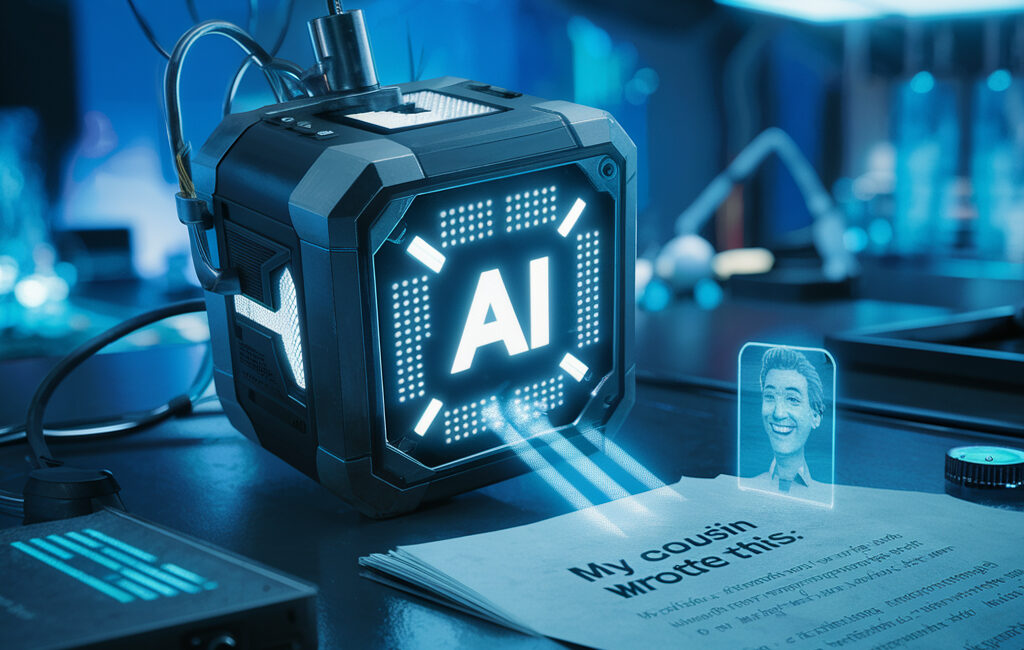
Generative Artificial Intelligence (Gen AI) is a transformative subset of artificial intelligence focused on creating novel content rather than merely analyzing or predicting data. Unlike conventional AI models that classify images, detect fraud, or recommend products, generative AI produces original outputs that can mimic human creativity.
From writing essays and coding software to generating photorealistic images, music, and even immersive 3D worlds, Gen AI has become a cornerstone of technological innovation in 2026, influencing industries such as healthcare, education, entertainment, business, and scientific research.
2. Core Principles of Generative AI
Generative AI leverages advanced machine learning techniques, particularly deep learning, to synthesize new data. Its operation can be understood in stages:
2.1 Data Acquisition
- Massive datasets are essential to teach AI patterns and context.
- Examples:
- Text: Wikipedia, news archives, literature databases.
- Images: ImageNet, Shutterstock libraries.
- Audio: Music libraries, speech datasets.
- Video: YouTube, Vimeo archives for motion and visual patterns.
- High-quality, diverse datasets reduce bias and improve output variety.
2.2 Pattern Learning
- Generative AI uses neural networks to identify statistical relationships in the data.
- Transformers are dominant for text and multimodal generation; they model long-range dependencies between inputs.
- Diffusion models are commonly used for images, progressively transforming noise into coherent visual outputs.
2.3 Content Generation
- The AI predicts outputs based on user input prompts and learned patterns.
- Examples:
- LLMs (e.g., GPT-5) predict the next word in a sentence.
- Diffusion models (e.g., Stable Diffusion XL) convert random noise into images following a text description.
2.4 Feedback and Refinement
- Modern AI systems incorporate Reinforcement Learning from Human Feedback (RLHF) to align outputs with human preferences and ethical guidelines.
- Example: ChatGPT’s alignment training reduces harmful or nonsensical responses.
3. Types of Generative AI and Tools (2026)
| Type | Description | Popular Tools/Platforms |
|---|---|---|
| Text Generation | Generates essays, chat responses, scripts, code | GPT-5, Claude 3, Mistral, ChatGPT Enterprise, Perplexity AI |
| Image Generation | Converts text prompts into realistic or stylized images | DALL·E 3, MidJourney v6, Stable Diffusion XL, Leonardo AI |
| Audio & Music | Produces music, speech, and sound effects | MusicLM, AudioGen, Jukebox, Soundful |
| Video & Animation | Creates video clips and animations from text or images | Synthesia, Runway Gen-Video, Kaiber |
| 3D & AR/VR Content | Generates 3D models, virtual environments, game assets | DreamFusion, Kaedim3D, NVIDIA Omniverse |
| Multimodal AI | Handles text, image, audio, and video together | GPT-4V, Gemini 2, LLaVA, MosaicML |
| Code & Automation | Writes scripts, automates processes, and generates pipelines | GitHub Copilot, CodeGeeX, Tabnine |
4. Mechanisms Behind Generative AI
4.1 Large Language Models (LLMs)
- Transformer-based models trained on billions of parameters.
- Can generate text, answer questions, and assist in coding.
- Example: GPT-5 produces coherent essays, stories, and professional reports; integrated into chatbots, research assistants, and enterprise applications.
4.2 Diffusion Models
- Start with random noise and iteratively refine it into coherent images or audio.
- Example: Stable Diffusion XL generates ultra-high-resolution images based on text prompts.
4.3 Reinforcement Learning
- Aligns AI outputs with human preferences.
- Reduces biases, hallucinations, and inappropriate content.
- Example: ChatGPT uses RLHF to ensure helpful, safe, and contextually relevant answers.
4.4 Multimodal Integration
- AI now handles text, images, audio, and video simultaneously.
- Example: GPT-4V and Gemini 2 can analyze an image, explain it in words, and generate related content.
5. Applications Across Industries
5.1 Business and Enterprise
- Content Marketing: Automated ad creatives, social media posts, newsletters.
- Tools: Jasper AI, Writesonic, Copy.ai
- Customer Engagement: Conversational AI for chatbots and support.
- Tools: ChatGPT Enterprise, Anthropic Claude
- Data Analysis: AI generates insights, visualizations, and business reports.
5.2 Healthcare
- Drug Discovery: AI generates new molecular compounds for experimental drugs.
- Example: Insilico Medicine, Exscientia
- Diagnostics & Communication: AI summarizes patient data and generates health instructions.
5.3 Creative Industries
- Art & Design: AI generates illustrations, digital art, logos, and advertising material.
- Tools: DALL·E 3, MidJourney v6, Adobe Firefly
- Music & Film: AI-generated music, soundtracks, and videos.
- Tools: MusicLM, Jukebox, Synthesia
- Fashion & Architecture: AI produces design prototypes and virtual models.
5.4 Education
- Personalized Learning: AI tutors generate exercises and provide tailored feedback.
- Example: Khan Academy AI tutor, Socratic AI
- Research Assistance: Literature reviews, summarizing papers, and hypothesis generation.
5.5 Gaming and Virtual Worlds
- Storytelling & Quests: AI generates complex narratives and quests.
- Tools: AI Dungeon, procedural content generators
- 3D Environments: AI creates immersive AR/VR worlds.
- Tools: DreamFusion, NVIDIA Omniverse
5.6 Everyday Life
- Personal Assistants: AI drafts emails, schedules, and summaries.
- Entertainment: Personalized stories, music, and interactive experiences.
- Accessibility: AI converts text to speech, summarizes video content, or generates sign language avatars.
6. Emerging Trends (2026)
- Real-Time Generative AI
- AI integrated into video calls, AR, VR, and live streaming.
- Example: Real-time AI avatars in virtual conferences.
- Hyper-Personalization
- Content tailored to individual users, e.g., personalized advertisements, learning modules, or healthcare advice.
- Ethics, Safety, and Regulation
- Policies to ensure responsible AI usage.
- Examples: EU AI Act, US AI regulatory frameworks.
- AI in Scientific Research
- Generating hypotheses, simulating experiments, and designing molecules.
- Tools: AlphaFold (protein folding), Insilico Medicine.
- Integration Across Platforms
- Generative AI embedded in productivity tools, design software, and enterprise systems.
- Example: Microsoft Copilot integrated with Office 365, Adobe Firefly in Creative Cloud.
7. Challenges
- Accuracy and Hallucinations
- AI can produce plausible but false information.
- Bias and Ethical Issues
- AI may replicate societal biases present in training data.
- Copyright & Intellectual Property
- Legal ownership of AI-generated works remains complex.
- Resource Intensity
- Training models requires high computational power and energy.
- Security Risks
- AI can be misused for deepfakes, misinformation, or automated cyberattacks.
8. Future Prospects
By 2030, generative AI is expected to:
- Be fully multimodal, capable of understanding and producing any form of media.
- Transform creative industries, reducing production costs and timelines.
- Enable personalized medicine, education, and financial planning at scale.
- Expand the concept of AI-assisted science, accelerating research and discovery.
9. Conclusion
Generative AI represents a paradigm shift in how humans interact with technology. It is no longer just a tool for automation but a co-creator, enabling innovations across creative, business, healthcare, and scientific domains. While adoption grows rapidly, challenges such as ethics, accuracy, and resource consumption must be addressed to ensure responsible, safe, and equitable AI use in 2026 and beyond.
Additional References and Tools for Research
- Text/Language: GPT-5, Claude 3, Mistral
- Images/Art: DALL·E 3, MidJourney v6, Stable Diffusion XL
- Audio/Music: MusicLM, AudioGen, Jukebox
- Video/Animation: Synthesia, Runway, Kaiber
- 3D/AR/VR: DreamFusion, Kaedim3D, NVIDIA Omniverse
- Enterprise AI: ChatGPT Enterprise, Copilot, Jasper AI