


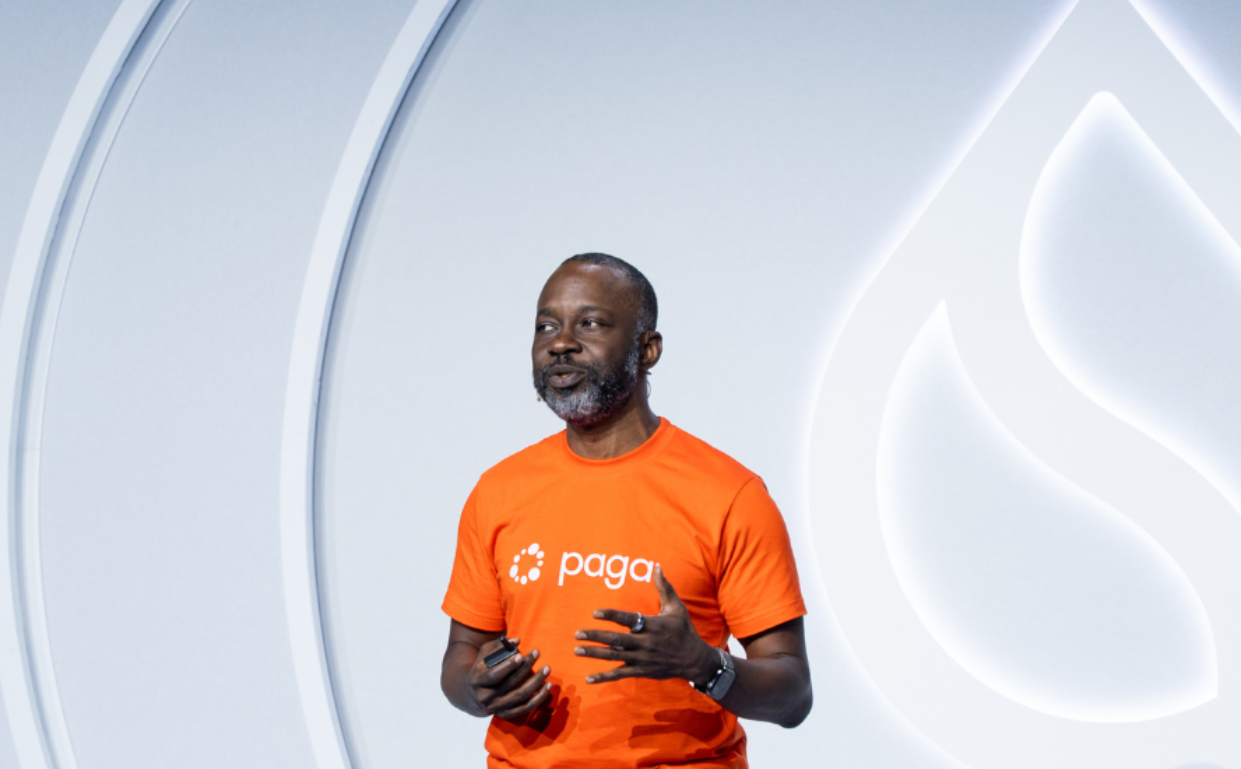
Paga Group, Nigeria’s largest payments infrastructure companies, is moving aggressively to embed itself at the center of the continent’s emerging stablecoin economy, announcing two major partnerships with Crossmint and the Sui blockchain aimed at rebuilding cross-border payments around programmable digital dollars.
With the deals, Paga aims to position itself as a critical bridge between Africa’s fiat payment systems and a rapidly expanding multi-chain stablecoin ecosystem, as global players race to capture emerging-market flows outside traditional correspondent banking networks. The firm also recently partnered with PayPal in Nigeria.
On June 10, Paga partnered with Crossmint, a U.S.-based enterprise stablecoin infrastructure provider, to create what the companies describe as a bi-directional payments bridge between Africa and global markets.
Under the arrangement, Crossmint will integrate Paga Engine’s fiat on- and off-ramp network to extend its global payout capabilities into African markets. In return, Paga will adopt Crossmint’s smart contract wallet infrastructure to issue programmable, multi-chain wallets for consumers and agents.
The wallets are designed to operate natively on-chain, allowing features such as spending limits, approval workflows, and compliance controls to be enforced at the protocol level while abstracting blockchain complexity from end users.
“By combining Paga’s local financial rails with Crossmint’s programmable wallet infrastructure, we are connecting the African economy to global finance,” said Tayo Oviosu, founder and chief executive officer of Paga Group. “We are eliminating friction and giving African consumers and businesses the financial mobility they deserve.”
Crossmint co-founder Rodri Fernández Touza said the partnership was shaped in part by his personal experience in Lagos, highlighting long-standing inefficiencies in cross-border payments for African users.
The collaboration targets enterprise clients seeking African payment access, fintech developers building stablecoin-native applications, and consumers who will interact with simplified digital dollar products.
The announcement follows a period of rapid growth for Paga, which processed more than $11 billion in transactions across 169 million payments in 2025, underscoring its position as one of the continent’s largest fintech infrastructure providers.
Just weeks earlier, Paga unveiled a separate but strategically aligned partnership with Sui, a high-performance Layer 1 blockchain developed by Mysten Labs, marking a deeper architectural commitment to blockchain-based settlement infrastructure.
Announced in May, the deal integrates Sui Dollar (USDsui), a native stablecoin launched in March 2026, across Paga’s ecosystem and positions Sui as the primary blockchain underpinning its platform.
The integration will see USDsui deployed across Paga’s enterprise APIs and consumer applications, enabling dollar-denominated payments and settlements without reliance on traditional foreign exchange intermediaries or correspondent banking networks.
“We have chosen Sui because it is built for the scalability, throughput, programmability, and privacy requirements of the future of money movement,” said Oviosu at the launch event. “It aligns with our vision of financial freedom for Africans participating in global markets.”
Sui executives framed the partnership as part of a broader effort to extend high-performance blockchain infrastructure into fast-growing emerging markets.
The collaboration also includes plans to develop yield-bearing products backed by real-world assets, with Sui serving as the on-chain settlement layer, alongside joint developer tooling aimed at accelerating fintech adoption across Africa.
Together, the two partnerships reflect a dual-stack strategy: Crossmint providing a multi-chain wallet and orchestration layer, and Sui serving as a primary high-throughput settlement blockchain with its native stablecoin, while Paga anchors the fiat connectivity and distribution network across Africa.
The approach effectively places Paga at the intersection of three layers of the emerging digital finance stack: blockchain infrastructure, stablecoin settlement, and local fiat rails.
Industry analysts say the model reflects a broader shift in global payments, as fintechs in emerging markets increasingly bypass legacy banking infrastructure in favor of programmable, blockchain-based systems.
If successful, Paga’s strategy could make it one of the most important gateways for stablecoin flows into and out of Africa, a region where demand for dollar liquidity, cross-border efficiency, and inflation hedging continues to drive alternative financial infrastructure adoption.
Still, execution risks remain. Regulatory frameworks for stablecoins across African markets remain uneven, and competition is intensifying from global fintechs and crypto-native infrastructure providers targeting the same corridors.
Even so, Paga’s dual partnerships signal a clear intent: to move beyond payments infrastructure into the foundational rails of Africa’s digital dollar economy.