


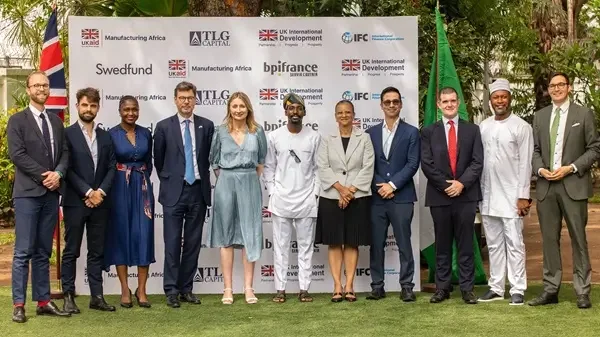
African private credit manager TLG Capital has secured a $120 million second close for its Africa Growth Impact Fund II (AGIF II), attracting backing from development finance institutions, insurers, family offices and impact investors seeking exposure to small-business lending across underserved markets.
The latest round was led by Proparco and Calvert Impact Capital and included new commitments from Africa Re, along with increased allocations from existing investors including Swedfund. Other investors in the fund include IFC and Tsao Family Office. The financing expands the investor base to 22 participants and highlights growing appetite for African private credit among institutional investors.
Nearly half of the fund’s committed capital now comes from investors outside the development finance institution ecosystem, a sign that private capital is increasingly viewing African SME lending as a scalable investment category rather than a niche impact strategy.
The second close comes roughly a year after AGIF II reached its $75 million first close in April 2025. Since then, the fund has deployed capital to nine small and medium-sized businesses operating across seven countries and seven industries, with individual debt facilities ranging from $5 million to $15 million.
The strategy is notable for its concentration on frontier and higher-risk markets that have historically struggled to attract commercial financing. According to TLG, 59% of invested capital has been directed toward United Nations-designated Least Developed Countries, while a further 19% has been invested in World Bank conflict-affected environments.
TLG’s lending model, known as Bank Originated & Mitigated Assets, or BOMA, is designed to address one of Africa’s longstanding financing constraints: the mismatch between the needs of growing businesses and the risk appetite of local lenders.
Under the structure, TLG works with African banks to originate loans to SMEs while providing borrowers with longer maturities than banks would typically extend. The originating bank then guarantees repayment of principal, shifting risk exposure from the underlying business to a regulated financial institution.
The model aims to create a more attractive risk-adjusted profile for investors while extending financing options for businesses that frequently struggle to secure long-term capital.
“AGIF II exists to bring African SMEs the financing they need to grow,” TLG Capital Co-Founder Isha Doshi said in a statement, adding that the structure seeks to balance commercial returns with measurable social impact.
TLG said companies financed through the fund currently support about 850 jobs across several African markets. The firm also traced broader economic effects from its investments, including expanded recycling capacity in Nigeria, wider fiber connectivity in Djibouti and financing for lower-cost schools in Kenya serving more than 20,000 additional students.
Several investors pointed to the fund’s risk mitigation structure as a central factor behind their participation.
Calvert Impact said TLG had demonstrated an ability to innovate while providing downside protection aligned with commercial investment requirements. Africa Re described the use of bank guarantees as a mechanism that could help make African private credit more accessible to institutional capital.
The fund also maintains a strategic partnership with the UK Foreign, Commonwealth and Development Office through its Manufacturing Africa program.
TLG and AGIF II were recognized in 2026 under the Gender 2X Challenge and included in the ImpactAssets 50, reflecting the fund’s emphasis on development outcomes including employment creation, gender inclusion and sustainable industrial growth.