



Apple has entered the foldable smartphone market with the iPhone Duo, a $1,999 device that combines a 7.6-inch inner display with a conventional 5.4-inch outer screen as the company seeks to redefine its flagship iPhone lineup.
The device, unveiled Sept. 10, is Apple’s first foldable iPhone and represents one of the biggest changes to the product since the original iPhone. Pre-orders begin Oct. 16, with sales starting Oct. 23.
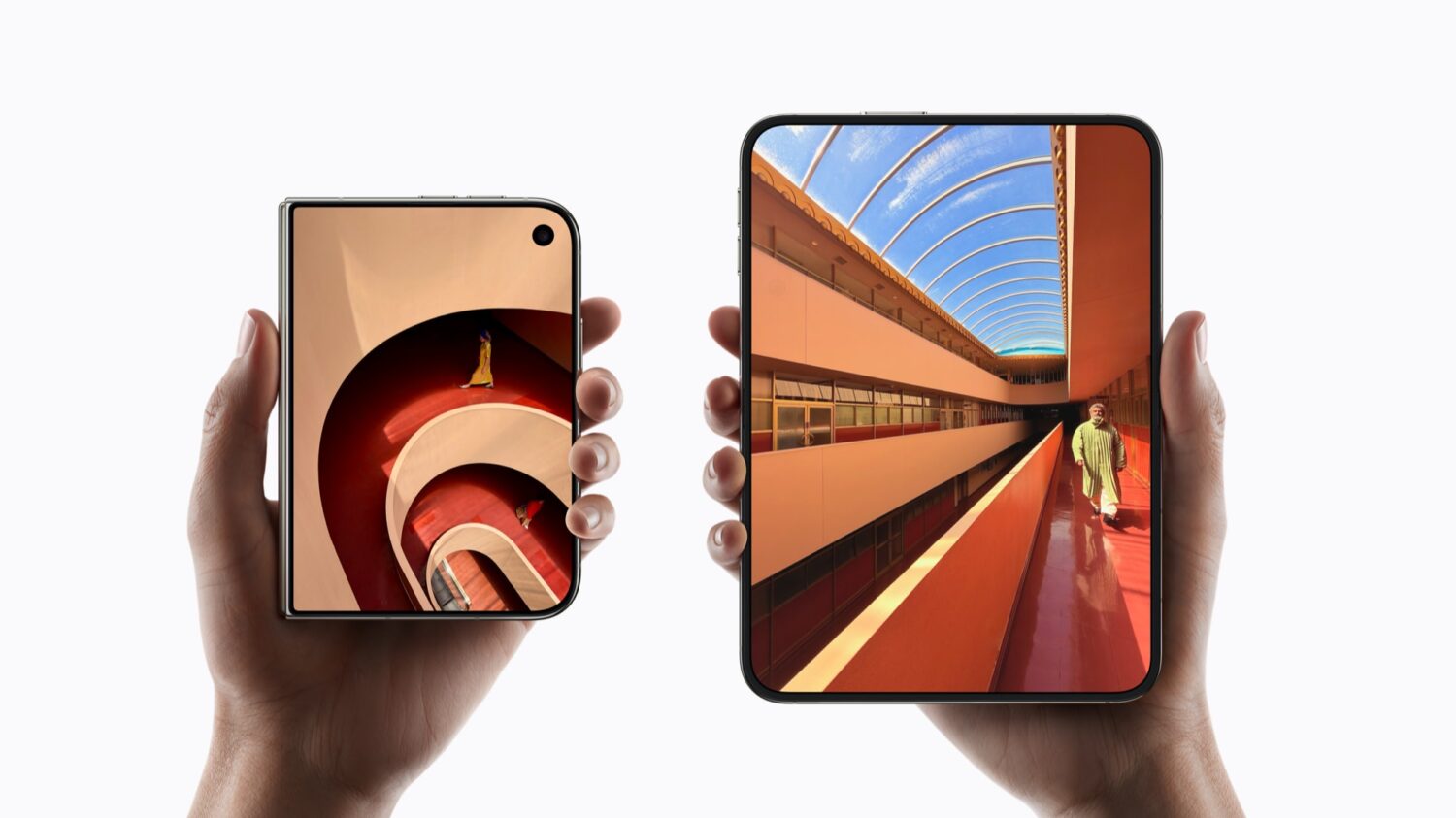
Apple is positioning the iPhone Duo as a premium productivity and entertainment device rather than simply a phone with a folding screen. When opened, the device offers Apple’s largest-ever iPhone display, while its outer screen is designed for one-handed use and everyday tasks.
The iPhone Duo starts at $1,999 in the US for 256GB of storage and will also be offered with 512GB, 1TB and 2TB capacities. Apple is offering financing starting at $83.29 a month over 24 months.
The pricing puts the device firmly at the high end of the smartphone market and gives Apple a direct presence in a segment that has largely been developed by rivals including Samsung, Huawei and other Android manufacturers.
Apple Bets on the Foldable Form Factor
The iPhone Duo measures similar to a passport when closed and opens into a 7.6-inch Super Retina XDR display. The inner screen is 50% larger than the iPhone 18 Pro Max, according to Apple, while the 5.4-inch outer display provides 90% of the screen area of the iPhone 18 Pro.
Both displays use the same aspect ratio, allowing content to transition between the screens without significant changes in scale.
The inner display has a nano-texture finish designed to reduce glare and reflections while also making the crease less visible. It supports ProMotion, Always-On display functionality and up to 3,000 nits of peak outdoor brightness.
Apple has also redesigned iOS 27 around the foldable form factor. Controls move toward the sides of the interface to preserve vertical screen space, while the expanded display allows two applications to run side by side.
That enables users to perform tasks such as browsing the web while communicating with another person, comparing products in two Safari windows or using Siri AI alongside another application.

A20 Pro Brings Apple’s Latest Silicon to the Foldable
The iPhone Duo is powered by Apple’s A20 Pro processor, the same chip used in the iPhone 18 Pro models.
Apple says the chip’s six-core CPU is up to 20% faster than the previous-generation A19 Pro, while its seven-core GPU is up to 40% faster and more power efficient.
The A20 Pro also includes a dual 16-core Neural Engine, which Apple says delivers twice the compute power for on-device artificial intelligence workloads.
The processor is paired with a custom vapor chamber and an advanced thermal-management system designed to maintain performance during demanding workloads such as gaming, multitasking and AI processing.
Apple says the iPhone Duo can deliver up to 35% better sustained performance than the iPhone 17 Pro.
The company is using a chip package inspired by its M-series Apple silicon architecture, while the A20 Pro is manufactured using a 2-nanometer process.
AI Becomes a Bigger Part of the Foldable Experience
Apple is also using the larger display to expand the role of Apple Intelligence and its redesigned Siri AI assistant.
Siri AI can use information from a user’s messages, emails, photos and other applications to provide context-aware assistance. It can also understand what is displayed on the screen and take actions based on that information.
On the iPhone Duo, users can hold a conversation with Siri while working in another application, making the larger display a more natural environment for Apple’s AI ambitions.
Apple Intelligence also adds new image-editing capabilities, including Spatial Reframing, Extend and an upgraded Clean Up tool.
In Safari, a new Notify Me feature can monitor web pages for changes such as product availability or price reductions.
Apple says AI processing is handled through a combination of on-device processing and Private Cloud Compute, maintaining the company’s focus on privacy.
Foldable Design Changes the Camera Experience
The iPhone Duo has a 48-megapixel Fusion Main camera with a 2x optical-quality telephoto option, alongside a 48-megapixel Fusion Ultra Wide camera.
The main camera can capture 48-megapixel photographs and record 4K video at up to 120 frames per second in Dolby Vision.
But Apple is using the two-screen design to introduce camera features that would not be possible on a conventional iPhone.
Smart Take uses on-device AI to analyze a scene and automatically capture photographs when subjects are ready. Duo Preview allows people being photographed to see the camera’s live preview on the outer display.
The outer screen can also serve as a preview when users take selfies using the higher-resolution rear cameras.
Another feature, Kid Cue, uses animations on the outer display to attract children’s attention toward the camera.
For video calls, Duo FaceTime allows another person to join a conversation through the outer display and camera, while Dual Capture can show feeds from the front and rear cameras simultaneously.
Battery Life Targets a Foldable Weakness
Apple has built the iPhone Duo around a dual-battery architecture, placing one high-energy battery on each side of the device.
The batteries operate as a single system through Apple’s silicon and energy-management algorithms.
Apple rates the device for up to 31 hours of video playback using the inner display and as much as 44 hours using the outer display. With both displays used equally, the company says the device can deliver up to 24 hours of usage per charge.
Fast charging can take the battery to 50% in about 20 minutes, while MagSafe or Qi2 wireless charging can reach 50% in approximately 30 minutes.
Apple Puts Durability at the Center
Durability has been one of the biggest concerns surrounding foldable phones, and Apple is emphasizing materials and engineering in an effort to address it.
The iPhone Duo uses grade 5 titanium with a mirror-polished finish and a precision hinge made from more than 100 components.
Apple says the hinge is designed to support the center of the display while maintaining smooth opening and closing.
The device has an IP68 rating for splash, water and dust resistance. Ceramic Shield protects the rear, while Ceramic Shield 2 on the front provides three times the scratch resistance of the previous generation.
The inner folding display uses a multilayer structure with custom adhesives that allow the layers to move relative to one another as the phone folds, reducing stress on the panel.
An eSIM-Only iPhone
The iPhone Duo will use eSIM globally rather than a physical SIM card.
Apple says the move allows more internal space to be dedicated to battery capacity while offering what it describes as greater security and flexibility.
The device supports Wi-Fi 7, Bluetooth 6 and Thread through Apple’s N1 wireless chip. Its C2 cellular modem adds AI-powered improvements to cellular reliability and supports mmWave in the US.
Apple Targets the Premium End of Foldables
The launch gives Apple a product in a category that has existed for years but has yet to become mainstream across the global smartphone market.
Rather than competing primarily on price, Apple is using its ecosystem, custom silicon, cameras, AI software and tightly integrated hardware and operating system to justify the iPhone Duo’s premium positioning.
The $1,999 starting price is substantially higher than Apple’s conventional flagship iPhones, potentially limiting the foldable to affluent consumers and professionals willing to pay for a larger mobile workspace.
Apple’s strategy also puts pressure on the rest of the premium smartphone market as competitors attempt to differentiate through foldable hardware, AI and larger mobile displays.
The company is offering the iPhone Duo in two colors, Star White and Night Sky, with 256GB, 512GB, 1TB and 2TB storage options.
The iPhone Duo will be available from Oct. 23, with pre-orders opening Oct. 16.