


Artificial intelligence is moving deeper into the private lives of Kenyans, with a growing number of digitally engaged users turning to chatbots for emotional support, personal advice and questions they have not shared with other people.
About 72% of respondents in a new survey said they had used AI to seek emotional support or talk through a personal situation, according to a study by Nairobi-based research agency Nendo and African consumer-insights platform LOOKA.
The survey found that 54.1% of respondents used AI for emotional support or advice at least once a week, while 46.3% said they had used it for matters they had not told anyone else about.
The findings come as AI tools become increasingly embedded in everyday digital services, blurring the line between productivity software and personal advisers.
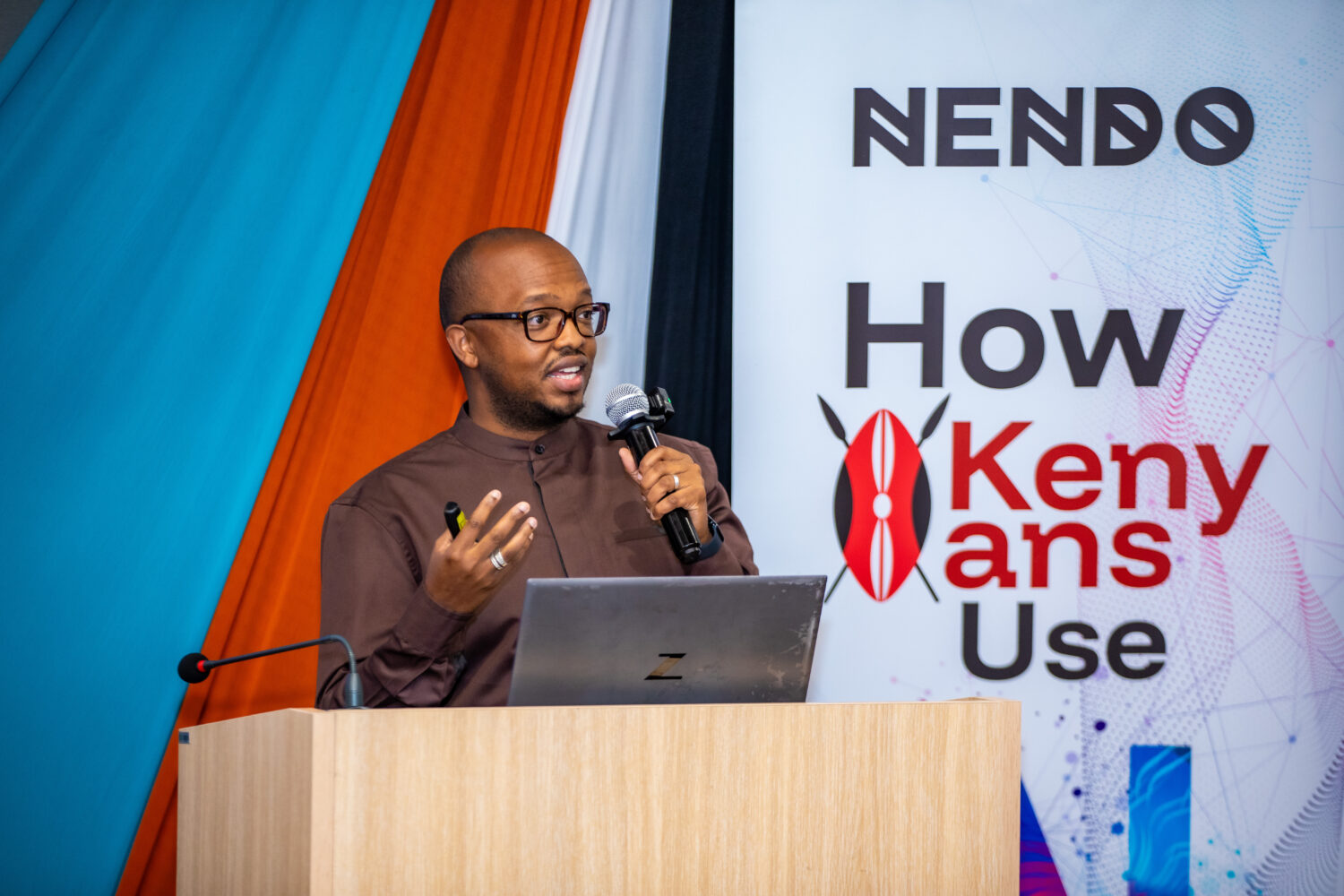
Nendo conducted the study to examine how Kenyans use AI at work and in education. Instead, the responses revealed a substantial level of personal use, Nendo founder and chief executive Mark Kaigwa said.
“The answers kept pulling us into their private lives,” Kaigwa said.
Younger Kenyans Lead Personal AI Use
Younger respondents were substantially more likely to use AI for personal matters.
Among respondents aged 25 to 34, 81.4% said they had used AI for a personal situation, compared with 76% of those aged 18 to 24 and 46.8% among people aged 45 to 54.
Women reported higher personal use than men, at 76% compared with 68.4%.
The age gap was even more pronounced when respondents were asked about using AI for matters they had not disclosed to anyone else. About 55.2% of people aged 25 to 34 reported such use, compared with 16.5% of those aged 45 to 54.
The figures suggest that for some younger users, AI is becoming an informal sounding board for questions that might traditionally have been directed to friends, relatives or professionals.
ChatGPT Leads a Crowded AI Market
Kenyans are also using multiple AI assistants rather than settling on a single platform.
Among respondents surveyed about their AI use in the previous 30 days, 78.6% had used at least two assistants, while 34.9% had used four or more.
ChatGPT was the most frequently selected service, at 84.5%, followed by Meta AI, available through WhatsApp and Facebook, at 66.9%. Google’s Gemini was used by 57.6%.
Grok was selected by 32.6% of respondents, ahead of Anthropic’s Claude at 23.9%. Microsoft Copilot and DeepSeek recorded 19.8% and 18.9%, respectively.
The figures are not market-share estimates because respondents could select multiple services.
Distribution may be playing an important role in adoption. About 91.3% of respondents said they had noticed or used an AI feature within WhatsApp or Facebook.
Trust Depends on the Question
Kenyans’ willingness to rely on AI varies significantly depending on the subject.
Career advice attracted the highest level of trust, with 57.9% saying they mostly or completely trusted AI advice in that area. Legal questions followed at 55.7%, financial decisions at 53.5% and health at 50%.
Family matters ranked lowest, with 39.9% saying they mostly or completely trusted AI advice.
Health is nevertheless becoming a significant area of AI use. Almost half of respondents, or 48.8%, said they had used AI for health information.
The survey does not establish whether that advice was accurate or safe, nor does its definition of emotional support amount to measuring AI use as therapy.
AI Brings Gains and New Concerns
Respondents broadly reported productivity gains from using AI.
About 91.2% said AI had made them somewhat or significantly more effective at work or in their studies, although the figure is based on respondents’ own assessments.
At the same time, concerns about the economic consequences of AI remain widespread.
About 43.6% said they were at least somewhat worried that AI would affect their jobs or income within three years. Another 59.4% described themselves as equally excited and concerned about the spread of the technology.
On whether AI is making opportunities in Kenya more equal, 49.8% said it was, while 23.9% said AI was making opportunities less equal.
The Localization Gap
Despite widespread adoption, Kenyan users still see a gap between AI’s capabilities and local context.
About 72.5% of respondents said AI advice felt as though it came from someone who understood Kenyan life. But a quarter, or 25.1%, said they had received advice that felt inconsistent with Kenyan culture or values.
There is also demand for better local-language performance. About 72% said they would use AI moderately or significantly more if it better understood Kenyan culture and language.
Among respondents assessing AI responses in Kiswahili and Sheng, 35% rated them excellent or very good, while 35.8% rated them fair or poor.
“What struck us was how quickly it has become personal, and how clearly respondents want it to understand their language and culture,” said Serigne Fall, LOOKA’s co-founder.
Fall said the company plans to ask similar questions in other African markets.
Access Doesn’t Equal Advantage
The survey also points to differences in how AI is being used depending on users’ access to devices and working environments.
Professional AI use stood at 72.5% among respondents who used AI on both smartphones and computers, compared with 42.8% among those who relied only on phones.
Daily AI use was broadly similar between the lowest and highest income groups, at 55% and 54.8%, respectively. Professional use, however, increased from 48% in the lowest income band to 73% in the highest.
Kaigwa described the combination of devices, data costs, skills and workplace permission as an “AI workbench,” arguing that access to the technology alone does not determine what users can achieve with it.
“Access is spreading faster than advantage,” he said. “A phone gets you into AI. What you can do with it depends on the rest of your workbench.”
The report was launched Sept. 29 at Aga Khan University in Nairobi.
Survey Limits
The findings are not nationally representative of Kenya’s adult population.
The online panel included about 1,200 respondents across 18 counties and was younger, more educated and more digitally connected than the broader Kenyan population. The percentages were unweighted, and fieldwork was conducted in May 2026.
The detailed AI module was completed by 1,161 respondents.
The survey’s tool figures measure use across a 30-day period and should not be interpreted as market share. Its definitions of “emotional support” and “personal situation” were broad, and the study did not test whether AI advice was safe or accurate.
Differences by device and income also show associations rather than establishing cause and effect.