

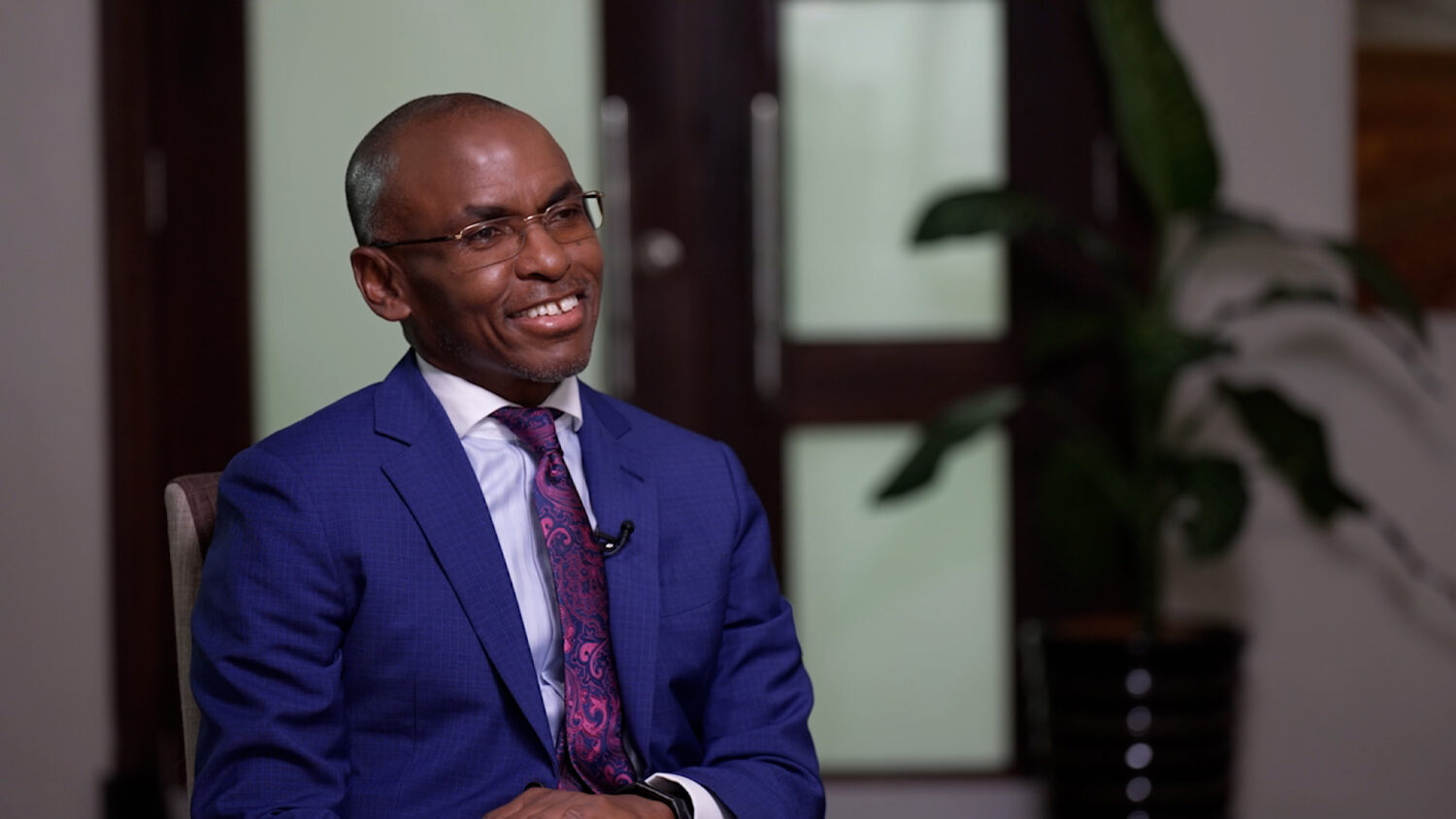
Safaricom Plc is expanding M-PESA from a payments service into savings, investment and insurance, Chief Executive Officer Peter Ndegwa said, while a court dispute over who controls the Kenyan operator remains unresolved.
“We want to broaden and democratise access so you can either pay, you can save, you can invest, you can insure using M-PESA,” Ndegwa said, according to CNN’s summary of an interview with Victoria Rubadiri for Marketplace Africa, which airs on CNN International on Oct. 24. He described the company’s ambition as becoming “Africa’s leading purpose-led technology company.”
Fintech push
M-PESA is already Safaricom’s biggest earner. Its revenue rose 13.4% to KES 182.7 billion in the year to March 31, and it now accounts for 45.6% of Kenya’s service revenue. Group service revenue rose 11.1% to KES 414.1 billion, and group net income grew 67.3% to KES 99.7 billion, measured excluding hyperinflation accounting.
The company has begun widening M-PESA’s reach. Its Ziidi Trader product, launched with the Nairobi Securities Exchange and Kestrel Capital, lets customers buy and sell listed securities from the M-PESA app. Ndegwa said the platform is also being built out for businesses, from small traders to established merchants, with tools to accept payments and pay suppliers and staff. A “one app” super app that uses AI to personalise the experience has launched in Kenya.
The expansion brings Safaricom into closer competition with banks, insurers and fintechs. Ndegwa played down the rivalry: “Financial institutions like banks and insurance companies are competitors, but they’re also partners,” according to the CNN.


Fraud and infrastructure
Safaricom processes about 150 million transactions a day, and Ndegwa said fraud prevention depends on artificial intelligence. “We can’t manually be able to prevent fraud if we didn’t have AI and we have a data layer,” he said. He also said Safaricom spends “approximately between $400 and $500 million in Kenya on our infrastructure” as it adds capacity to meet rising data demand.
Ethiopia
Ndegwa cited the Ethiopia expansion as one of the defining decisions of his six years in charge. M-PESA’s 90-day active customers there rose 119.4% to 5.2 million. The business is still loss-making, though losses are narrowing. Ethiopia’s EBITDA losses improved 64.8%, from KES 43 billion to KES 15.1 billion. The birr fell 23.7% against the dollar over the year, and management expects startup losses to shrink further in the current financial year.
Payouts and a legal cloud
Shareholders approved a final dividend of KES 1.15 a share in August, bringing the year’s total to KES 2.00. The total payout is KES 80.1 billion, up 66.7% on the previous year.
Control of the company is in dispute. Vodacom completed its purchase of an additional effective 20% stake on June 30, taking its holding from about 35% to 55%. On Sept. 15, Kenya’s High Court voided the government’s sale of a 15% stake, ruling that it gave Vodacom control of Safaricom and amounted to a takeover. Vodacom remains the registered holder while the Court of Appeal fast-tracks the main appeal, and a loss would cut its holding to about 40%. The government has told the appeal court that the KES 204.3 billion it received is non-refundable.
Ndegwa told CNN Safaricom and M-PESA embody a commitment to both commercial performance and societal impact. Marketplace Africa airs on CNN International on Saturday, Oct. 24, at 06:30 EAT.