


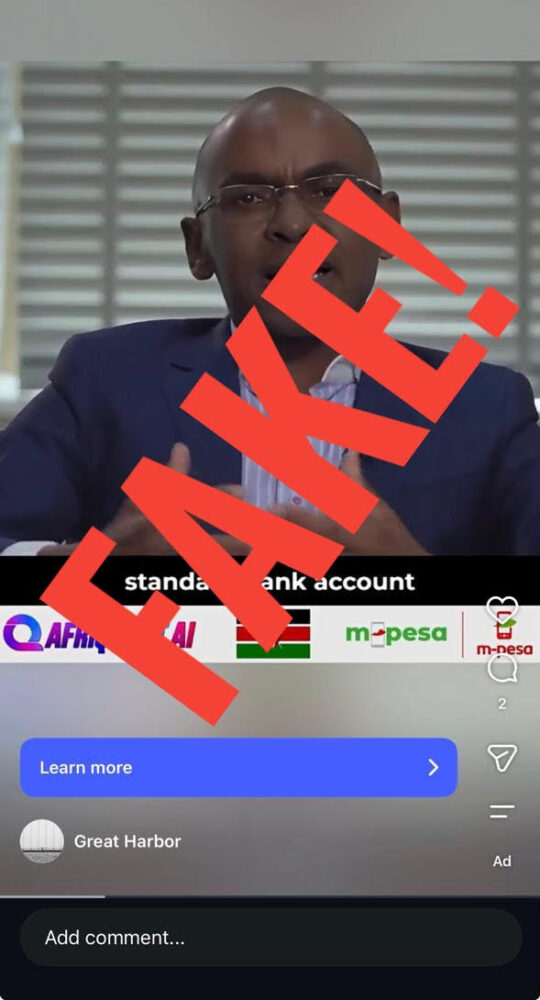
Artificial intelligence (AI) is making it easier for fraudsters to create convincing videos, imitate familiar voices and impersonate trusted brands. For Safaricom customers, a video that appears to feature a company executive announcing a giveaway or promising to double Fuliza loan limits could be designed to steal money or personal information.
Most these scammers use familiar faces, voices and brands to exploit the trust people place in them. They create videos using Safaricom branding and sound like an authentic announcement, with face like a top Safaricom executive to lure their victims with fake offers.
#JiulizeKamaNiUkweli
Under its #JiulizeKamaNiUkweli campaign, Safaricom is encouraging customers to question suspicious online offers and verify information before taking action. Safaricom is asking its customers to verify the messages they receive or the ads they watch to ensure they are online.
Scammers use urgency to trap innocent victims. The biggest warning sign is pressure to act immediately. Fraudulent videos and advertisements may claim that customers have only a few minutes to claim a reward, unlock a bigger Fuliza limit or qualify for an exclusive investment opportunity. The urgency is designed to prevent people from checking whether the offer is legitimate.
Pause, Check and Confirm

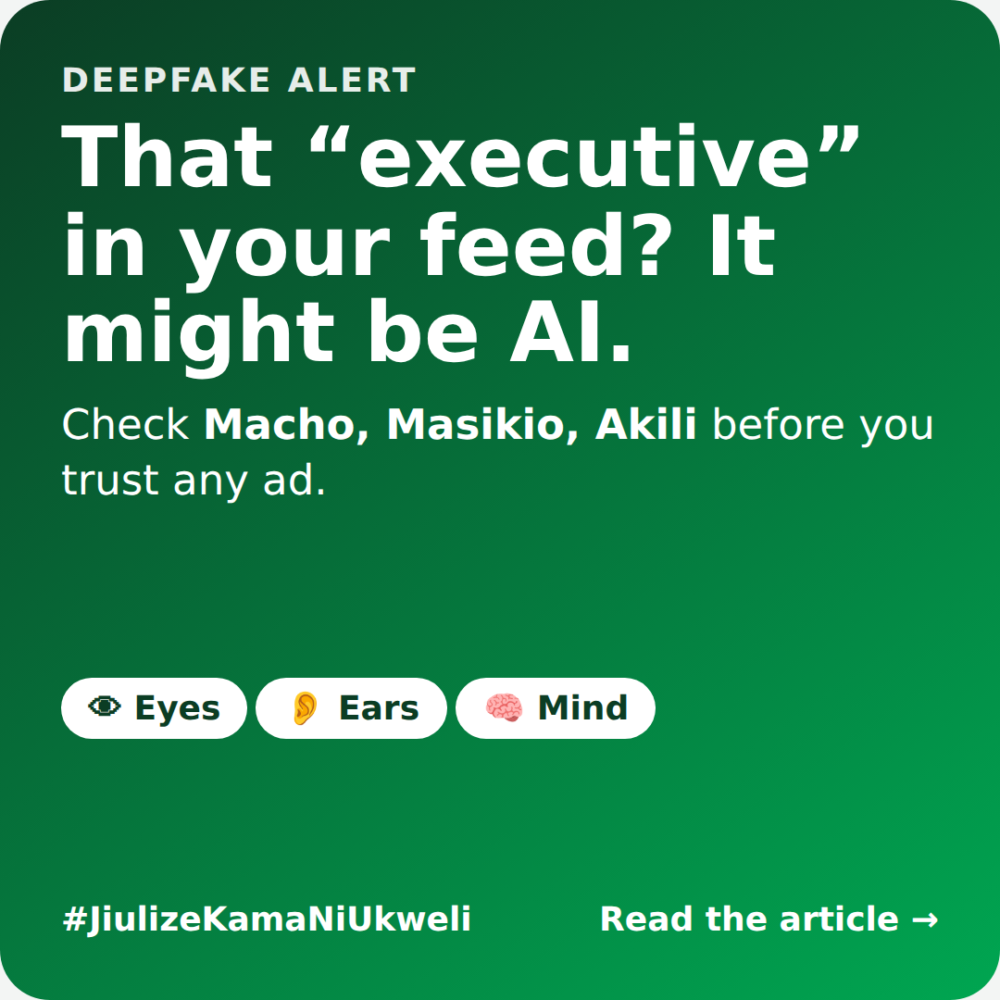
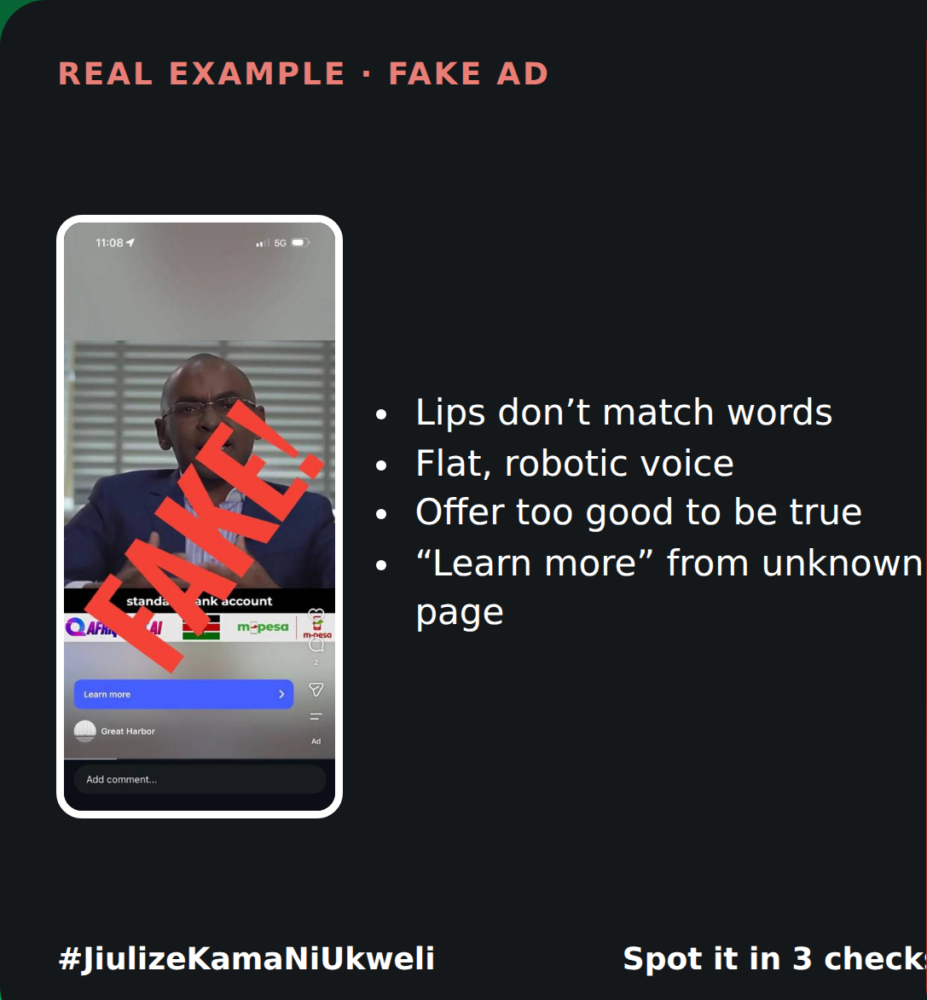
Scammers use AI tools to piece together faces, audio and background and most times they do a shoddy job leading to so many inconsistencies. Customers should pay attention to inconsistencies in videos such as unnatural lip movements, audio that does not match a speaker’s mouth, unusual facial expressions, strange blinking or abrupt changes in voice quality or pitch can indicate that footage has been manipulated. However, sophisticated deepfakes may not display obvious flaws, while genuine videos can sometimes look or sound unusual. Visual inspection alone is therefore not enough.
A useful way to remember the warning signs is to Pause, Check and Confirm. Pause when an offer demands immediate action. Check whether the message contains suspicious links, exaggerated financial promises or requests for confidential information. Confirm the offer through Safaricom’s official channels before sharing information, sending money or following instructions.
Unlike Safaricom itself, scammers always will ask for something in return for the offer. Scammers could ask for payment, click on a suspicious link or fill in a regisration form to have their Fuliza limits doubled or cleared. An advertisement featuring a familiar executive or using official-looking colours and logos should never be treated as proof that an offer is genuine. Safaricom customers can apply the three-step Stop, Think, Act/Verify rule to suspicious videos, social media posts and calls.


Stop: Do not click a link, send money or share personal information simply because a video or caller creates a sense of urgency.
Think: Ask whether the offer sounds realistic. Look for mismatched audio and lip movements, unnatural speech, unusually generous financial promises or requests that seem out of place.
Act/Verify: Check the claim through Safaricom’s official website, verified social media accounts, the MySafaricom app where relevant, or customer care using contact details obtained from an official source. Do not use contact details supplied only by the suspicious advertisement.
Customers should never share their M-PESA PIN, passwords or one-time verification codes with someone claiming to help them access a promotion or increase their loan limit even if the video was shared by a friend or family. Social media groups receive numerous innocent shares and likes and comments. The sharing or commenting doesn’t mean its geniune. Some members accounts can be compromised, and engagement does not establish authenticity.

If a customer encounters a suspicious advertisement, they should avoid interacting with it, report it through the relevant platform and alert Safaricom through its official reporting channels. If you have already shared sensitive information or made a payment contact Safaricom promptly through official customer care channels for the company to take appropriate steps to protect their accounts.
As AI-generated content becomes more convincing, customers will have to be on high alert to question extraordinary claims and independently checking their source. #JiulizeKamaNiUkweli is worth remembering before acting on any online offer: stop, think and verify. A familiar face is not proof, a convincing voice is not confirmation, and a promise of easy money should never replace a proper check.