


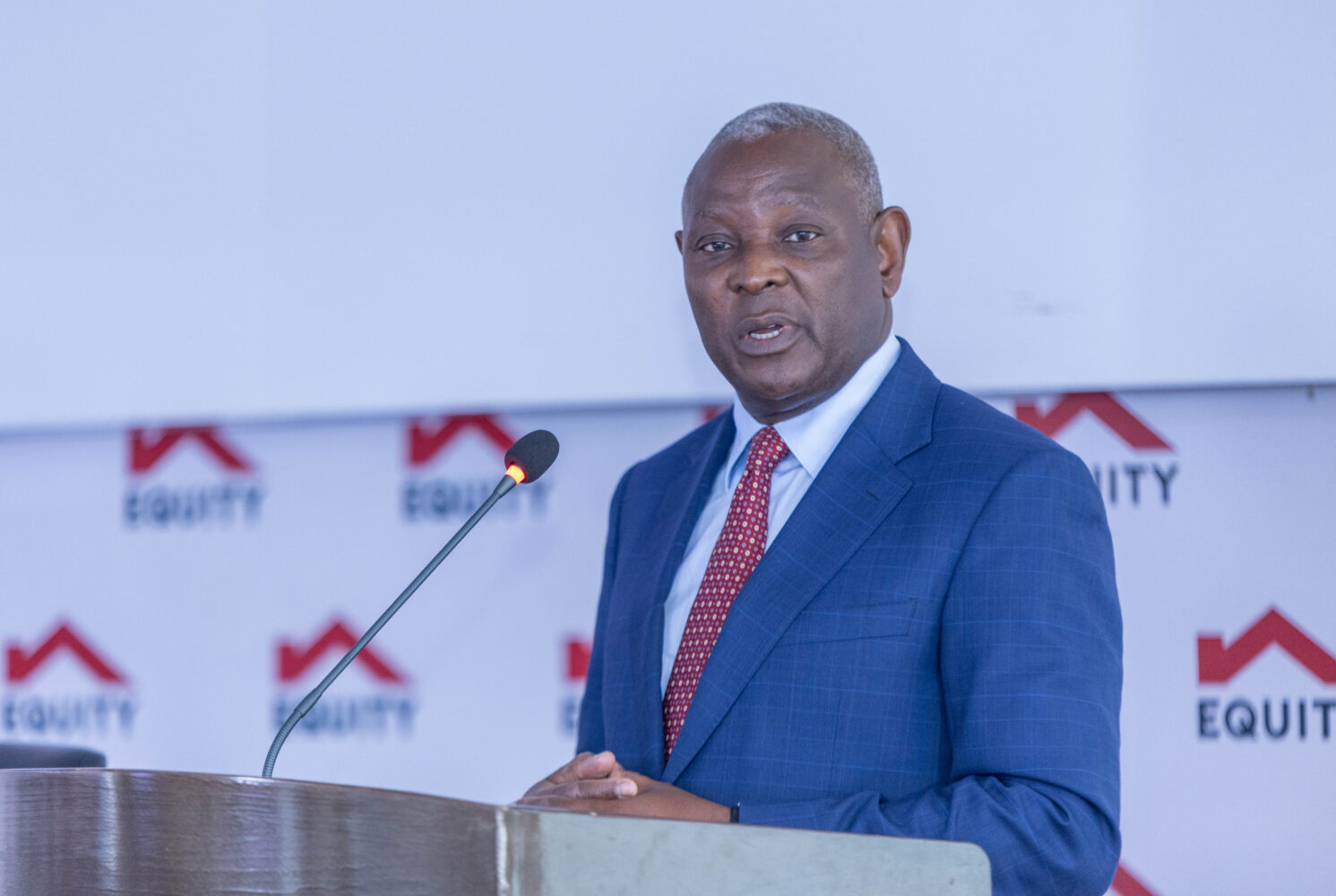
Equity Group Holdings Plc reported a 32% increase in net profit to KSh71.5 billion in the nine months through September 2026, as stronger lending, expanding operations outside Kenya and rising income from fees and other services boosted earnings at one of East Africa’s largest financial institutions.
Profit before tax climbed 37% to KSh89.8 billion from KSh65.6 billion a year earlier, according to results released by the Nairobi-based lender. The performance was supported by growth in customer deposits, improved loan quality and higher contributions from its regional banking subsidiaries.
The results highlight Equity’s growing reliance on its operations across East and Central Africa, where expanding demand for credit and financial services is helping diversify earnings beyond its Kenyan home market.
Total assets rose 18% to KSh2.15 trillion from KSh1.82 trillion, while customer deposits increased 19% to KSh1.58 trillion from KSh1.32 trillion. Net loans grew 17% to KSh1.01 trillion from KSh859.8 billion, reflecting increased lending to corporations, small and medium-sized businesses, retail customers and public-sector borrowers.
Equity Bank Kenya, the group’s largest subsidiary, recorded a 31% increase in profit after tax to KSh40.7 billion, supported by a 10% expansion in customer deposits and 12% growth in loans.
The Kenyan business accounted for approximately 57% of group net profit, underscoring its continued importance even as subsidiaries in other markets expand.
Equity Bank Tanzania reported a 60% increase in profit after tax, the fastest growth among the subsidiaries highlighted in the results, while Equity Bank Democratic Republic of Congo posted a 34% rise. Tanzania, DRC and Uganda also led loan-book expansion across the regional franchise.
The growing contribution from these markets is helping Equity reduce its dependence on Kenya, where banks face competition for deposits, pressure on lending margins and changing credit conditions.
Fee Income and Digital Banking
Non-funded income, which includes fees, commissions and other revenue not directly generated from lending, increased 34% to KSh84.3 billion. Its contribution to total income rose to 44% from 40.1% in the corresponding period last year.
The shift reflects Equity’s efforts to build revenue streams beyond traditional interest income, including payments, transaction banking, insurance and digital financial services.
The lender said 98.3% of customer transactions now take place outside physical branches, with digital channels accounting for 89.5% of transactions.
The growing adoption of digital services is central to Equity’s strategy of expanding customer activity without a corresponding increase in the cost of operating its branch network.
Operating efficiency improved during the period, with the group’s cost-to-income ratio declining to 47.9% from 50.6% a year earlier. The improvement indicates that Equity is generating more income relative to its operating expenses as its regional and digital businesses gain scale.
Loan Quality Improves
Equity also reported an improvement in asset quality, a closely watched indicator for investors assessing the health of banks’ lending portfolios.
The group’s non-performing loan ratio declined to 9.3% from 12.1% a year earlier, while its cost of risk fell to 1.5% from 1.9%.
Non-performing loan coverage stood at 71%, indicating the extent to which the bank has made provisions against troubled credit.
The improvement comes as Equity expands lending across multiple markets and customer segments, including small businesses and households that can be particularly vulnerable to economic shocks.
Lower credit risk, combined with loan-book growth, helped support profitability during the nine-month period.
Insurance Business Expands
Outside banking, Equity Insurance Group recorded a 52% increase in gross written premiums and a 34% rise in profit before tax, highlighting the growing contribution of insurance to the group’s diversified financial services operations.
The expansion supports Equity’s strategy of offering customers banking, insurance and other financial products through an integrated distribution network.
Although banking remains the group’s primary earnings driver, the growth in insurance provides an additional source of revenue as the lender seeks to increase income from its existing customer base.
Group Managing Director and Chief Executive Officer James Mwangi attributed the performance to the company’s transformation strategy, regional expansion and investments in digital financial services.
Mwangi said the group’s earnings were becoming more balanced across countries, products and business lines, strengthening its ability to withstand economic uncertainty while pursuing growth opportunities.
Equity said it met or exceeded management guidance across its key performance indicators during the period. The results position the lender for another year of earnings growth, with regional expansion, increased lending and transaction-based income emerging as important drivers of profitability.
For investors, the sustainability of that growth will depend on Equity’s ability to maintain improving loan quality, manage operating costs and translate its expanding regional presence into stronger returns as competition intensifies across African banking markets.