


For many patients in Uganda, getting an MRI scan has never been just a medical appointment. It often means long, costly journeys to major cities trips that can delay diagnosis and, in some cases, treatment itself.
At Mbarara University of Science and Technology (MUST), a quieter, more hopeful story is taking shape.
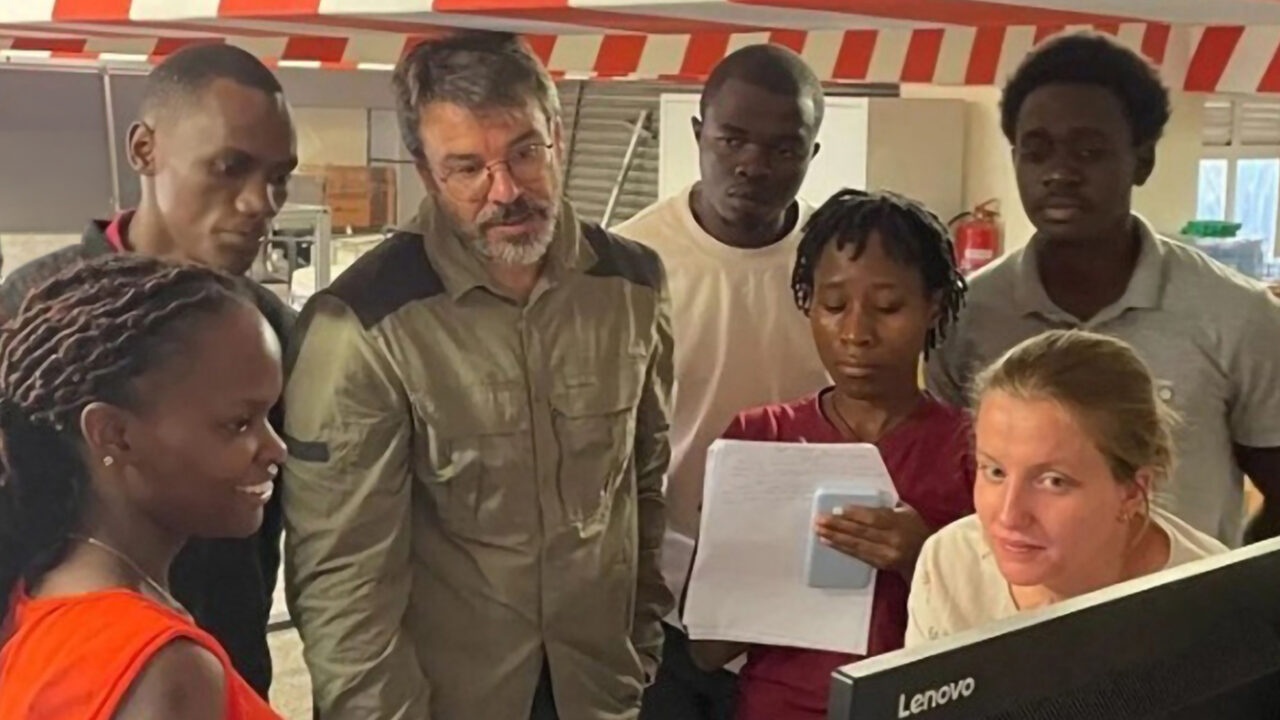
Inside a small lab, researchers and students are working with an ultra-low-field MRI machine, less powerful than conventional hospital systems, but far more accessible. Until recently, however, producing clear, reliable images from the machine remained a challenge.
“We could capture signals, but turning them into images we could confidently interpret was difficult,” said Eng. Dr. Johnes Obungoloch, dean of the Faculty of Applied Sciences and Technology at MUST.
That changed when the team partnered with Spain’s Institute of Instrumentation for Molecular Imaging (I3M) and began using Tyger, a cloud-based imaging platform developed by Microsoft Research.
Instead of relying on local computing power, raw MRI data is now sent to the cloud, where advanced algorithms reconstruct and enhance the images before returning them to the lab. The improvement has been striking.
“Early on we could only image part of the head,” Obungoloch said. “Today, we can acquire full-head images.”
For students, the project is opening doors beyond the classroom. Engineering and medical trainees are working side by side, learning how to operate imaging systems, process signals and interpret results skills that are still scarce in many parts of the region.
In a country where access to advanced imaging is limited, the implications extend far beyond the lab. Patients with conditions such as stroke, head injuries or hydrocephalus often depend on timely scans to guide treatment. Yet for many, distance and cost remain major barriers.
“For some patients, traveling hundreds of kilometers for a scan is simply not possible,” Obungoloch said. “If we can bring this closer, it can change outcomes.”
Since 2025, the team has scanned dozens of volunteers while refining the system. Though still in the research phase, the work points to a different model for delivering healthcare one where lower-cost machines, combined with cloud computing, can expand access without requiring massive infrastructure.
What is unfolding in Mbarara is not just a technical breakthrough. It is a practical attempt to shrink the gap between patients and diagnosis using connectivity, collaboration and a rethinking of how medical technology is delivered.