


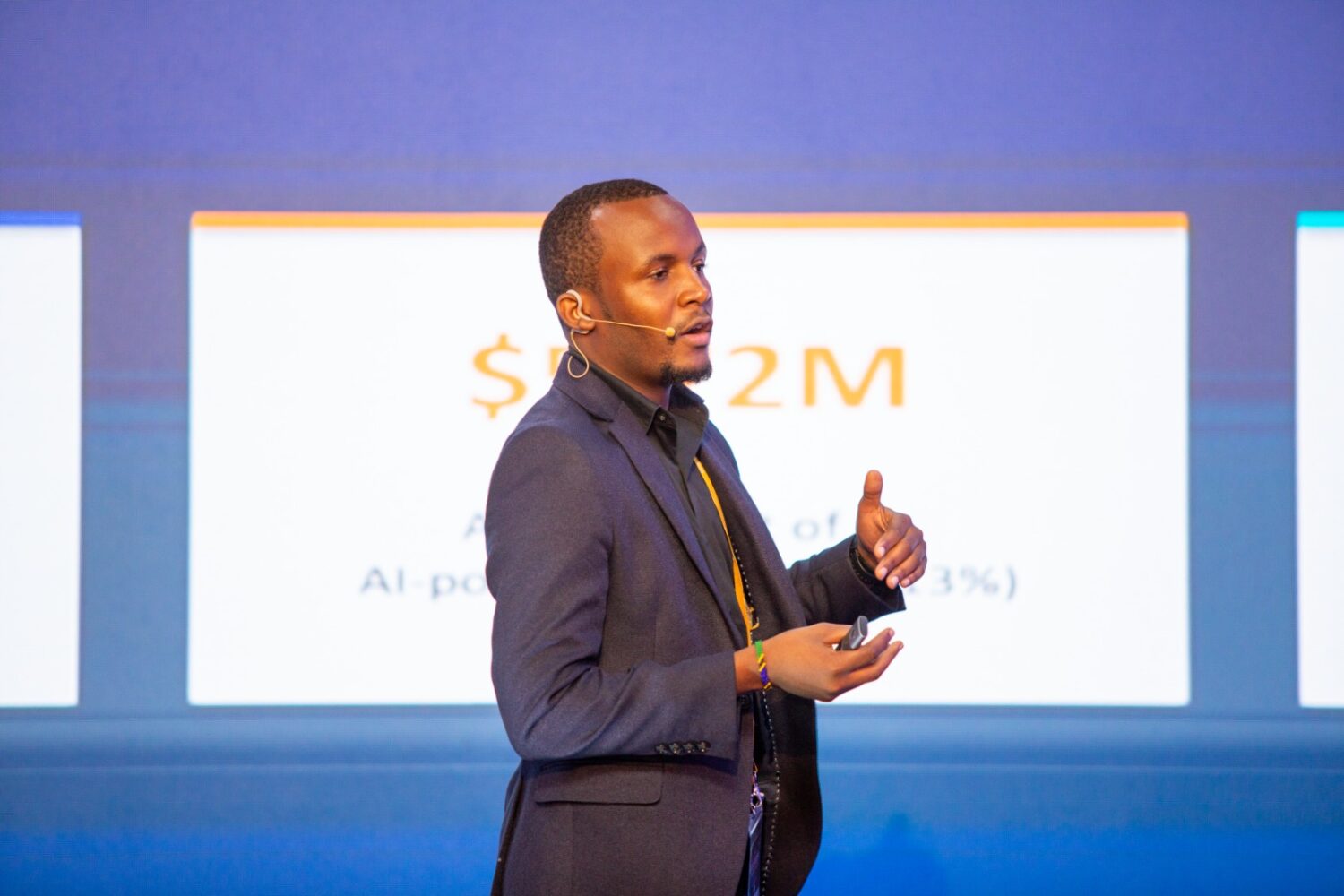
Financial institutions across Africa must focus on business value, cyber resilience and leadership if they are to successfully harness the transformative potential of artificial intelligence (AI), speakers said during the opening day of BFSI Week 2026.
Held from June 17-18 under the theme “Powering Africa’s Financial Transformation,” the event brought together more than 300 decision-makers from banking, SACCOs, insurance, fintech and technology organizations to discuss the future of financial services in an increasingly digital economy.
Opening the conference, Harry Hare, Chairman of CIO Africa by dx5, urged organizations to look beyond the hype surrounding AI and focus on practical business outcomes.
“Technology is not there for technology’s sake. Technology is there to help us solve very specific problems, improve efficiency and create value for customers,” said Hare.
He noted that organizations are facing mounting pressure to adopt AI from boards, customers, competitors and technology vendors, but warned against implementing the technology without a clear understanding of the value it creates.
“Your board is asking what you are doing about AI. Your customers are asking how you are using AI. Your competitors are adopting AI, and vendors are constantly offering AI solutions,” he said.
While acknowledging AI’s transformative potential, Hare emphasized the need for organizations to remain grounded in business realities.
“Let’s ride the hype, but let’s reason reality into what we’re doing in technology so that we don’t lose sight of what technology is supposed to do,” he added.
However, as organizations accelerate AI adoption, they must also prepare for a rapidly evolving cybersecurity landscape, according to Dennis Muriithi, Senior Solutions Engineer at Sophos.
Delivering a keynote address titled “Cyber Crisis Decision Room: A Strategic Leadership Experience,” Muriithi warned that AI is enabling cybercriminals to launch attacks faster and at greater scale than ever before.
“With new technology come new risks, and one of the most constant risks has always been cybersecurity,” he said.
According to Muriithi, phishing attacks have increased by more than 1,200 percent during the generative AI era, while AI-enabled cyberattacks continue to rise globally.
“The number is not going to go down. Whatever we’re experiencing today will get worse,” he warned.
Muriithi noted that AI is increasingly being integrated into every stage of the cyberattack lifecycle, including reconnaissance, credential theft, privilege escalation, lateral movement and ransomware deployment, significantly reducing the time organizations have to detect and respond to incidents.
“In the AI era, we are moving from minutes to seconds of impact,” he said.
He urged organizations to establish clear incident response plans, test backup systems regularly and ensure leadership teams understand their roles during a cyber crisis.
“The question is, what is your escalation chain? Do you have a plan?” Muriithi asked delegates.
The opportunities presented by AI were highlighted by Sarah Muriuki, Group Head – Enabler Systems Support at Equity Bank Kenya Ltd, who argued that Africa has the potential to become a global delivery engine for AI-enabled services.
“Africa is not only a market for AI, we are becoming a delivery engine,” she said.
Muriuki pointed to Africa’s growing business process outsourcing and shared services industry, valued at nearly $20 billion, and noted that the continent already employs approximately 1.1 million people in business processing services while maintaining a significant cost advantage over Europe and North America.
She challenged African organizations to move beyond competing as low-cost outsourcing destinations and instead position themselves as providers of higher-value, AI-enabled services.
“Are we going to just stay as an arbitrage back office, or do we level up and start bringing value to the market through AI-augmented services?” she asked.
According to Muriuki, the answer lies not in technology alone but in leadership and strategic vision.
“That is not a technology question. It is a leadership question,” she said.
The discussions underscored the dual challenge facing financial institutions across Africa: embracing AI to improve efficiency, customer experience and competitiveness while simultaneously managing the risks associated with cybersecurity, governance and responsible deployment.
As BFSI Week continues, delegates are expected to explore how emerging technologies, digital transformation and innovation can help accelerate financial inclusion, strengthen operational resilience and power the next phase of Africa’s financial transformation.