


YouTube is raising the bar for creators seeking to earn money from its platform, while introducing new revenue opportunities tied to subscriptions, shopping and brand deals.
The company said Monday that it will overhaul parts of the YouTube Partner Program from Feb. 1, 2027, marking its first major changes to the program since 2018. The changes come as YouTube tries to direct more money toward creators who consistently generate views and engagement.
The YouTube Partner Program has more than 3 million creators, according to the company. YouTube said it expects to pay creators more in 2027 than it did in 2026.
The biggest change affects Shorts, YouTube’s short-form video product.
Starting Feb. 1, 2027, creators will need at least 10 million qualified Shorts views over a 90-day period to remain eligible for advertising and subscription revenue sharing from Shorts.

Creators who fall below that threshold will not be removed from the Partner Program. They will continue to earn from eligible long-form videos, while Shorts revenue sharing will resume if they again reach 10 million qualified views in 90 days.
The move could put pressure on creators whose businesses depend heavily on viral Shorts, particularly smaller channels that generate large numbers of views but have inconsistent traffic.
YouTube is also promising alternative ways for those creators to make money. The company said it plans incentives tied to YouTube Shopping, brand deals and the ability to start or grow trends on the platform.
Details of those programs will be announced later.
YouTube expands Premium revenue
YouTube is also expanding Premium Lite to every country where YouTube Premium is available.
Premium Lite offers users largely uninterrupted viewing, as well as offline and background playback for most content. YouTube will distribute a portion of subscription revenue to creators based on member watch time and views.
For YouTube Premium, 30% of net subscription revenue is allocated to the creator pool, while Premium Lite allocates 60%. From those pools, creators receive a 55% share for long-form videos and 45% for Shorts.
YouTube said creators can, on average, earn more from a Premium subscriber than from the same user viewing advertisements.
The expansion gives creators another source of income that is less directly dependent on advertising demand.
Higher hurdle for new creators
YouTube is also increasing the requirements for new creators who want access to advertising and Premium revenue sharing.
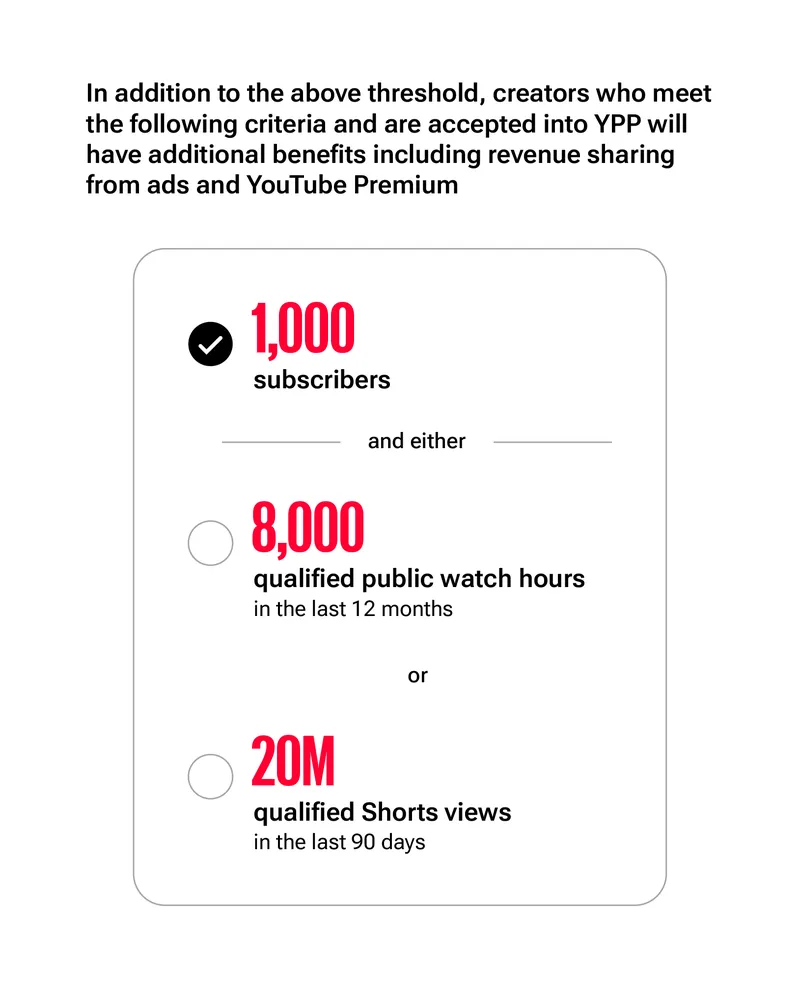
From Feb. 1, 2027, new applicants will need either 8,000 qualified public watch hours during the previous 365 days or 20 million qualified Shorts views during the previous 90 days.
The company said the thresholds for fan-funding and shopping products will remain unchanged. Existing YPP members will not be affected by the new entry requirements.
YouTube said the changes reflect the scale of the platform, which now generates more than 200 billion Shorts views a day and more than 1 billion hours of daily viewing on television. For creators, the message is increasingly clear: YouTube is moving away from a model where sheer view volume is enough to drive monetization.
The platform is putting greater emphasis on sustained engagement, audience loyalty and commercial activity while giving creators more ways to earn beyond advertising. Creators will be able to review and accept the new Partner Program terms in YouTube Studio before the changes take effect on Feb. 1, 2027.