

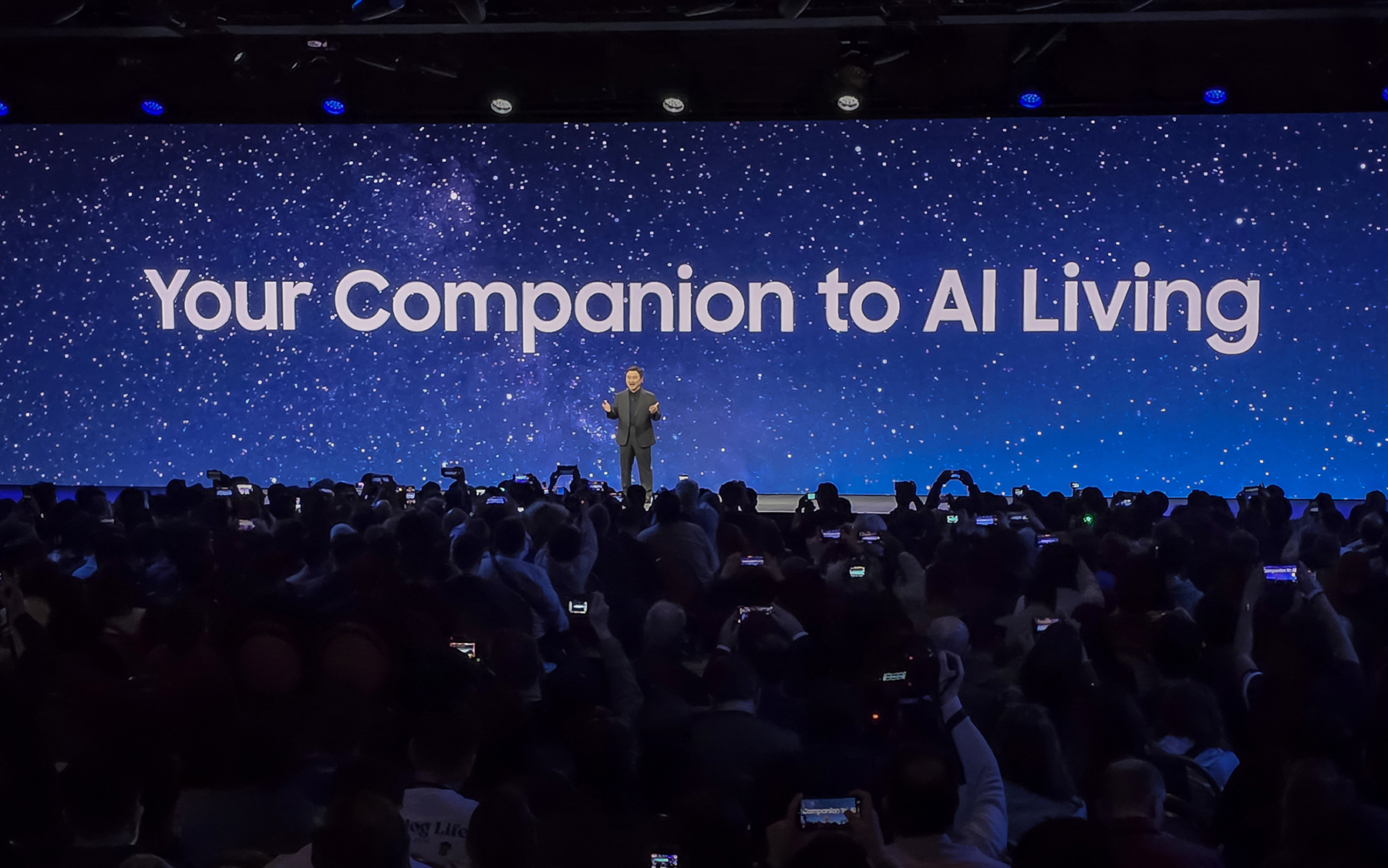
Samsung Electronics on Saturday outlined a strategy to embed artificial intelligence across its consumer electronics lineup, presenting AI as a daily companion rather than a standalone feature, as the South Korean company seeks to deepen user engagement and sustain growth beyond traditional hardware cycles.
At its annual First Look event ahead of CES 2026 in Las Vegas, Samsung executives said the company’s advantage lies in its vast connected ecosystem spanning smartphones, televisions, home appliances and wearables, allowing AI to operate seamlessly across devices.
“Samsung is building a more unified, more personal experience across mobile, displays, home appliances and services,” said TM Roh, chief executive of Samsung’s Device eXperience (DX) division. “By embedding AI across categories, we can deliver more meaningful everyday experiences.”
AI-powered displays and entertainment
Samsung used the event to showcase its most advanced television lineup to date, led by a 130-inch Micro RGB TV that uses microscopic red, green and blue light sources to deliver enhanced colour accuracy and brightness. The display is powered by a new AI engine designed to optimise picture quality scene by scene.
Central to the company’s TV strategy is what it calls Vision AI Companion, an AI system that offers content recommendations, adjusts picture and sound automatically, and integrates with other connected devices in the home. Samsung said the technology will be available across its 2026 TV range, including OLED, Neo QLED and Micro LED models.
The company also said its 2026 TVs will be the first to support HDR10+ ADVANCED, an upgraded version of the high dynamic range format, and will ship with Samsung’s Tizen operating system, backed by seven years of software updates.
Samsung additionally unveiled new Odyssey gaming monitors, including a 6K 3D model, as it targets high-end gamers and content creators.
Smart home and appliances
Samsung executives said AI will play an increasing role in household management, with appliances designed to anticipate user needs rather than respond to commands.
The company said its SmartThings platform now has more than 430 million users globally, providing data that supports personalised services across devices.
Samsung highlighted upgrades to its Family Hub refrigerator, including enhanced food recognition powered by AI and partnerships with Google’s Gemini models. New features include automatic meal suggestions, weekly food usage reports and personalised displays for different family members.
In home care, Samsung introduced updates to its AI-powered laundry systems, garment care devices and robot vacuums, which can detect liquids, navigate more accurately and be controlled using conversational voice commands.
Health and security
Samsung also outlined longer-term plans to expand AI-driven health monitoring through smartphones and wearables, aiming to shift healthcare from reactive treatment to preventive care. The company said connected devices could help detect early signs of chronic illness or cognitive decline and share data with healthcare providers, subject to user consent.
Security remains a core focus, Samsung said, with its Knox and Knox Matrix platforms designed to protect user data across devices and AI training processes.
The Samsung exhibition at CES runs through Jan. 7, as competition intensifies among global technology firms racing to position AI as the next major driver of consumer electronics demand.