



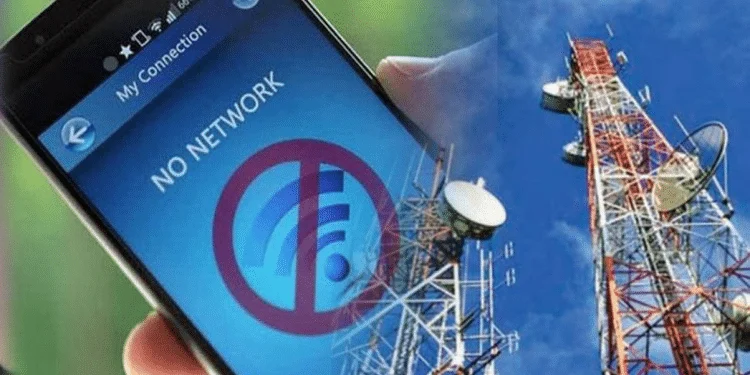
KAMPALA, UGANDA — In a major disruption to the nation’s digital infrastructure, the Uganda Communications Commission (UCC) has issued a formal directive to all service providers to suspend internet access.
The order issued comes just ahead of the high-stakes general election scheduled for tomorrow, January 15, 2026.
Technical Suspension and Scope
According to reports by BBC, the UCC’s technical directive specifies that the suspension of services was to commence at 18:00 local time (15:00 GMT) on Tuesday.
While a specific restoration date has not been provided, the following service impacts have been observed:
-
Mobile Data: Standard users report a total loss of connectivity.
-
WLAN/Fixed Lines: Some large business facilities, including major hotels, reportedly maintain wireless access.
-
Critical Services: Voice calls and basic SMS functionality are expected to remain operational throughout the period.
Justification and Security Protocol
The regulator cited a “strong recommendation” from the Inter-Agency Security Committee, which includes the army and police, as the primary driver for the move.
Furthermore, the UCC justified the intervention as a measure to safeguard national stability.
“This temporary suspension is a precautionary intervention to ensure peace, protect national stability and prevent the misuse of communication platforms during a sensitive national exercise,” the commission stated in its letter to operators.
Moreover, the authority argued that the blackout is necessary to prevent “online misinformation, disinformation [and] electoral fraud… as well as preventing [the] incitement of violence.”
This marks a significant pivot from earlier this month, when the UCC dismissed reports of an impending blackout as “mere rumours,” asserting its role was to “guarantee uninterrupted connectivity nationwide.”
Digital Resilience and Opposition Response
The 2026 election features a rematch between 81-year-old President Yoweri Museveni, who is seeking a seventh term after four decades in power, and 43-year-old Robert Kyagulanyi (popularly known as Bobi Wine).
In response to the digital crackdown, the opposition leader utilized X (formerly Twitter) to share the leaked UCC directive.
Consequently, he urged his supporters to adopt decentralized communication methods.
-
Alternative Tech: Supporters were encouraged to download apps that utilize Bluetooth technology to bypass centralized network requirements.
-
Counter-Measures: However, the UCC has issued a technical warning, stating it possesses the capability to restrict such applications from operating.
Historical Context of Digital Shutdowns
This move echoes the events of the 2021 election, where a similar internet cut lasted for at least a week amid widespread protests.
Essentially, the government remains focused on its campaign message of “Protecting the Gains,” while the opposition mobilizes one of the world’s youngest electorates under the slogan “Protest Vote.”
Reacting to the technological restrictions, Bobi Wine described the architects of the communication suspension as “cowards.”
Continent’s Review on Internet Shutdowns
As of January 2026, internet blackouts and digital repression in Africa have reached critical levels, transitioning from temporary measures to more permanent legislative and technical control.
The year 2025 set a record for shutdowns, with the momentum carrying into early 2026 as several countries face pivotal elections and transitions.
Key Highlights of 2026 Digital Restrictions
Uganda’s Pre-Election Blackout (January 2026): Ahead of the general election scheduled for January 15, 2026, the Uganda Communications Commission (UCC) reportedly issued a directive to suspend internet and mobile money services. Although officials later described specific notices as “fake news,” rights groups have noted an escalating crackdown on VPN users and journalists.
The Rise of “Quiet Repression”: Beyond total blackouts, governments in Kenya(Computer Misuse and Cybercrimes (Amendment) Act, 2025) and Zambia (Cyber Security Act, 2025 (CSA) and Cyber Crimes Act, 2025 (CCA)),have entered 2026 with new cybersecurity laws passed in 2025.
These allow for continuous monitoring and “throttling” of networks, which are harder to challenge legally than a total shutdown.
Uganda: Facebook has remained blocked for five consecutive years (since 2021).
Nigeria: Meta (Facebook/Instagram) faces a potential service shutdown in early 2026 due to unresolved regulatory fines totaling nearly $290 million.
Economic and Human Impact in 2026
| Metric | Estimated Impact (Sub-Saharan Africa) |
| Economic Loss (2025) | $1.11 Billion (Sub-Saharan Africa alone) |
| Duration of Disruptions | Over 24,000 hours of recorded regional downtime in 2025 |
| Top Economic Loser | Tanzania ($889.8 Million lost due to 2025 election-day outages) |
| Users Affected | Approximately 116 million users in the region |
2026 Critical Zones
1. Ethiopia and Sudan: The Permanent Blackouts
Ethiopia remains the country with the most extensive history of blackouts (30 instances since 2016).In 2026, regions in Sudan and eastern DRC continue to face intermittent “conflict-related” shutdowns that cripple humanitarian aid and cross-border remittances.
2. West Africa and Legal Pushback
Following a landmark ruling by the Economic Community of West African States (ECOWAS) Court of Justice in May 2025—which declared Senegal’s previous shutdowns unlawful—governments in the region are facing increased legal scrutiny.
However, Senegal and Zimbabwe have countered by restricting “unlicensed” satellite services like Starlink to maintain control over the digital gateways.