


 announced that it had secured a place in the 2026 Amateur Radio on the International Space Station (ARISS) program.)
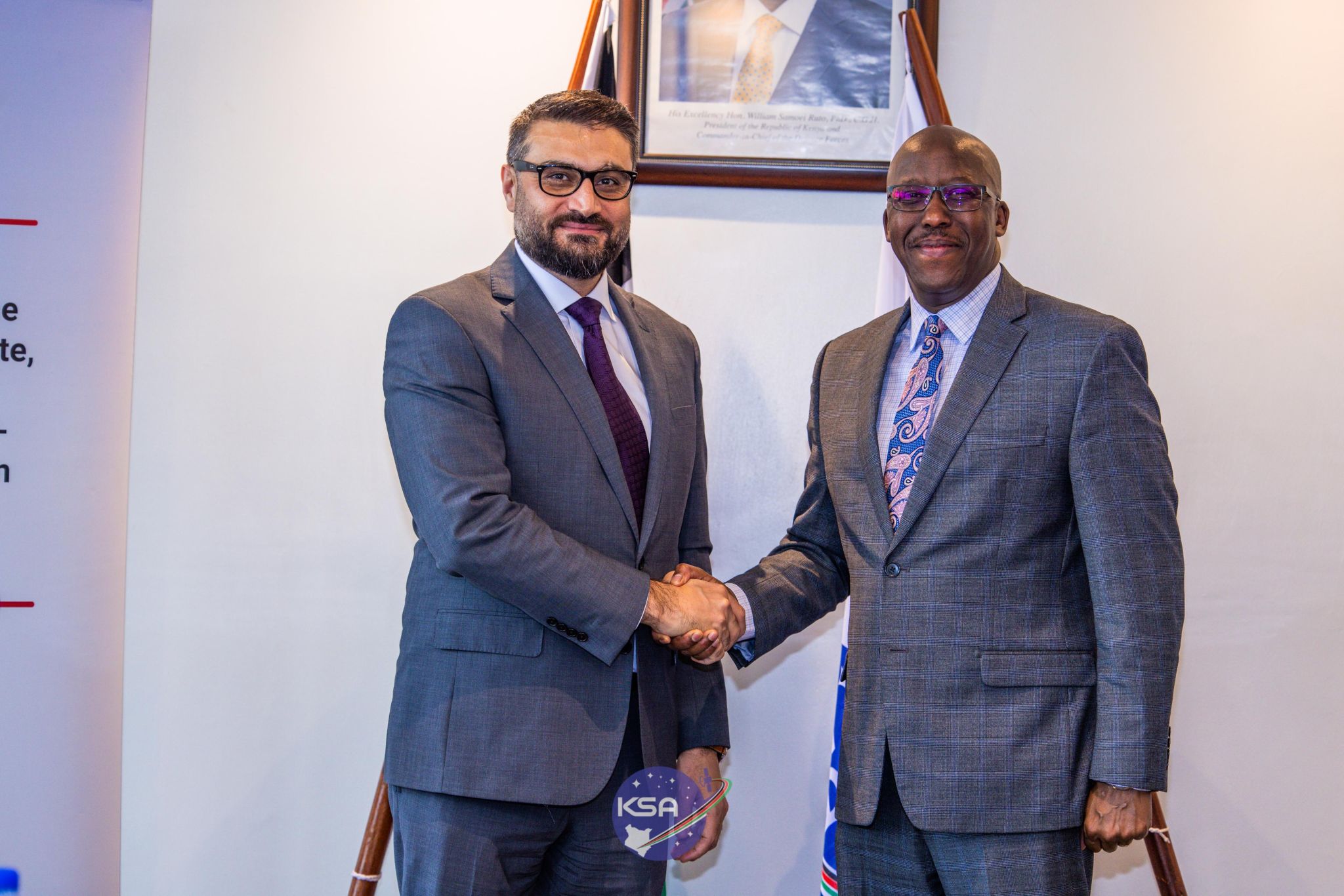
Kenya has been selected to host a prestigious global space program that will allow its citizens to speak directly with astronauts orbiting the Earth, being the first African country.
Today, the Kenya Space Agency (KSA) announced that it had secured a place in the 2026 Amateur Radio on the International Space Station (ARISS) program.
The initiative, which is typically reserved for a small number of elite global institutions, uses amateur radio to connect students and local communities with the International Space Station (ISS).
In regard to this, between July and December 2026, Kenyan students and industry professionals will participate in live, coordinated communication sessions with astronauts as they fly overhead at approximately 28,000 km/h.
“This milestone brings space closer to the Kenyan people and empowers the next generation of explorers, researchers, and innovators,” the KSA said in a statement. The agency confirmed it will soon issue an “open call” for individuals and institutions wishing to take part in the live broadcasts.
To ensure the technical success of the mission, the KSA will collaborate with the Pan-African Citizen Science e-Laboratory (PACS eLab) and Agency Liaison Harold Safary.
Expanding space ambitions
The selection comes at a time of rapid growth for Kenya’s space sector. Following the successful launch of the country’s first Earth observation satellite, Taifa-1, in April 2023, the government is now looking to establish more permanent infrastructure.
In December 2025, the KSA began a search for experts to guide the construction of a national spaceport. If successful, this would be the country’s first active launch site since the historic Luigi Broglio Space Centre in Malindi ceased rocket launches in 1988.
The equatorial advantage
Kenya’s geographical position on the equator makes it a prime location for the multi-billion dollar space industry.
Because the Earth’s rotational speed is greatest at the equator, rockets launched from this region require significantly less fuel to reach orbit. Experts estimate this provides a 10-15% payload capacity advantage over launch sites at higher latitudes, such as Cape Canaveral in the United States.
The ISS itself is a massive scientific collaboration involving 15 countries. Since its first crewed mission in 1998, it has hosted more than 250 astronauts and cosmonauts, supported by mission control centers in Houston, Moscow, and various hubs in Europe and Asia.
By hosting ARISS in 2026, Kenya hopes to inspire a new generation to pursue careers in Science, Technology, Engineering, and Mathematics (STEM), cementing its role as a leader in Africa’s emerging space ecosystem.