



The Government of Rwanda has signed a historic expansion agreement with Zipline, a move that will see the country become the first in the world to achieve nationwide autonomous logistics coverage.
This landmark deal, announced in Kigali on 05 February 2026, marks the first major milestone under a $150 million pay-for-performance award granted to Zipline by the U.S. Department of State.
While Rwanda was already a pioneer as the first country to launch Zipline’s service in 2016, this new phase will introduce Africa’s first urban drone delivery network and a dedicated autonomous delivery testing centre.
Consequently, the expansion reinforces Rwanda’s position as a global leader in robotics and artificial intelligence, aimed at providing life-saving healthcare to millions of citizens.
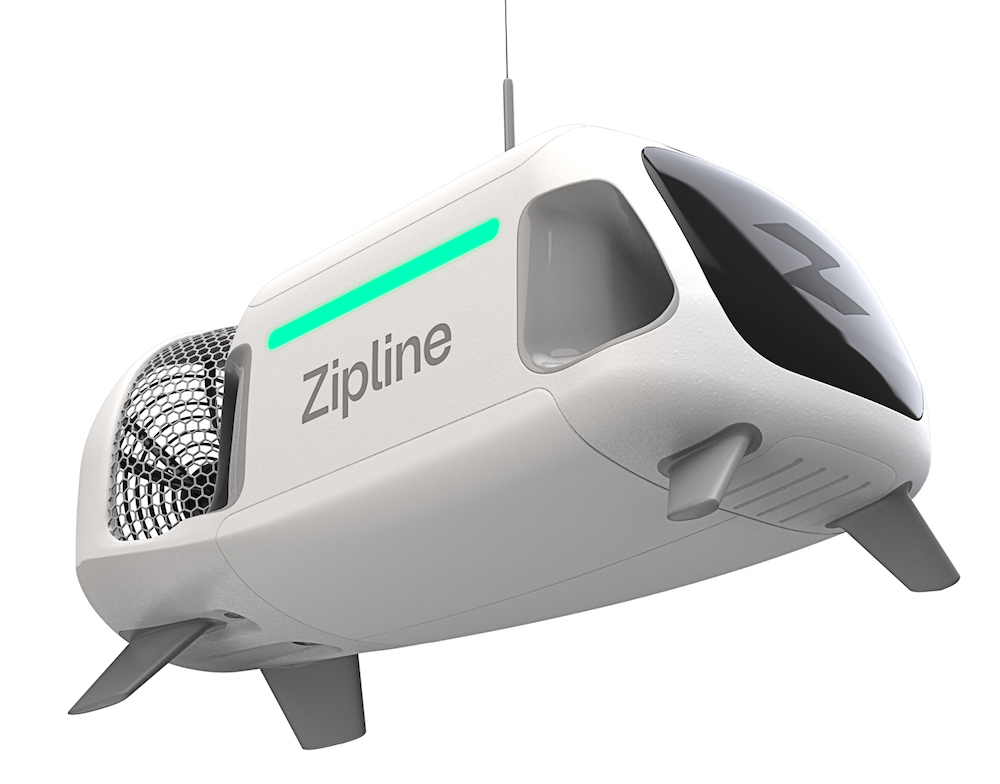
A central component of this agreement is the introduction of Zipline’s “Platform 2” (P2), an urban delivery system designed for dense environments.
Rwanda will be the first nation in Africa to deploy this technology, which allows for ultra-fast and precise deliveries in cities like Kigali, where approximately 40% of the country’s healthcare demand is currently concentrated.
While the P2 system is already utilised in the United States to deliver 100,000 retail and food items with “dinner plate accuracy,” its deployment in the country focuses on streamlining essential medical supply chains.
Speaking on the partnership, Paula Ingabire, Minister of ICT and Innovation, noted that the two entities have worked together for years to harness technology for the public good.
“We have witnessed the extraordinary impact of drone delivery — saving time, saving money, and saving lives,” she said.
Minister Ingabire further explained that the expansion into urban delivery will bring these benefits to even more communities, while expressing gratitude to the U.S. Government for supporting the foundation of Africa’s future in innovation.
Connecting remote regions and the DRC border
In addition to urban growth, Rwanda will establish a new long-range distribution centre in the Karongi District.
This third hub will complement existing facilities in Muhanga and Kayonza, specifically extending the network’s reach to districts beyond the Nyungwe Forest and those bordering the Democratic Republic of Congo (DRC).
Notably, the new hub is situated on the border as a symbol of peace between the two nations.
Within Rwanda, the Karongi facility is expected to serve approximately 200 health posts and 60 major health facilities, reaching more than 2.9 million people.
As a result of this nationwide scale-up, Zipline’s network will eventually cover over 11 million people and support approximately 350 local jobs.
Pierre Kayitana, Country Director for Zipline Rwanda, remarked that the addition of the Karongi hub and the upcoming Kigali service would create a “single, seamless system that serves all Rwandans equally.”
He emphasised that Rwanda has proven autonomous logistics to be more reliable and less wasteful than traditional systems.
A global hub for robotics research
Beyond logistics, the agreement includes the establishment of a new AI and robotics testing facility, which will serve as Zipline’s first overseas research and development hub.
This facility is expected to play a critical role in testing aircraft performance, new safety systems, and next-generation software.
By developing local talent and refining technology in various climates, the centre ensures that innovation intended for the world is also built by the world.
Caitlin Burton, CEO of Zipline Africa, described the move as a “global first,” attributing the success to Rwanda’s leadership and the U.S. Government’s backing.
“In 2016, Rwanda made a decision that changed health access forever. Rwanda did not ask whether it had been done before. It asked whether it could work and whether it could save lives,” Ms. Burton said.
She added that this leadership is why Zipline is now investing beyond its contract into research and high-skill jobs within the country.
To date, the network has already contributed to a 51% reduction in maternal deaths by providing on-demand access to blood and vaccines.
All operational data will continue to integrate into Rwanda’s national health systems, supporting the Africa CDC’s vision for equitable, technology-driven emergency responses.