

, has committed $5 million in equity to Arc Ride.)
The World Bank’s private sector arm, the International Finance Corporation (IFC), has committed $5 million in equity to Arc Ride, a move set to accelerate the rollout of electric motorcycles across East Africa.
This significant investment serves as the anchor for the Nairobi-based startup’s Series A funding round.
It marks a pivotal moment for the continent’s transport sector, signaling robust institutional confidence in the shift away from fossil fuels toward sustainable, electric alternatives.
At the core of Arc Ride’s operational success is its innovative “Battery-as-a-Service” (BaaS) framework.
By decoupling the ownership of the vehicle from its most expensive component, the battery, the company has managed to lower the initial purchase price of electric motorcycles to a level that competes directly with traditional internal combustion engine (ICE) bikes.
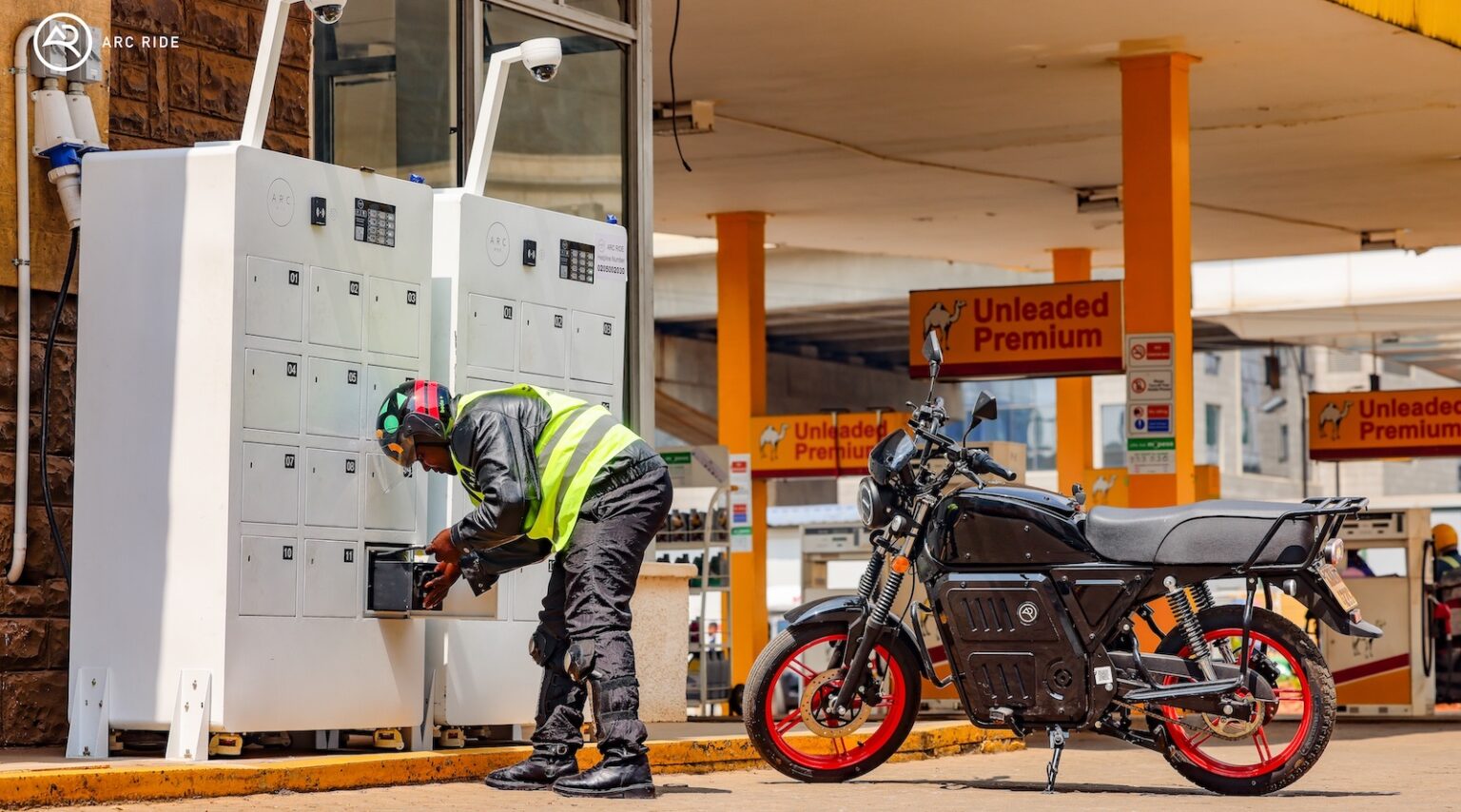
Under this “swap economy” model, riders lease batteries and utilize a network of automated cabinets located at petrol stations and warehouses.
The process is designed for speed; a depleted battery can be exchanged for a fully charged one in under 60 seconds, effectively eliminating “range anxiety” for commercial operators.
Strategic deployment of capital
The $5 million equity injection is intended to help Arc Ride transition from a local pioneer into a regional leader.
Consequently, the capital will be focused on three primary objectives: First, network Density by expanding the footprint of automated swapping stations within Kenya to reduce wait times in urban areas.
Second, regional Growth by facilitating entry into new high-growth markets across East Africa, targeting major commuter hubs.
Lastly, research and development by upgrading proprietary infrastructure to ensure all technology meets internationally compliant standards.
For the “boda boda” (motorcycle taxi) sector, the transition to electric power offers a significant financial lifeline.
It is estimated that this model can slash daily fuel and maintenance costs by up to 40%, providing a meaningful boost to the disposable income of low-income gig workers.
Furthermore, the environmental benefits are substantial. Each electric motorcycle deployed is expected to save approximately 2 tonnes of carbon dioxide (CO2) emissions annually.
This aligns with Kenya’s aggressive national e-mobility policy, which aims to reduce the nation’s reliance on volatile and expensive fossil fuel imports.
The IFC’s equity stake follows a series of successful capital raises throughout 2025.
In early 2025, Arc Ride secured a $5 million debt facility from British International Investment (BII), followed by a $10 million senior secured loan from Mirova International in September 2025.
Beyond the financial boost, the IFC is expected to provide “non-financial additionality” by helping the company elevate its Environmental, Social, and Governance (ESG) standards.
This role is likely to create a “crowding-in” effect, making the venture more attractive to future private investors.
As Arc Ride scales its operations, it is not merely electrifying the streets of Nairobi; it is providing a scalable blueprint for the future of the African commuter economy.