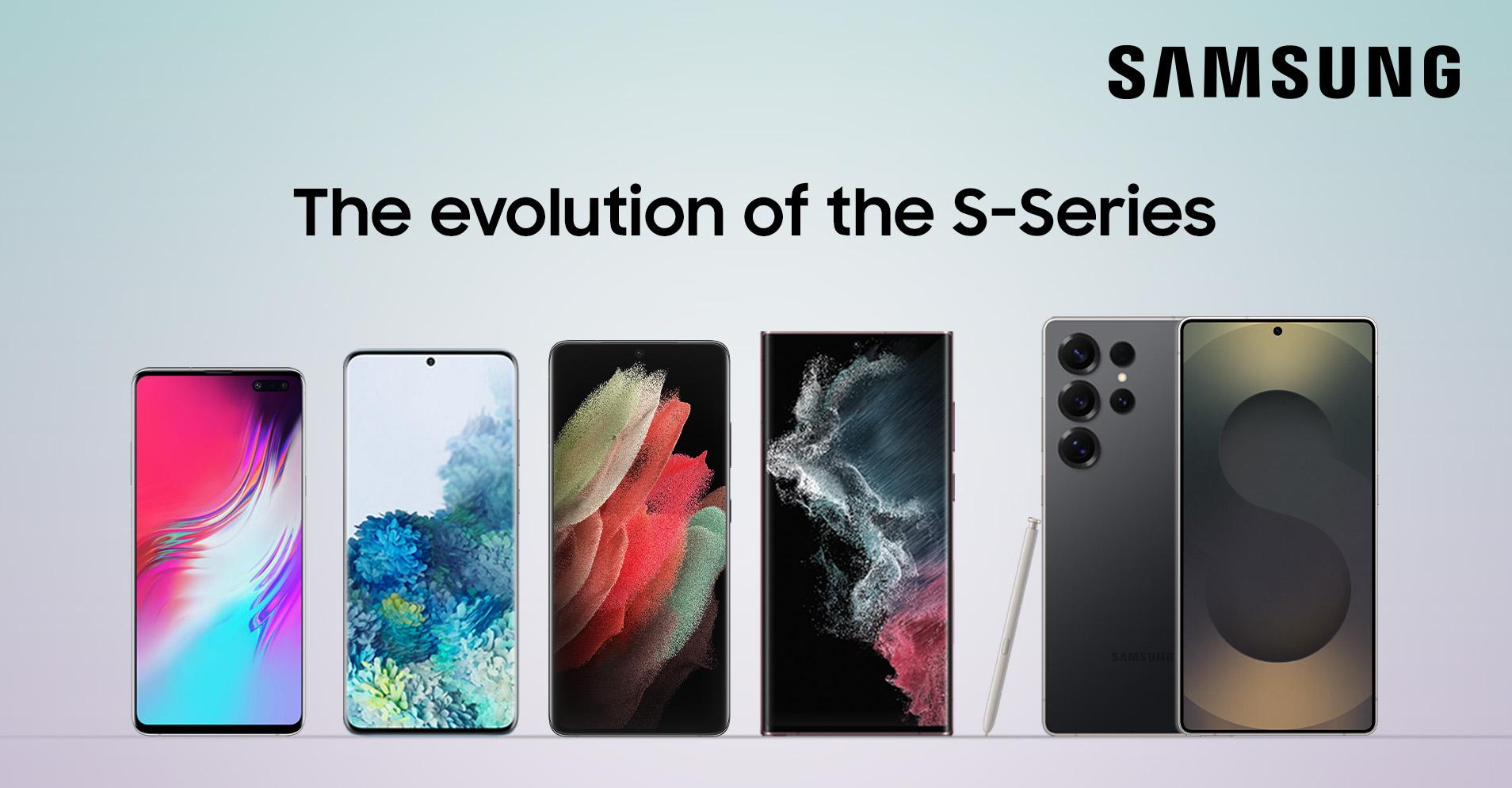
It’s hard to believe the Samsung Galaxy S series has now been with us for 16 years, having first launched in 2010. Back then, smartphones felt almost sculptural. Smooth, shiny and curved like polished river stones, early Galaxy S devices were designed to look elegant and futuristic — and they did.
Fast forward to today, and the phones sitting on store shelves tell a very different story. Over the past decade and a half, Samsung’s flagship line has evolved its design language, camera technology and — more recently — AI integration, not randomly, but in response to real-world needs: larger camera sensors, better photography in any light, improved durability, easier handling and smarter everyday use.
The Early Years: Curves, Plastic and the Birth of Galaxy Photography (2010–2014)
The journey began with the Samsung Galaxy S. It featured a simple, rounded plastic body that felt light and grippy, paired with a vibrant Super AMOLED display that instantly stood out. Its 5MP rear camera was modest, but it marked Samsung’s serious entry into smartphone photography.
Samsung refined the formula quickly. The Samsung Galaxy S II arrived slimmer and more comfortable, with an upgraded 8MP camera and Full HD video recording. By the time the Samsung Galaxy S III and Samsung Galaxy S4 launched, the Galaxy S had adopted organic, pebble-like shapes, glossy finishes and larger displays.
Camera capabilities surged as well — reaching 13MP on the S4 and introducing 4K video recording on the Samsung Galaxy S5, alongside practical features like water resistance and removable backs.
Glass, Metal and the Rise of Curved Displays (2015–2016)
A dramatic shift came with the Samsung Galaxy S6 and Samsung Galaxy S6 Edge. Samsung abandoned plastic in favor of glass and metal, instantly elevating the premium feel. The Edge variant introduced curved displays that flowed into the sides of the phone, creating a seamless, immersive look.
Cameras jumped to 16MP with optical image stabilization, delivering sharper photos. The Samsung Galaxy S7 and Samsung Galaxy S7 Edge perfected this era, introducing dual-pixel autofocus that dramatically improved focus speed and low-light photography.
Infinity Displays and Luxury Aesthetics (2017–2019)
The curved design reached its peak with the Samsung Galaxy S8 and Samsung Galaxy S9, showcasing near bezel-less Infinity Displays that wrapped elegantly around the sides. By the Samsung Galaxy S10, Samsung had introduced hole-punch cameras and shimmering prismatic glass backs that shifted colors in the light.
Camera systems evolved rapidly — from dual lenses on the S9+ to ultra-wide cameras and advanced pro controls on the S10. These devices felt like luxury accessories: stunning, elegant and unmistakably premium, though often slippery and prone to fingerprints.
Function Over Form: Camera Bumps and Matte Finishes (2020–2021)
As camera hardware grew more complex, design priorities shifted. The Samsung Galaxy S20 introduced a bold rectangular camera module — a visual break from the smooth backs of previous generations.
The Samsung Galaxy S21 refined this idea, blending the camera housing into the frame itself. Matte finishes replaced glossy glass, improving grip and durability, while camera performance leapt forward with higher-resolution sensors and improved zoom.
Flat Screens, Boxy Frames and Mature Design (2022–2024)
The Samsung Galaxy S22 marked a decisive turn toward flat displays and boxy aluminum frames. These designs proved easier to hold, simpler to protect and less prone to accidental touches. Individual metal camera rings added a clean, premium aesthetic.
Samsung refined this approach with the Samsung Galaxy S23, improving materials, slimming bezels and fully integrating the S Pen into the Ultra model. The Samsung Galaxy S24 pushed things further, featuring uniform bezels, brighter displays and titanium construction on the Ultra for strength and weight reduction, alongside more natural color processing in photography.
The Galaxy S25 Era: Thoughtful Refinement (2025)
Samsung continued the evolution with the Samsung Galaxy S25 series. Rather than reinventing the design, the company focused on refinement. Flat displays remained, while the Ultra gained subtly rounded corners for comfort. The S25 and S25+ became thinner and lighter without sacrificing durability.
Camera upgrades stood out. The Ultra introduced a 50MP ultra-wide camera, replacing the long-standing 12MP sensor, while retaining the 200MP main camera. Enhanced Nightography and improved image processing delivered sharper detail, richer colors and more consistent results across lighting conditions.
Sixteen Years Later: A Tool Built for Everyday Life
These changes didn’t happen by accident. Larger sensors demanded sturdier frames. Flat screens reduced usability frustrations. Matte finishes improved grip. As smartphones became essential tools rather than fashion statements, Samsung leaned into function, durability and user feedback.
The result is a Galaxy S lineup that feels unified, capable and purpose-built for daily life. From a humble 5MP shooter in 2010 to today’s AI-powered, titanium-clad devices, the Galaxy S series has matured into one of the most influential smartphone lines in history.
And if the past 16 years are anything to go by, the next chapter is already being written — quietly preparing to shift expectations once again.