



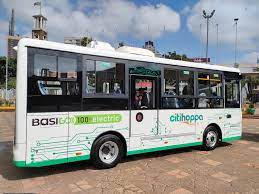
The Kenyan electric vehicle pioneer, BasiGo is venturing into the world of scheduled transit, launching a pilot program designed to lure Nairobi’s middle class away from private cars and into battery-powered buses.
By integrating mid-sized electric buses into the capital’s existing “matatu” cooperative networks, the startup is attempting to formalize a transit market long defined by its fragmentation.
The service offers fixed-route, non-stop connections between residential estates and key commercial districts such as Westlands and Upper Hill, directly addressing the predictability gap that often forces professionals to drive themselves.
Unlike traditional public service vehicle operations, which often rely on guesswork and touting, BasiGo’s approach is rooted in digital insights.
Moses Nderitu, BasiGo’s Kenyan managing director, explained: “The model is built on data. We collect and analyse customer demand to determine which routes make sense for operators, and with those insights, operators deploy buses on structured schedules.”
To facilitate this, the company uses its booking platform, Jani, to aggregate demand and pre-sell seats.
Currently, commuters traveling from Nyayo Estate to Westlands via the Nairobi Expressway pay KES 200 ($1.55), while the route from Mwiki to Upper Hill is priced at KES 150 ($1.16).
Although these fares are a premium compared to the KES 80–120 ($0.62–$0.93) charged by standard diesel matatus, the company argues that the direct nature of the service reclaimed time for the 90% of riders who are corporate employees.
This move into mass transit inevitably draws comparisons to Swvl, the Egyptian startup that exited the Nairobi market in 2022.
However, while Swvl attempted to build a parallel fleet, BasiGo is layering its technology onto existing Saccos—the transport cooperative societies that already dominate the city’s roads.
Under this financial architecture, local operators retain 75% of the revenue after expenses, while BasiGo takes a 20% share.
Furthermore, the service is betting on high-end amenities to change public perception of mass transit.
Features such as:
-
Quiet, vibration-free cabins to provide a mobile office environment.
-
Onboard charging ports for professional convenience.
-
Digital payments, with 80% of transactions currently made via M-PESA till numbers.
Despite its limited scale, the pilot appears to have found its footing. The three-bus pilot currently serves approximately 300 unique weekly riders and maintains a robust average occupancy rate of 80%.
According to BasiGo, these direct routes can shave as much as 40 minutes off a one-way commute, providing a compelling alternative to ride-hailing giants like Uber and Bolt.
Looking ahead, the startup has expressed ambitions to add 10 more buses over the next 12 to 24 months.
Nevertheless, the speed of this expansion remains contingent on vehicle delivery timelines and the continued rollout of essential charging infrastructure across the city.