


 prepares to deploy a network of 1,000 high-tech traffic cameras across the country.)
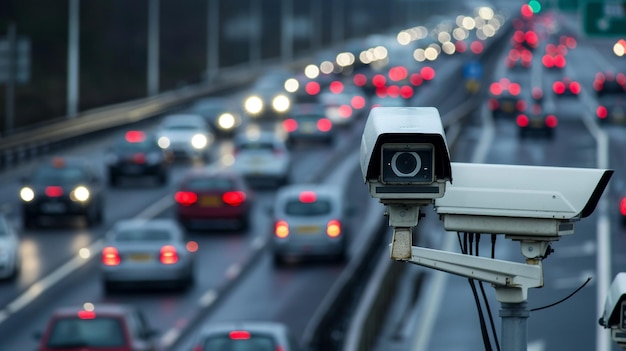
Motorists in Kenya will soon face instant electronic fines as the National Transport and Safety Authority (NTSA) prepares to deploy a network of 1,000 high-tech traffic cameras across the country.
The ambitious rollout is designed to track traffic offences in real time and link them directly to “smart” driving licences.
By automating enforcement, the NTSA stated it aims to modernise the country’s road safety systems and eliminate the human interference that has long been associated with roadside corruption.
The new surveillance network will consist of 700 fixed cameras stationed along major highways and high-risk corridors.
Furthermore, these will be supported by 300 mobile units deployed to known accident hotspots and speeding zones.
Each device is engineered to capture violations, such as speeding, failing to wear seat belts, or using a mobile phone, and relay the data instantly to the NTSA.
Consequently, the offence is automatically attached to the driver’s digital profile, triggering an immediate penalty.
This modernisation programme is being delivered through a 21-year public-private partnership (PPP) involving KCB Bank Kenya and Pesa Print.
Approved by the Cabinet in December, the consortium is expected to invest Sh42 billion over the first two to three years to finance and maintain the infrastructure.
Under the new system, motorists will be able to settle their fines seamlessly via: Mobile money services (such as M-Pesa), USSD codes and Direct banking channels.
The NTSA has defended the move as a necessary response to a deteriorating safety record.
On Tuesday, the authority released a statement noting that Kenya’s roads are currently defined by “high levels of road fatalities, road indiscipline, poor driver licensing systems and weak enforcement.”
The statistics provided by the NTSA highlight the scale of the crisis: where 5,100 lives were lost in road accidents in 2024.
Comsequently, Sh450 billion is the estimated annual economic burden of these crashes, including medical costs and lost productivity.
NTSA noted that 1.3 million drivers currently hold smart licences, out of an estimated 5 million motorists nationwide.
In addition to the cameras, the project aims to accelerate the adoption of polycarbonate smart licences, which have seen a sluggish uptake since their introduction in March 2017.
Despite a target of five million cards, the government-managed programme saw a 14.38 per cent shortfall in the financial year ending June 2025, printing only 342,492 licences.
To rectify this, the new partnership will establish 102 enrolment centres and deploy 392 kits to ensure a processing time of 24–48 hours.
Drivers seeking new or replacement licences will be required to pay Sh3,000.
Ultimately, the NTSA believes this shift from reactive policing to proactive digital monitoring, complete with a merit and demerit point system, will fundamentally alter driver behaviour.
As the system goes live, the era of officer-led enforcement and manual paper licences appears to be drawing to a close.