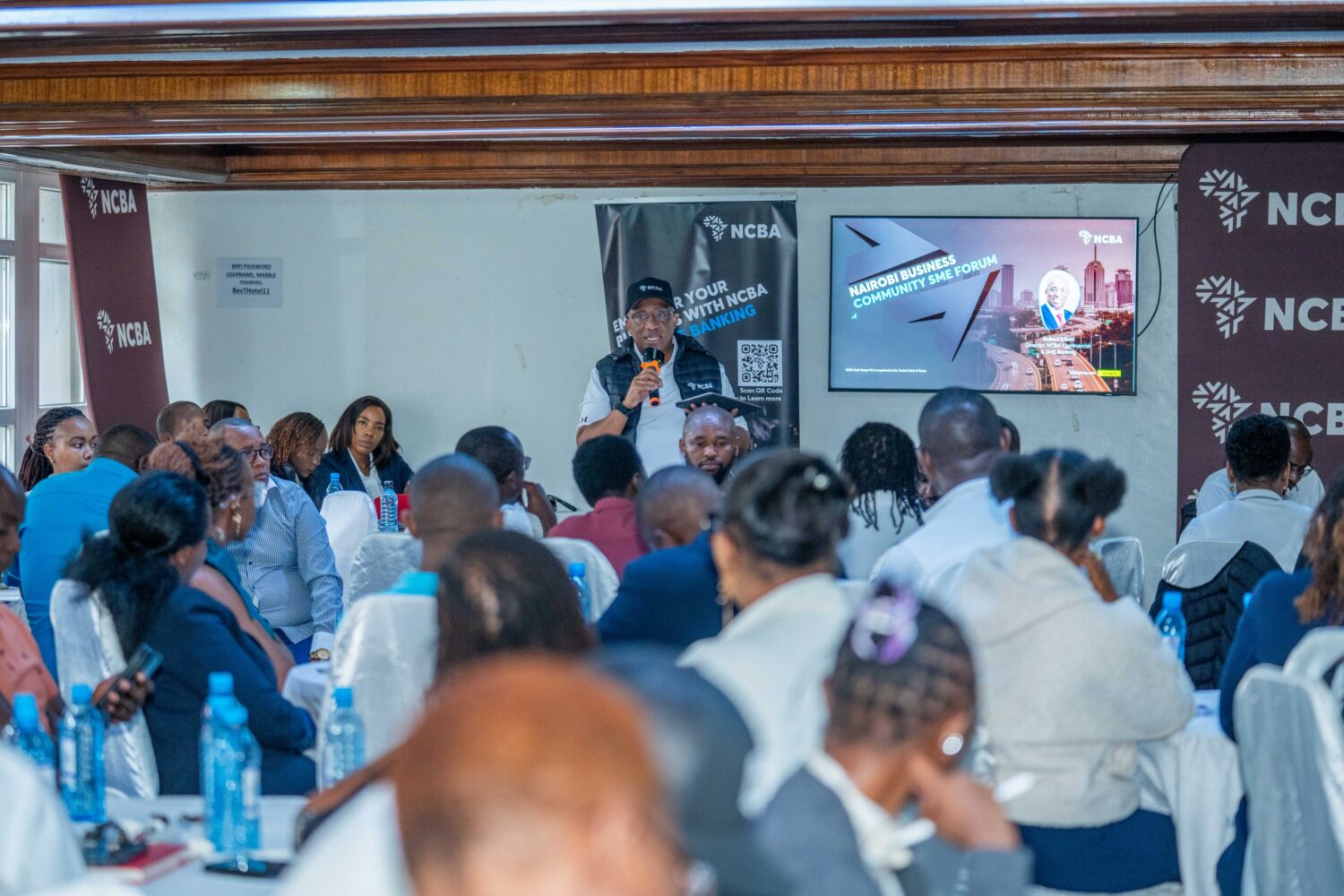
[ez-toc]NCBA Bank hosted more than 100 small and medium entrepreners (SMEs) from Nairobi’s most active commercial hubs for a dedicated financial advisory session, as lenders look to bridge the gap between informal trading and modern banking.
The forum, held on February 27, 2026, targeted traders from sectors traditionally driven by cash, including the Gikomba second-hand clothing market, Nyamakima cereals hub, and the Kamukunji electronics district.
Business owners from the Kirinyaga Road auto spares and Sheikh Karume areas also attended the engagement, which was designed to bolster business resilience in an increasingly volatile economic climate.
While these markets remain central to the Kenyan capital’s economy, they are often described as “highly transactional,” where cash remains king. Consequently, many traders struggle to scale their operations due to a lack of formal financial structures.
To address this, NCBA experts provided guidance on a range of sophisticated services.
These included: Asset finance and leasing: helping traders upgrade equipment and delivery fleets.
Second, trade finance: assisting with the complexities of importing goods.
Third, cash management: introducing digital tools to track high-volume daily transactions.
Lastly, insurance: offering a safety net against common market risks like fire or theft.
This initiative follows a broader trend among Kenyan banks to move beyond simple lending toward a more holistic approach.
Speaking at the event, Robert Kiboti, NCBA Group Director for CSME Banking, reaffirmed the bank’s strategy is now focused on “ecosystem-based solutions.”
Mr Kiboti emphasized that the goal is to provide more than just credit.
He stated: “NCBA Bank has convened over 100 Small and Medium Enterprise traders… for a financial literacy and advisory engagement aimed at strengthening business resilience and deepening access to tailored financial solutions.”
He further noted that the bank remains committed to “equipping SMEs with knowledge and ecosystem-based solutions to enable informed decisions and sustainable scaling.”
The timing of the forum is significant. As the Kenyan economy faces pressure from inflation and a shifting tax landscape, the banking sector is under pressure to ensure its SME clients are not just borrowing, but surviving.
Furthermore, by convening these traders within their own communities, the bank noted it is attempting to position itself as a “primary financial partner,” moving away from the purely transactional relationship that has historically defined the sector.