



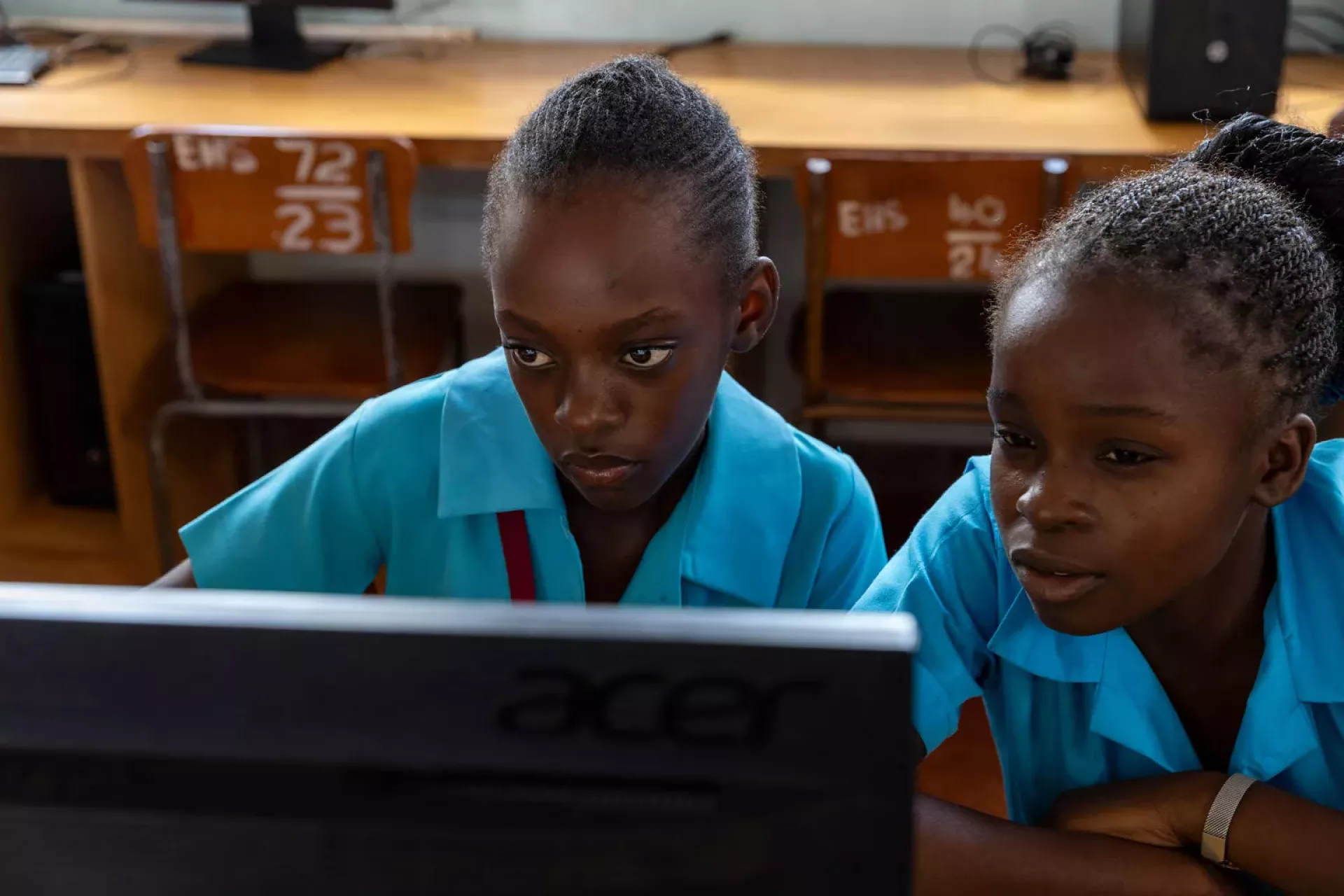
UNICEF plans to provide high-speed internet to as many as 500,000 schools and essential public facilities across Africa, the U.N. children’s agency said on Tuesday, in a push to narrow the continent’s digital divide.
The initiative will pool demand from 54 African countries under a single procurement framework, replacing fragmented national contracts with a “group purchasing” model designed to attract large-scale investment from internet service providers.
UNICEF said the programme will prioritise schools and communities in rural and low-income areas, where limited connectivity has restricted access to digital education and economic opportunity. About 2.6 billion people worldwide remain offline, the agency said.
The plan draws on UNICEF’s experience managing large procurement programmes, including its multibillion-dollar annual vaccine purchases, to give telecoms providers greater market visibility and longer-term revenue certainty.
The rollout will begin with a request for expressions of interest, open until March 27, 2026, inviting companies to outline their ability to deliver terrestrial, wireless or satellite connectivity. A competitive tender is expected in the second quarter of 2026.
“Connectivity is no longer optional; it is foundational,” said Kaan Çentintürk, UNICEF’s chief information officer. He said suppliers would be required to provide fully managed services, including reliable network uptime, power continuity in areas with unstable electricity supply and built-in cybersecurity safeguards for children.
UNICEF will act as the main procurement agent for participating governments, working with the World Bank, Smart Africa and the United Nations Economic Commission for Africa to align financing and implementation.
By treating Africa as a single market, UNICEF said it aims to ensure digital tools, including artificial intelligence, are accessible to children across the continent and that the infrastructure remains sustainable over the long term.