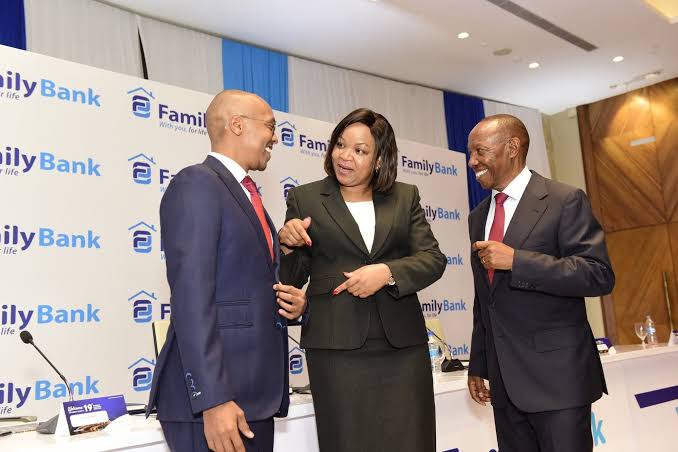
Family Bank Group has reported a 68% increase in nine-month net profit to KSh 6 billion, driven by higher interest income and expanding lending as the Kenyan lender strengthened its balance sheet following its Nairobi Securities Exchange listing.
Profit after tax rose from KSh 3.6 billion a year earlier, while total operating income climbed 26% to KSh 18.6 billion in the nine months through September, according to results released Tuesday.
Net interest income surged 37%, reflecting growth in interest-earning assets, while non-interest income stood at KSh 3.6 billion.
Total assets expanded 22% to KSh 247.5 billion, with the net loan book growing 14% to KSh 118.2 billion.
The lender disbursed more than KSh 91 billion to private-sector borrowers during the period, with over 70% directed toward micro, small and medium-sized enterprises and consumer banking.
Customer deposits increased 24% to KSh 182.3 billion from KSh 146.8 billion a year earlier, outpacing loan growth and strengthening the bank’s funding position.
Operating expenses rose 11% to KSh 11.4 billion, considerably slower than revenue growth, indicating improved cost efficiency. However, loan loss provisions increased 27% to KSh 1.7 billion as the bank built additional buffers against potential credit defaults.
Shareholders’ funds climbed 29% to KSh 36.4 billion, while the liquidity ratio stood at 62%, above the regulatory minimum.
“These results reflect the strength and clarity of our strategy as well as the confidence our customers continue to place in us,” Chief Executive Officer Nancy Njau said.
She said the bank’s NSE listing marked a new phase focused on transparency, accountability and long-term shareholder value.
Family Bank, which serves more than 1.4 million customers through 98 branches and over 5,000 agents, is investing in digital banking and distribution to expand its retail, SME and commercial lending businesses.
The results point to stronger earnings capacity, with revenue growing faster than costs and deposits providing additional lending headroom. Sustaining that momentum will depend on the bank’s ability to expand credit while containing loan losses as it competes with Kenya’s larger lenders.