

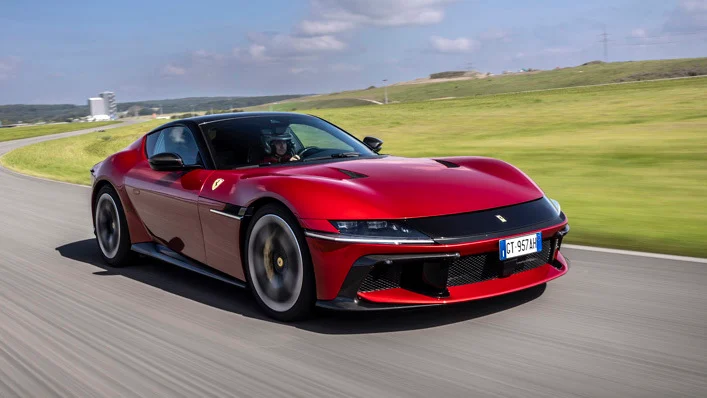
Italian cars are known not only for their striking design and performance, but also for their ability to integrate history with innovation. From the track-ready builds of Ferrari to the electric charm of the Fiat 500e, Italian manufacturers continue to preserve their unique brand identities while incorporating cutting-edge technologies.
This careful balance of legacy and progress is what makes Italian cars distinct. Whether producing exotic supercars or accessible urban vehicles, these marques focus on maintaining core values while evolving with the demands of modern motoring.
Iconic Design Informed by Modern Engineering
Italy’s design heritage plays a central role in the appeal of its cars. Ferrari and Lamborghini retain strong visual links to past models, yet they refine those forms using contemporary tools like computational fluid dynamics (CFD) and active aerodynamics. This ensures that performance is enhanced without sacrificing the essence of the brand.
Pagani continues this philosophy, using handcrafted carbon fibre structures shaped by modern simulation techniques. Even the Fiat 500e, though compact and designed for efficiency, retains the unmistakable silhouette of the original Cinquecento while adopting a fully electric drivetrain. The result is a family of vehicles that look familiar but operate at the forefront of automotive technology.
Traditional Craftsmanship with Digital Functionality
Interiors across Italian marques continue to prioritise craftsmanship, using materials like stitched leather, brushed metal, and carbon fibre. However, these elements are now combined with modern features such as touchscreen infotainment, digital gauge clusters, and adaptive driving modes.
Ferrari incorporates digital controls directly onto the steering wheel, influenced by its Formula 1 heritage. Lamborghini offers fully digital instrument displays while maintaining physical switchgear for key functions. Even Pagani’s analogue-style cockpits are supported by modern ECUs and real-time vehicle monitoring systems.
This approach ensures that technology complements rather than dominates the driving experience, allowing the driver to feel connected to both the car’s mechanics and its digital systems.
Mechanical Purity Enhanced by Electronic Systems
Traditionally, Italian performance cars have been celebrated for their mechanical engagement—responsive steering, manual gearboxes, and high-revving engines. While many of these elements remain, they now work in concert with modern systems designed to improve control, safety, and efficiency.
For example, Ferrari integrates hybrid systems that deliver more power and faster response, while preserving the dynamic feel expected by drivers. Maserati’s MC20 uses F1-derived engine technology supported by electronic controls that fine-tune its performance in real time.
Fiat and Alfa Romeo apply this approach at a more accessible level. The Fiat 500e blends electric propulsion with the original’s compact, agile character, while the Alfa Romeo Giulia Quadrifoglio pairs traditional rear-wheel dynamics with advanced systems like torque vectoring and brake-by-wire. To maintain this blend in everyday ownership, specialist workshops such as the Automoda Alfa Romeo and Fiat Service Centre provide the technical expertise to service these electronically enhanced systems while respecting the original mechanical character of the vehicle.
Innovation That Supports Identity
One of the reasons Italian cars continue to resonate with enthusiasts is that each brand adopts technology in a way that supports its core identity. Ferrari uses hybrid systems not simply to reduce emissions but to enhance throttle response and chassis balance. Lamborghini explores electric power while preserving the sound, feel, and design language that define its models.
Similarly, Fiat focuses on building urban vehicles that are compact, stylish, and now increasingly electrified. Alfa Romeo has introduced advanced driver assistance systems, but ensures they operate subtly to preserve the car’s sense of control and responsiveness.
Driving Forward Without Losing Identity
Italian carmakers demonstrate that innovation and tradition do not have to compete. By blending historical design, mechanical feel, and driver-focused engineering with digital interfaces, hybrid systems, and intelligent safety features, they continue to create cars that reflect their past while remaining relevant today.
For drivers who appreciate both heritage and progress, Italian cars offer a uniquely compelling combination of emotional design and modern capability.