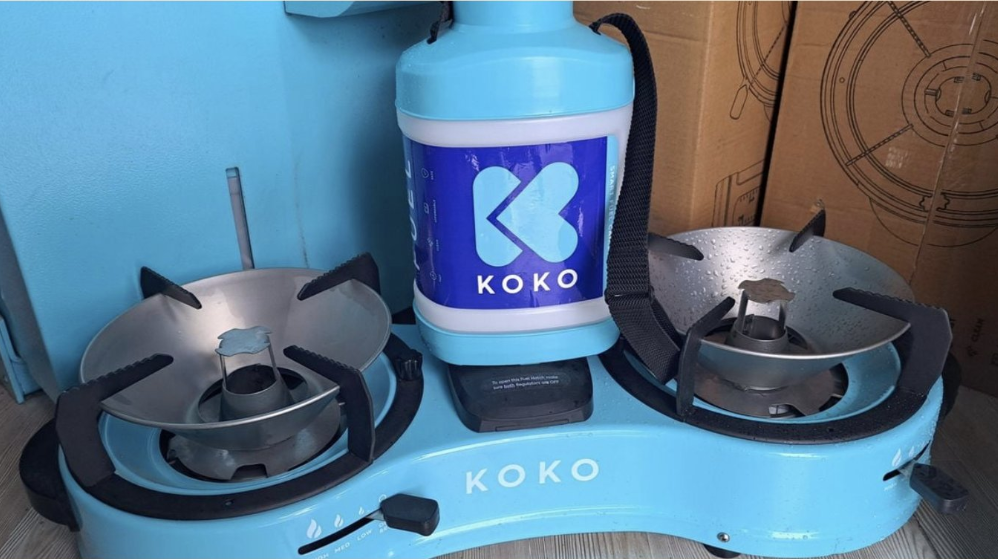
KOKO Networks, Kenya’s leading clean-cooking startup, has shut down operations, leaving millions of urban households without access to its ethanol fuel and smart cookers, the company said on Monday.
The closure comes after a dispute with the Kenyan government over carbon credit authorisations, a key revenue stream that subsidised affordable fuel for low-income households. KOKO said it was forced to halt operations after the government failed to issue a necessary Letter of Authorisation (LOA), blocking the company from selling verified emissions reductions internationally.
Founded in 2014, KOKO Networks sought to provide cleaner alternatives to charcoal, firewood, and kerosene. Its ethanol fuel, sold through automated “KOKO Points” at local shops, was paired with smart cookers and digitally monitored refill canisters. The system allowed households to pay for small fuel quantities using mobile money.
The company’s model relied heavily on carbon finance. Emissions avoided by households switching from charcoal to ethanol were converted into carbon credits, which KOKO intended to sell to international buyers. Revenue from these sales subsidised fuel prices and cookers, making clean cooking affordable for low-income families.
Without government authorisation to sell the credits, KOKO said it could no longer maintain fuel subsidies or operating costs. “Despite strong demand and investor support, our business model became financially unsustainable,” the company said in a statement.
The shutdown affects approximately 700 employees and millions of customers across Kenya. Retailers hosting KOKO Points will lose income, and households may revert to charcoal and kerosene, increasing indoor pollution and environmental degradation.
KOKO had raised hundreds of millions of dollars from global investors, including climate-focused funds and multinational firms. Its rapid expansion made it one of Kenya’s most prominent climate-tech startups.
Analysts said the company’s collapse highlights the risks for climate startups dependent on regulatory approvals and carbon markets. “KOKO Networks shows that even innovative solutions can fail if government policy and institutional support lag behind,” said a Nairobi-based clean energy analyst.
The Kenyan government did not immediately respond to requests for comment.
KOKO’s shutdown underscores the fragility of climate finance-dependent business models in emerging markets. The company had achieved significant adoption among urban households, providing both health and environmental benefits, but the lack of regulatory clarity made the model unsustainable.
Investors and policymakers in Africa are now watching closely, as the collapse raises questions about the future of carbon-credit-backed clean energy ventures in the region.