


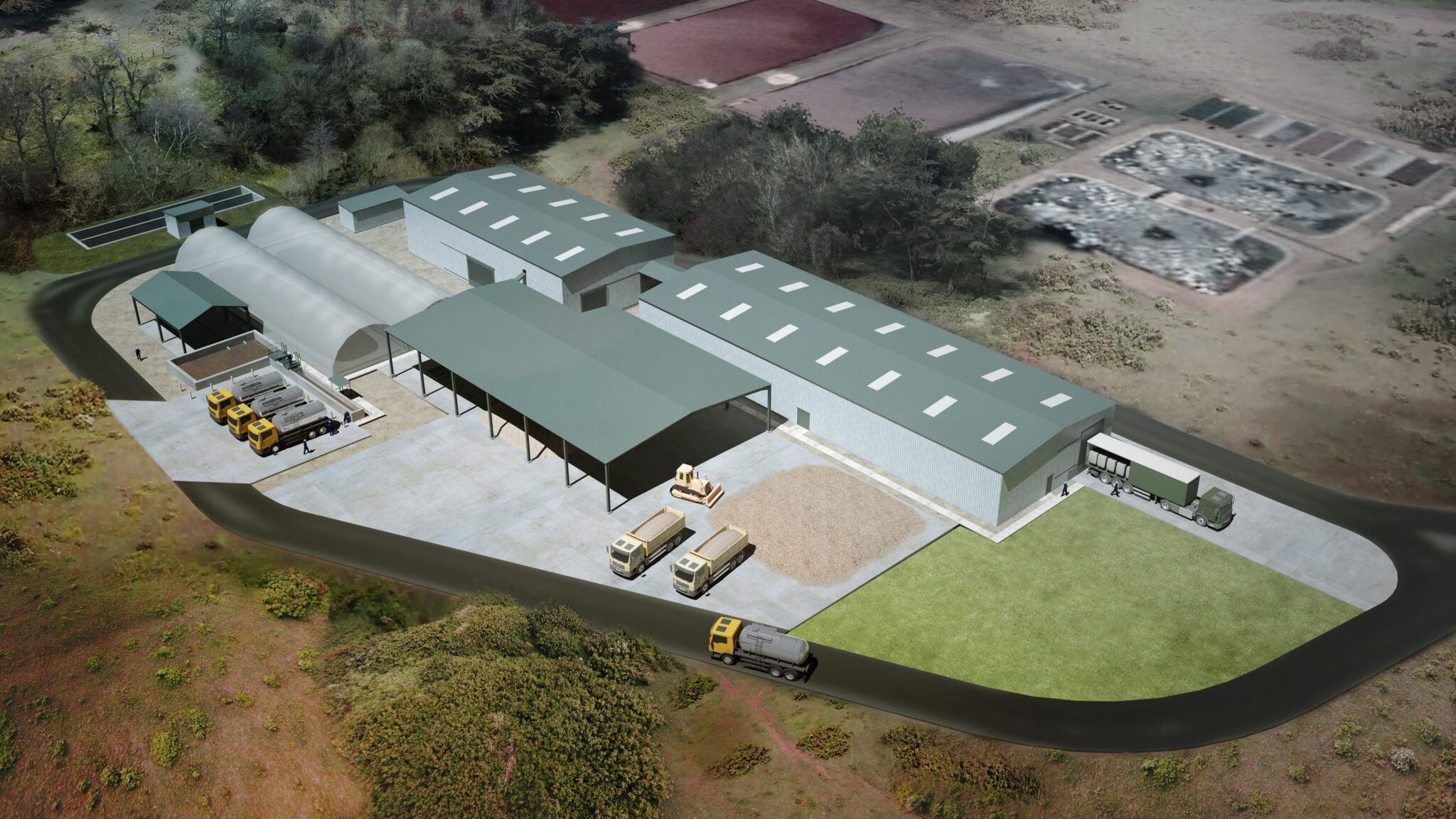
Sanivation has raised $3.3 million to finance the expansion of its waste-to-energy operations, the group said on Tuesday.
The equity investment, made through PIDG’s project development arm InfraCo, will support the expansion of Sanivation’s Naivasha Treatment Plant, increasing its capacity to convert human waste into solid fuel briquettes for industrial use. PIDG has also provided an additional $500,000 grant through its technical assistance facility.
Sanivation, which partnered with the Nakuru County government to establish a pilot facility in 2018, produces fuel briquettes by treating faecal sludge and blending it with waste from sawmills and agricultural processors. The briquettes burn longer and more efficiently than firewood and can reduce energy costs for industrial customers by between 10% and 30%, the company says.
The expanded facility is expected to treat waste equivalent to that generated by 100,000 to 130,000 households, easing pressure on existing wastewater infrastructure and helping to curb pollution around Lake Naivasha.
“This investment marks a turning point, not just for Sanivation, but for how sanitation infrastructure can be delivered across Kenya and the region,” said Sanivation CEO and co-founder Emily Woods. She added that the project demonstrates how waste can be transformed into clean energy while improving environmental outcomes and supporting community livelihoods.
PIDG said the project reflects its focus on circular economy solutions and climate-aligned infrastructure development in emerging markets.
“By reducing costs for industrial customers while decreasing pollution of the local environment, Sanivation aligns strongly with our strategy,” said Omar Jabri, PIDG’s head of business development for Africa at InfraCo.
Operations at the expanded Naivasha Treatment Plant are expected to begin in 2027.