

Zipline’s autonomous drone logistics network is delivering measurable gains across nutrition, agriculture and local economies in Africa, according to three new studies that extend the company’s impact well beyond its core healthcare operations.
The research finds a 22% reduction in child fatalities linked to severe acute malnutrition, a 68% return on investment for smallholder pig farmers, and between $850 and $1,200 in additional annual household income for communities located near Zipline distribution hubs.
“This research shows what communities and governments across Africa have seen firsthand: when essential supplies reliably reach the people who need them, outcomes change,” said Caitlin Burton, CEO for Africa and Emerging Markets at Zipline. “Zipline began by improving access to critical health supplies. Today, the same infrastructure is strengthening nutrition systems, agricultural productivity and local economies.”
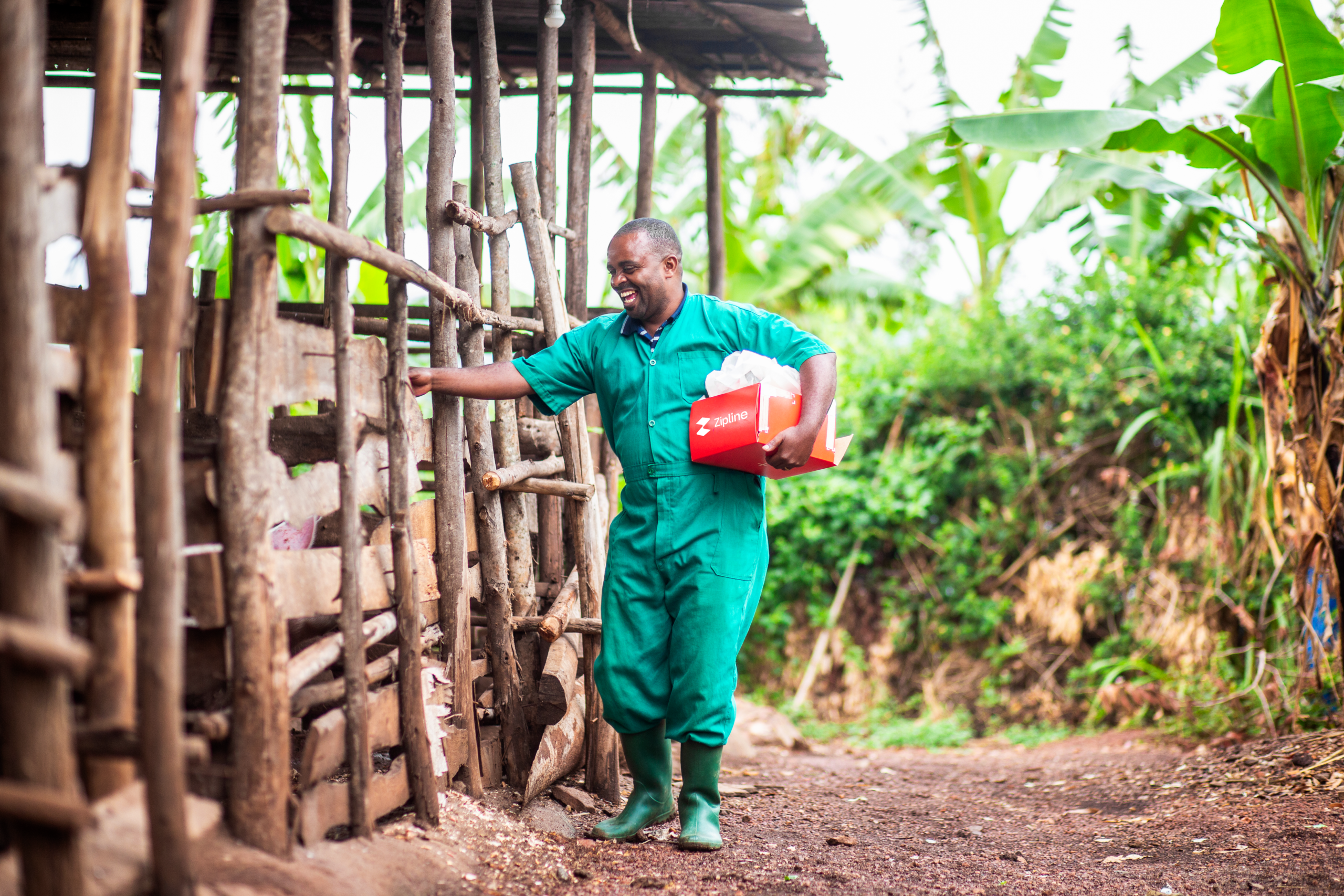
A peer-reviewed study published in Frontiers in Veterinary Science examined Zipline’s role in Rwanda’s pig farming sector, where drone delivery of temperature-sensitive pig semen was paired with training for community animal health workers across eight rural districts. The initiative, run in partnership with the Rwanda Agriculture and Animal Resources Development Board and Feed the Future Rwanda, aimed to determine whether reliable logistics could make artificial insemination a viable and scalable income stream.
The results point to significant gains. About 17% of the increase in farmers’ income was directly attributed to Zipline’s logistics support, while the program generated nearly $129,000 more in farmer income than it cost to implement—equating to a 68% return on investment. Artificial insemination success rates also rose sharply, from 48.8% to 74.8% following the integration of drone delivery.
A second study focused on healthcare outcomes, specifically the delivery of ready-to-use therapeutic food (RUTF) for treating severe acute malnutrition in Rwanda. Comparing 299 facilities over five years, researchers found that Zipline-enabled supply chains reduced in-hospital child deaths from severe malnutrition by 22%.
The data also showed a broad decline in severe malnutrition cases across all age groups, including a 22% drop among children under two, 42% among those aged two to five, and 84% among children older than five. Severe anemia cases in children aged two to 59 months fell by 46%.
While malnutrition-related hospitalisations rose by 21%, mortality did not increase—an indication that more children were being identified earlier and receiving sustained treatment due to improved supply reliability.

“The protocol for treating malnutrition has not changed. What changed was whether supplies were there when clinicians needed them,” said Pedro Kremer, Head of Impact and Research at Zipline. “That is the variable these studies are measuring—and the results are unambiguous.”
A third study assessed the broader economic footprint of Zipline’s GH3 distribution hub in northern Ghana, combining household surveys with satellite analysis of nighttime light intensity—a widely used proxy for economic activity. The findings suggest that proximity to the hub correlates with tangible economic gains.
Households within a two-kilometre radius of the hub reported annual income increases of between $850 and $1,200. Asset accumulation declined with distance, dropping by roughly 27% for every additional 1.5 kilometres from the hub, with a gap exceeding 30 percentage points between the nearest and farthest communities. Access to drinking water also followed a similar pattern, improving more significantly in areas closer to the hub.
Satellite data reinforced these findings, showing higher nighttime light intensity around the GH3 site compared with 82 benchmarked locations across Ghana.
Together, the studies suggest that Zipline’s logistics infrastructure is not only improving access to critical health supplies but also acting as a catalyst for broader economic activity in surrounding communities.
Zipline, which operates across four continents, currently serves more than 5,000 hospitals and health facilities globally and completes a delivery approximately every 30 seconds. With over 130 million autonomous miles flown, the company has positioned itself as a key player in transforming supply chains for healthcare, agriculture and commerce, particularly in underserved regions.
Earlier this year, Zipline and the Government of Rwanda signed an expansion agreement under a $150 million pay-for-performance award granted to Zipline by the U.S. Department of State. While Rwanda was already a pioneer as the first country to launch Zipline’s service in 2016, this new phase was expected to introduce Africa’s first urban drone delivery network and a dedicated autonomous delivery testing centre.