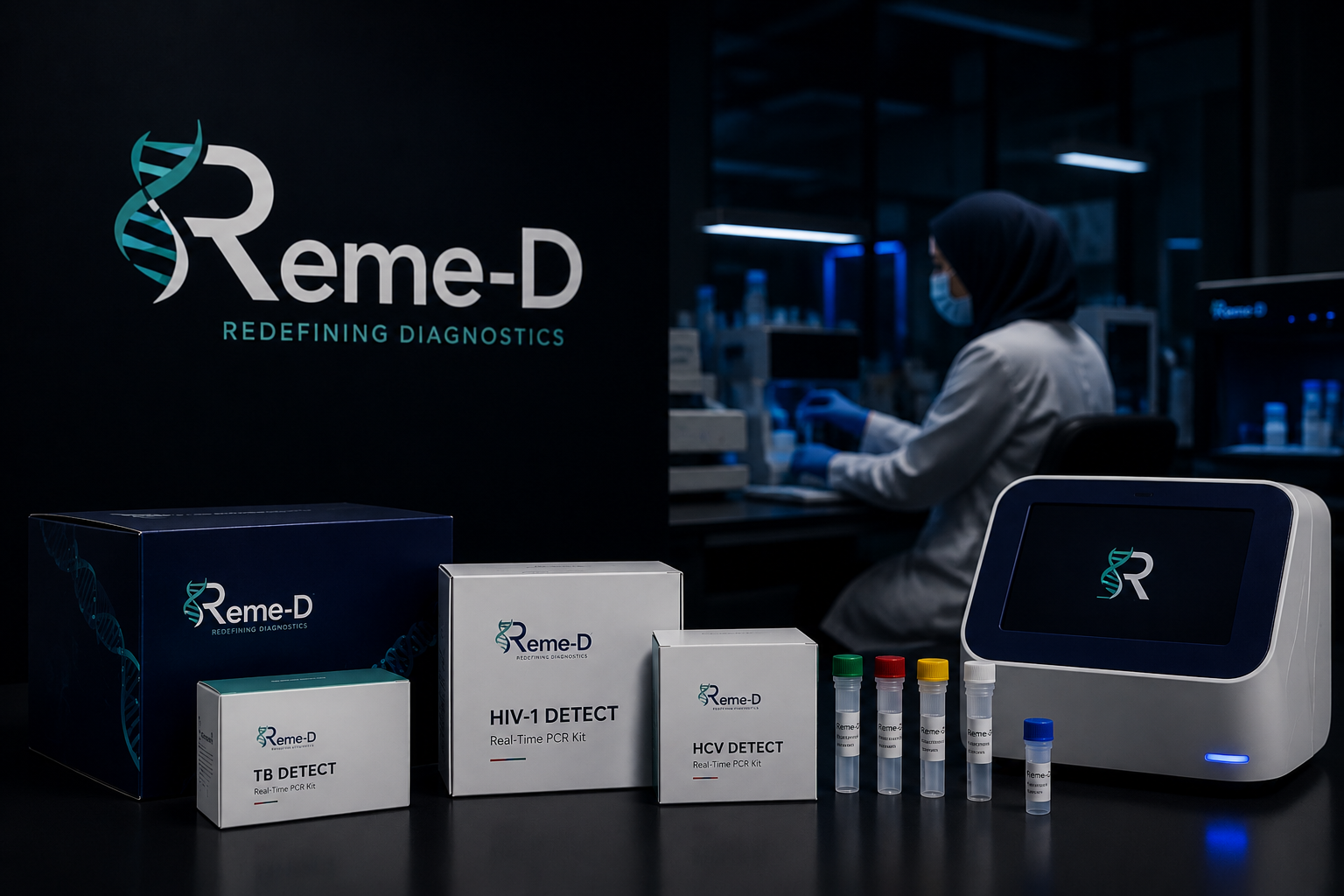
Egyptian health technology startup Reme-D has raised $1.45 million in a Pre-Series A funding round led by Anara Impact Capital, betting that locally manufactured molecular diagnostics can help close one of Africa’s biggest healthcare gaps while reducing dependence on imported testing kits.
The round, which also attracted participation from the Global Innovation Fund, Africa Health Ventures, and existing investors, will finance a tenfold expansion in manufacturing capacity, the development of new diagnostic tests for cancer and genetic diseases, and the company’s push into additional African markets.
The investment comes as healthcare startups across Africa attract growing investor interest by addressing long-standing shortages in medical infrastructure. While digital health platforms have dominated venture funding over the past decade, a new generation of companies is building local manufacturing capabilities for diagnostics, pharmaceuticals and medical devices in response to lessons from the COVID-19 pandemic, when global supply chain disruptions exposed the continent’s reliance on imports.
Founded in 2023 by Salma Tammam, Cairo-based Reme-D develops molecular diagnostic tests capable of detecting diseases including tuberculosis, HIV, hepatitis and human papillomavirus (HPV). The company differentiates itself by producing temperature-resilient testing kits designed for use in regions where refrigeration and laboratory infrastructure remain unreliable.
The latest capital follows a $500,000 investment from the Global Innovation Fund announced in April, giving the startup additional resources to accelerate commercial production.
Since launching three years ago, Reme-D says it has developed and commercialized 30 molecular diagnostic products from its manufacturing facility in Cairo and supplied more than 550,000 tests to healthcare providers in Egypt, Kenya and Sudan. Its customers include public laboratories, hospitals, private diagnostic centers and research institutions.
The company has also filed a U.S. patent application covering its proprietary molecular diagnostic technology, reflecting ambitions to compete internationally rather than remain solely an African manufacturer.
Reme-D recently supplied a customized solar-powered mobile laboratory commissioned by the World Health Organization’s Egypt office to support the Egyptian Ministry of Health’s surveillance of vector-borne diseases in remote communities.
The fresh funding will allow the startup to relocate into a 1,500-square-meter manufacturing facility, install additional production equipment and increase manufacturing capacity by ten times. It also plans to strengthen regulatory compliance while expanding distribution across Africa and the Middle East.
“We want patients in Africa and the Global South to no longer be prevented from accessing advanced molecular diagnostics because of cost or availability,” Chief Executive Officer Salma Tammam said in a statement. “That remains our ultimate goal.”
Tammam said the company also hopes to demonstrate that advanced biotechnology can be developed and manufactured on the continent.
“We take particular pride in demonstrating what African science and African women can bring to the global business and scientific community,” she said.
For investors, Reme-D represents a broader shift toward backing businesses capable of producing healthcare technologies locally rather than relying on imported solutions.
“We were impressed by Salma and the team’s ability to combine deep scientific expertise with a practical understanding of delivering diagnostics in underserved markets,” Mohamed Hussain, Principal at Anara Impact Capital, said. “Reme-D has already demonstrated that high-quality molecular diagnostics can be developed and manufactured locally.”
The investment reflects a wider trend in African venture capital, where investors are increasingly looking beyond software to businesses building critical infrastructure in sectors such as healthcare, agriculture and manufacturing. While funding for African startups has slowed from the record highs of 2021 and 2022, health technology companies solving structural challenges continue to attract capital from impact investors and development finance institutions.
For Reme-D, the next phase will test whether locally produced molecular diagnostics can compete on both price and quality while expanding beyond infectious diseases into oncology and genetic testing—markets that remain largely underserved across much of Africa.