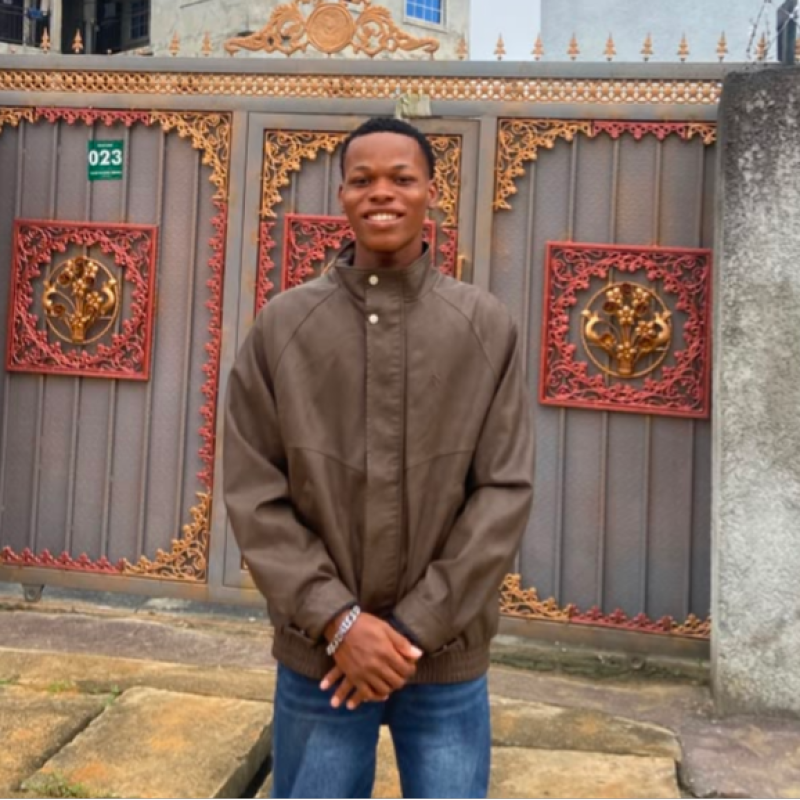
The College Date, a Nigerian student-focused social platform, has reached approximately 1,010 registered users as it looks to raise $250,000 in pre-seed funding to accelerate growth across university campuses.
Founded by Godswill Godlife Onah, the platform combines dating, social discovery, messaging and student services, positioning itself as an alternative to general-purpose social and dating apps. It is designed around the university experience, allowing students to discover and connect with people based on their institution, faculty, department and level of study.
Like Facebook which started with college campuses, the startup is initially targeting Nigeria universities before expanding into other African markets, where millions of students represent a potential audience for campus-focused digital services.
In this edition of CEO Weekends, Onah discusses the inspiration behind The College Date, its early traction, revenue model, approach to user safety and plans to build a campus-first social network for African students.
What inspired you to build The College Date?
I built The College Date after seeing how difficult it can be for students to meet new people and build genuine connections on campus, especially when they are shy, new to the school or do not have a large social circle.
Most dating and social platforms are built for everyone, but they do not really focus on the student experience. I wanted to create something around the environment students already understand: their university, faculty, department, level and campus community.
The College Date is not only about dating. It is a campus social platform where students can discover people, communicate, join communities and access student-focused services.
You’ve passed 1,000 users. How did you get there, and how active are they?
The platform was launched recently, and registered accounts have now reached approximately 1,010. The figures in our earlier assessment were based on last week, when we had 871 registered accounts. Since then, both user numbers and daily activity have increased.
Our growth has mainly come through student communities, campus relationships, student media, WhatsApp sharing, ambassadors and organic discovery. We are focused on growing campus by campus instead of simply chasing a large registration number.
The goal is to build enough activity within each campus so students can find people and communities that are actually relevant to them.
How does The College Date make money, and what are students paying for?
We currently make money through premium subscriptions, CD Coins and virtual gifts, and student services such as tutoring and proofreading.
Students can pay for premium features that improve their discovery and matching experience. They can also buy coins for gifts and other interactions.
For student services, users can offer or pay for services through the platform, while The College Date earns a platform fee. We also see future opportunities through campus partnerships, sponsored content, events and businesses that want to reach student communities.
We have already generated our first revenue from subscriptions and student services. Right now, we are focused on improving trust, engagement and conversion.
How big is the African student market you’re targeting?
We are starting with Nigeria, where there are approximately 2.8 million full-time tertiary students across more than 170 accredited universities, alongside other tertiary institutions. Across Sub-Saharan Africa, our initial market estimate is approximately 17.5 million tertiary students.
However, we are not looking at the market only as a large number of students. The real opportunity is the network within each campus, faculty, department and student community.
Our plan is to build strong campus networks in Nigeria first and then expand into other African markets.
How are you tackling safety, privacy and fake profiles on the platform?
Trust and safety are very important to us because students need to feel comfortable using the platform.
We use student verification, face verification and liveness checks to help confirm that users are genuine. We also have privacy controls, including consent around biometric information and self-service account deletion.
Users can communicate through in-app voice and video calls without having to share their personal phone numbers.
We also use information such as university, faculty, department and level to make the platform more relevant and help users connect within a clearer campus context.
There is still more we want to improve in trust and safety, and this is one of the areas we plan to invest in as the platform grows.
You’ve largely bootstrapped the business. How big is the team, and are you now raising capital?
The College Date has been largely built and funded by the founding team. The core team currently includes myself, Godswill Godlife Onah, Founder and CEO, and SOKEPIRIM Jackreece, who leads campus growth.
I focus on the technical architecture and product development, while Jackreece focuses on student media, campus relationships and distribution. Through Students O’clock, he has built a student audience of more than 50,000 followers.
We are now exploring a $250,000 pre-seed raise to move from early product validation into repeatable campus growth.
The funding will support campus acquisition, ambassadors, product development, trust and safety, campus operations and expansion across Nigerian universities.
With global dating apps already competing for young users, what will make The College Date win in Africa?
We are not trying to build a smaller version of Tinder or Bumble.
Our focus is the African university campus. A student’s university, faculty, department, level and hostel can all be important when deciding who they want to meet. That gives us a more local and relevant social experience than a general dating platform.
The College Date combines student discovery, verified identity, matching, conversations, confessions and student services in one platform. As more students join a particular campus, the platform becomes more useful for everyone there.
The global platforms have already shown that young people want digital connection. Our opportunity is to make that experience more local, trusted and relevant to African students.