Safaricom Plc is expanding its digital lending business with the introduction of Fuliza Ya Pochi, an overdraft facility targeting more than one million qualifying micro-merchants, as Kenya’s largest telecommunications operator seeks to capture a larger share of the country’s small-business financing market.
Unveiled on October 22, 2026, at Makongeni Market in Thika in partnership with Sidian Bank, the facility is designed to help small businesses replenish inventory, pay suppliers and address short-term cash-flow shortages. The expansion comes as Safaricom’s active credit customer base reaches approximately 17.5 million, supported by an ecosystem of 4.5 million merchants.
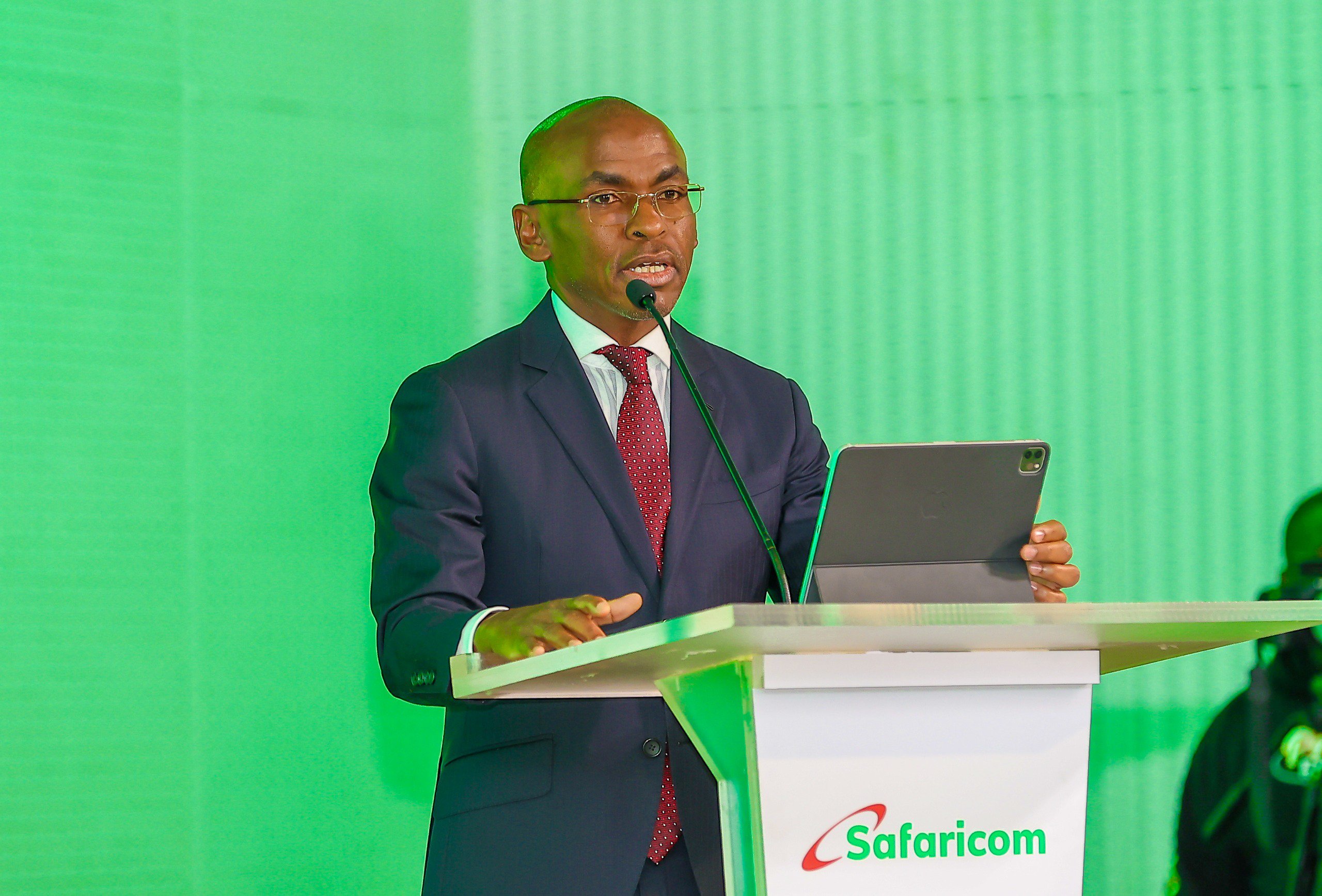
“For 15 years, we have embedded purpose in how we do business, measured not only by what we earn, but by the value we create for society,” Safaricom Group Chief Executive Officer Peter Ndegwa said during the launch of the company’s 15th Sustainable Business Report on October 27.
M-PESA group revenue increased 13.6% to Sh100.1 billion in the six months ended September 2026, crossing the Sh100 billion threshold for the first time in a half-year reporting period.
Merchant services revenue increased 34.6% to Sh8.18 billion, while merchant payment volumes rose 52.6% to 4.7 billion transactions, underscoring the growing commercial importance of small businesses within Safaricom’s financial services ecosystem.
Turning mobile payments into business financing
Fuliza Ya Pochi builds on Pochi La Biashara, Safaricom’s mobile money service that enables informal businesses to separate personal and commercial transactions.
The value of transactions processed through Pochi La Biashara increased 95.6% to Sh300.05 billion during the first half of FY27. Transaction volumes rose 65.8% to approximately 1.8 billion, while revenue increased 77.7% to Sh2.99 billion.
The service had approximately 3.2 million customers during the reporting period, providing Safaricom with a substantial potential market for merchant financing.
Fuliza Ya Pochi is designed to provide eligible merchants with short-term credit when their business wallets have insufficient funds to complete transactions.
“Fuliza Ya Pochi helps merchants overcome these short-term challenges while continuing to build their businesses,” Ndegwa said during the product’s unveiling in October.
Under the announced terms, the facility carries a one-off interest charge of 1%, alongside daily maintenance fees ranging from zero to Sh30, depending on the outstanding balance. Merchants receive a 48-hour grace period before daily maintenance fees apply, with repayment required within 30 days.
Repayments are made through automatic deductions from incoming payments. Eligibility requires merchants to have maintained an active Pochi La Biashara account for at least six months.
Safaricom subsequently indicated in November that Fuliza Ya Pochi was still undergoing testing, with full commercial availability yet to be confirmed.
AI-powered lending and alternative credit scoring
Alongside Fuliza Ya Pochi, Safaricom is enhancing its broader lending operations through refreshed AI-enabled credit scoring models, reflecting a growing shift towards data-driven financing across the global financial services industry.
Traditional lenders have historically relied on collateral, audited financial statements, formal employment records and established banking relationships to assess borrowers.
For millions of informal businesses, these requirements create barriers to accessing working capital despite generating regular income.
Digital transaction histories offer an alternative source of information, enabling financial institutions to assess commercial activity, cash flows and repayment behaviour.
Artificial intelligence can help lenders analyse these records at scale, potentially improving credit assessments, identifying repayment risks and extending financing to previously underserved businesses.
M-PESA processed 27.4 billion transactions during the first half of FY27, an increase of 25.2% from a year earlier, while financial services transaction volumes increased 48.2%.
The scale of these transactions provides Safaricom and its financial services partners with an extensive ecosystem through which alternative lending models can be developed.
Safaricom has not separately disclosed the specific credit scoring technology underpinning Fuliza Ya Pochi.
A trillion-shilling digital credit market
Fuliza Ya Pochi extends Safaricom’s merchant financing portfolio at a time of growing demand for digital credit in Kenya.
The company’s consumer-focused Fuliza service recorded disbursements of Sh1.16 trillion during the six months ended September 2026, an increase of 84% from a year earlier.
Revenue from Fuliza increased 86% to Sh4.9 billion, while the average advance declined to Sh192.10 from Sh254.60, reflecting increased activity in relatively small-value credit transactions.
Safaricom’s existing Merchant Overdraft facility, which is distinct from Fuliza Ya Pochi, recorded disbursements of Sh24.4 billion, up 13.6% from a year earlier.
The number of customers using that facility increased 41% to approximately 61,600, while disbursement transactions rose 31.1% to 7.1 million.
During the financial year ended March 2026, Safaricom’s annual credit revenues increased 20.6% to Sh9.8 billion.
The company has also upgraded its M-PESA technology infrastructure to process up to 6,000 transactions per second, while tripling Fuliza’s transaction-processing capacity.
The expansion comes as commercial banks, digital lenders and financial technology companies increasingly compete to provide financing to Kenya’s informal businesses.
Addressing a global financing challenge
The financing constraints facing Kenya’s small businesses reflect a wider challenge across emerging economies.
According to the World Bank’s Global Findex 2025 report, 59% of adults in low- and middle-income economies borrowed money in 2024, but only 24% borrowed through formal financial channels.
Among self-employed adults, 13% identified business expenses as their biggest financial concern.
The World Bank identified digital merchant payments as an opportunity to expand formal credit access because electronic transactions create records of commercial activity that can support lending assessments.
Globally, the proportion of adults making digital merchant payments increased to 42% in 2024 from 35% in 2021.
Kenya’s widespread adoption of mobile money provides a foundation for financial institutions seeking to extend financing to businesses operating outside conventional banking infrastructure.
For neighbourhood retailers, market traders and independent service providers, facilities such as Fuliza Ya Pochi could help bridge the gap between purchasing inventory and receiving payments from customers, reducing interruptions to business operations.
Financial inclusion and sustainable economic growth
Safaricom’s expansion into merchant financing also aligns with its broader sustainability and financial inclusion strategy.
The company’s 15th Sustainable Business Report, released in October 2026, estimated that Safaricom generated Sh1.25 trillion in wider societal value during the financial year ended March 2026, an increase of 10% from the previous year.
Its operations and extended business ecosystem sustained more than 1.4 million jobs and livelihoods, including those supported through agents, dealers, suppliers and commercial partners.
Kenya’s formal financial inclusion rate increased from 26.7% of adults in 2006 to 84.8% in 2024, according to the FinAccess Household Survey.
However, widespread access to transactional financial services has not necessarily translated into affordable business financing or long-term financial resilience.
Safaricom’s financial disclosures also highlight affordability as a component of financial inclusion. Approximately 81% of Lipa na M-PESA and Pochi La Biashara merchant transactions attracted no customer charge during the first half of FY27, while 53% of overall M-PESA transactions were non-chargeable.
Lower transaction costs can help small businesses retain a greater proportion of their revenues, particularly those operating on narrow profit margins.
By expanding access to working capital, Safaricom is seeking to move beyond facilitating commercial transactions towards supporting enterprise productivity and growth.
Balancing credit expansion with responsible lending
The rapid expansion of digital lending raises questions about borrowing costs, data privacy, algorithmic fairness and over-indebtedness.
While AI-enabled credit assessments can help financial institutions evaluate previously underserved borrowers, their effectiveness depends on the quality of underlying data and whether lending limits accurately reflect customers’ repayment capacity.
Automatic repayment mechanisms can also affect merchants’ available working capital, making transparency around fees and repayment obligations particularly important.
Safaricom has yet to disclose standalone disbursement figures, revenue, repayment performance or measurable business outcomes associated with Fuliza Ya Pochi.
For investors, however, the broader commercial opportunity is significant. M-PESA accounted for 46.3% of Safaricom’s Kenyan service revenue during the first half of FY27, up from 45.4% a year earlier.
Group service revenue increased 13.1% to Sh226.06 billion, while earnings before interest, taxes, depreciation and amortisation rose 27.5% to Sh129.18 billion. Net income attributable to shareholders increased 35.9% to Sh58.15 billion.
By integrating merchant financing into the same platform businesses use to receive payments and manage their finances, Safaricom is positioning M-PESA to capture a greater share of Kenya’s small-business financial services market.
The success of Fuliza Ya Pochi will ultimately depend not only on the number of merchants accessing credit but also on whether that financing translates into higher business revenues, improved profitability, employment creation and sustainable enterprise growth.