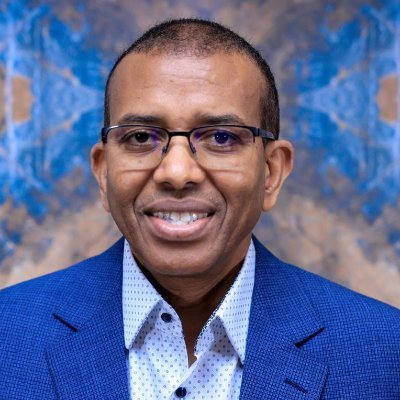
After building WorldRemit, a global remittance business valued at $5 billion, Ismail Ahmed is returning to entrepreneurship with Odola, a US fintech startup seeking to redefine how immigrants earn, spend, invest and move money across borders.
For Ismail Ahmed, the inspiration behind his second fintech venture comes from personal experience. Long before building WorldRemit into a multibillion-dollar business, he picked fruit in Kent, England, sending part of his earnings to support his family in a refugee camp in Ethiopia.
That experience shaped his understanding of the financial lives of immigrants and eventually inspired the creation of WorldRemit.
Now, Ahmed is pursuing a bigger opportunity.
The entrepreneur has committed an initial $5 million of his personal wealth to Odola, a financial technology company that launched in the US on November 24, with plans to invest more.
“WorldRemit was built for the money that goes home. Odola is built for the money that goes home and the money that stays,” Ahmed said.
Beyond the Remittance Business
Nearly three decades ago, Ahmed was among the early researchers studying remittance flows to the Horn of Africa. After exposing fraud in a United Nations remittance programme, he used his compensation from the organisation to establish WorldRemit.
The business subsequently expanded to more than 130 countries and reached a valuation of $5 billion.
With Odola, Ahmed is targeting a broader financial relationship with diaspora communities, moving beyond the individual transactions that defined his first venture. The platform combines salary deposits, early salary access, a Visa debit card and international money transfers within a single application.
The underlying opportunity is to serve customers whose financial obligations span multiple countries but whose banking and remittance needs have traditionally been addressed by separate providers.

Building Financial Security for Immigrants
Ahmed believes financial institutions have historically taken too narrow a view of immigrant customers, focusing on their remittance transactions rather than their broader economic aspirations.
“People who send money home are often treated as if that is all they do,” Ahmed said. “They are also building credit, saving for their children and planning for what’s next. We want Odola to be where all of that happens.”
Odola plans to introduce secured credit-building charge cards in the coming months, followed by investment products in 2027 targeting retirement, education and other long-term financial goals.
The expansion would position the startup to compete across multiple segments of the financial services industry rather than rely solely on international transfers.
Building an AI-Native Financial Institution
Ahmed and his co-founder, Dr. Abdigani Diriye, a former AI specialist at Amazon and IBM, are also experimenting with a different approach to building a financial technology company.
Odola operates without a layer of middle management, with experienced executives overseeing engineering, product development, compliance, operations and marketing while working directly with artificial intelligence tools.
The founders believe the model can reduce operating costs, accelerate product development and improve customer service without requiring the large teams traditionally associated with financial institutions.
“Most companies are still working out where to add AI. We built Odola with it from the first line of code, and every one of us works with it,” Diriye said.
A Second Entrepreneurial Chapter
For Ahmed, the decision to finance Odola with his own capital reflects his willingness to return to the challenges of building a business from the ground up.
His first venture helped transform how diaspora communities transferred money internationally. His second is an attempt to address what happens to their earnings before and after those transfers.
Odola is currently available to eligible US customers, with banking services provided by Lead Bank, a member of the Federal Deposit Insurance Corporation.
Whether Ahmed can replicate WorldRemit’s success in the more competitive market for everyday financial services remains to be seen.
This time, however, his ambition extends beyond connecting immigrants with their families back home. It is about helping them build financial security in the countries they now call home.