



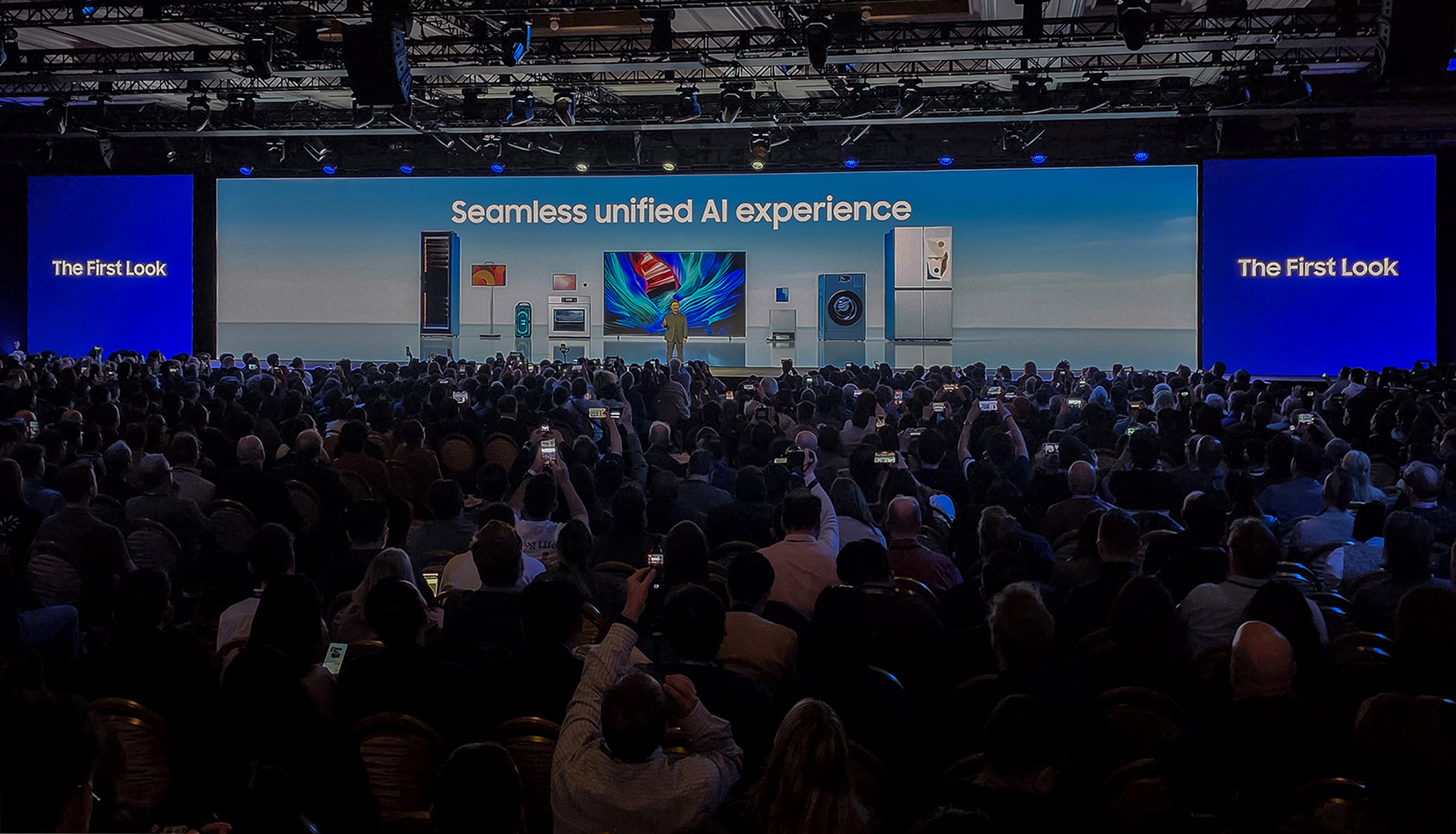
Samsung Electronics on Monday said open, interoperable ecosystems are critical to unlocking the full potential of artificial intelligence in the connected home, as it kicked off its CES 2026 Tech Forums in Las Vegas.
At a panel titled “When Everything Clicks: How Open Ecosystems Deliver Impactful AI,” Samsung convened industry leaders to discuss how cross-industry collaboration can transform smart homes from collections of devices into intelligent, integrated environments.
Samsung executives argued that as consumers increasingly rely on devices and services from multiple brands, closed systems limit the real-world value of home AI. Open connectivity, they said, allows appliances, energy systems and safety services to work together seamlessly, improving convenience, safety and efficiency.
“Home is the most personal place in our lives, so home AI must earn trust — quietly, respectfully and with value users can feel,” said Yoonho Choi, president and chair of the Home Connectivity Alliance and head of strategic alliances at Samsung Electronics. “Interoperability across brands is essential so the home works as one system, not as disconnected features.”
Samsung highlighted the scale of its SmartThings platform, which it said now serves more than 500 million users globally. The company said its long-standing presence in connected living gives it insight into how AI in the home is shifting from standalone smart devices to system-wide intelligence that coordinates across services.
Michael Wolf, founder and editor-in-chief of technology publication The Spoon, said broadly connected environments, particularly kitchens, could deliver some of the most tangible benefits of home AI by linking appliances with energy, water and heating systems to enable preventative actions.
The discussion also focused on how open ecosystems can translate into measurable consumer benefits. Samsung pointed to its partnership with Hartford Steam Boiler (HSB), which uses smart home data — with user consent — to help insurers assess risk and offer potential savings to homeowners.
“We’re at a point where connected homes can deliver seamless integration into lifestyles, which builds trust and results in direct consumer benefits,” said Jed Usich, senior vice president of strategic growth solutions at HSB.
Panelists agreed that for home AI to gain widespread adoption, it must feel intuitive rather than intrusive, fitting naturally into daily routines such as cooking, relaxing and caring for families.
Samsung said it remains focused on open collaboration, responsible data use and interoperability as AI becomes more ambient and embedded across the home, positioning openness as the foundation for meaningful and trusted connected living.