
.)
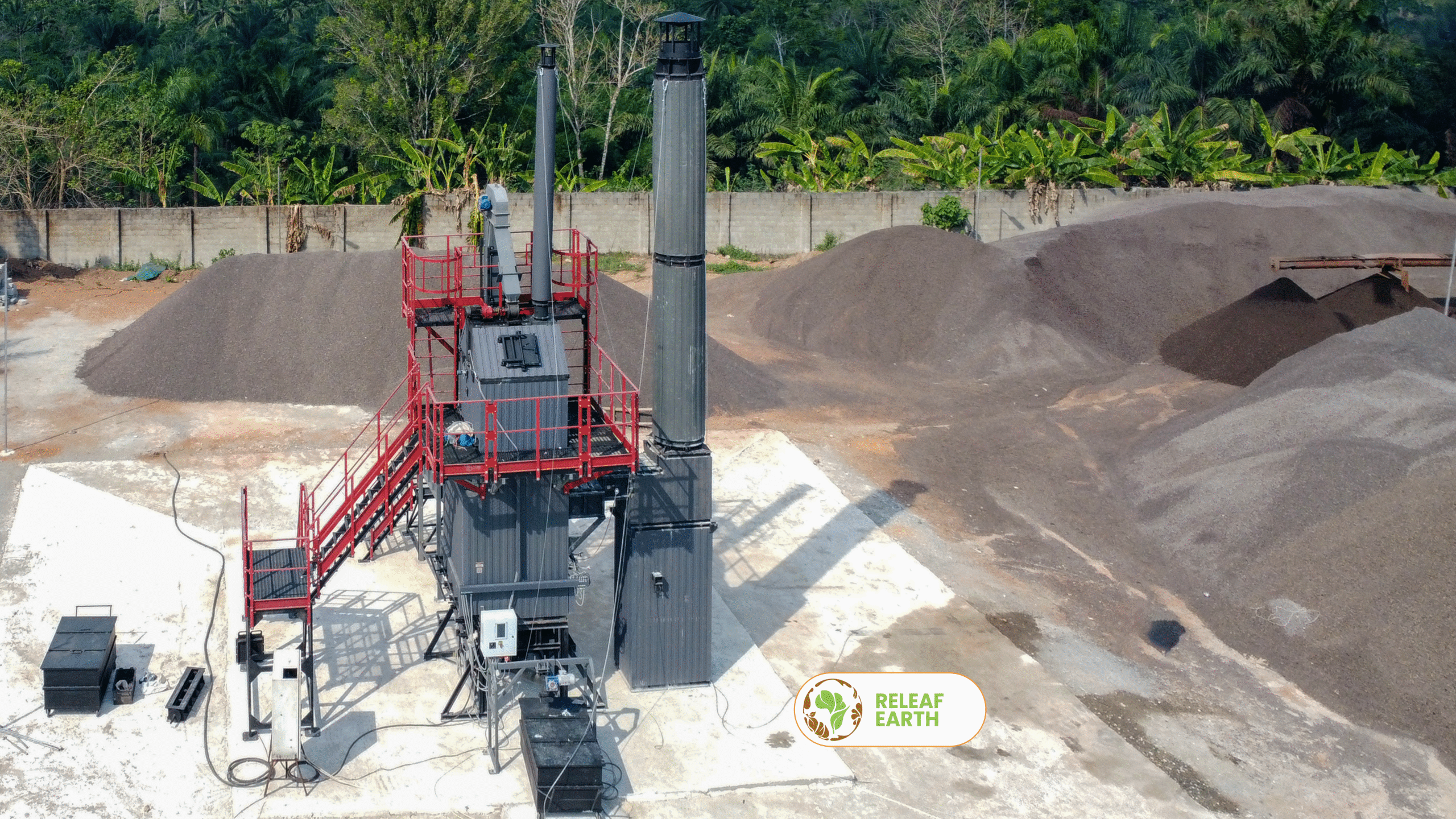
A climate technology firm has issued Nigeria’s first industrial-scale carbon removal credits, signaling a major shift in Africa’s role within the global climate economy.
Releaf Earth announced the milestone following the verification of an initial 190 tonnes of carbon dioxide equivalent ($tCO_2e$).
These credits, generated through the production of biochar, have already been snapped up by major global entities, including the tech giant Salesforce, via the climate action platform Milkywire.
The move is seen as a pivotal validation of Nigeria’s capacity to offer high-integrity, technology-based solutions to the escalating global climate crisis.
Unlike traditional carbon offsets—such as tree planting, which can be undone by fire or logging—Releaf Earth’s credits are derived from biochar.
This stable form of carbon is created at the company’s facility in Iwuru, Cross River State.
The process involves “pyrolysis,” where agricultural waste is heated in a low-oxygen environment.
This thermally stabilises the waste into a solid, inert form that resists decay for centuries.
Consequently, the company offers what it describes as a “physics-based” guarantee of permanence.
“We are removing carbon dioxide more cost-effectively than anywhere else,” said Ikenna Nzewi, CEO and co-founder of Releaf Earth.
He described the issuance as a “landmark moment” that represents “a fundamental shift in how Africa participates in the global climate economy.”
To satisfy international investors, the credits were issued through the Rainbow Standard, a data-driven registry.
By integrating their “SITE” geospatial tool, Releaf Earth can track every tonne of carbon from its original farm source to its final application in the soil.
Furthermore, the quality of this storage has been recognised with the “Inertinite Gold Certification,” the highest rating for carbon storage security.
This level of transparency is intended to give global buyers absolute certainty that the carbon has been permanently removed from the atmosphere.
A ‘Circular Wealth Engine’ for farmers
Beyond the environmental impact, the project aims to stimulate Nigeria’s rural economy through what it calls a “Circular Wealth Engine.”
The biochar produced is returned to the earth as a soil amendment, which can lead to a 23% increase in crop yields.
This boost is particularly critical as the cost of synthetic fertilisers continues to surge.
By turning previously discarded agricultural waste into a revenue stream, Releaf Earth estimates it is on track to increase the incomes of smallholder farmers by over 50%.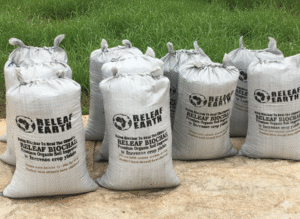
Nigeria’s $3 billion ambition
This successful issuance aligns with broader national goals. President Tinubu recently approved a framework aimed at generating $3 billion in annual carbon market revenue by 2030.
As the global demand for carbon removal evolves into a projected trillion-dollar market, Nigeria is positioning itself to export “climate solutions” with the same industrial scale it once applied to oil and agriculture.
With Africa producing over a billion tonnes of biomass annually, the potential for growth remains vast.
“With this issuance, we are sending a clear signal that Africa is ready to lead this new era of climate action,” Mr Nzewi added.