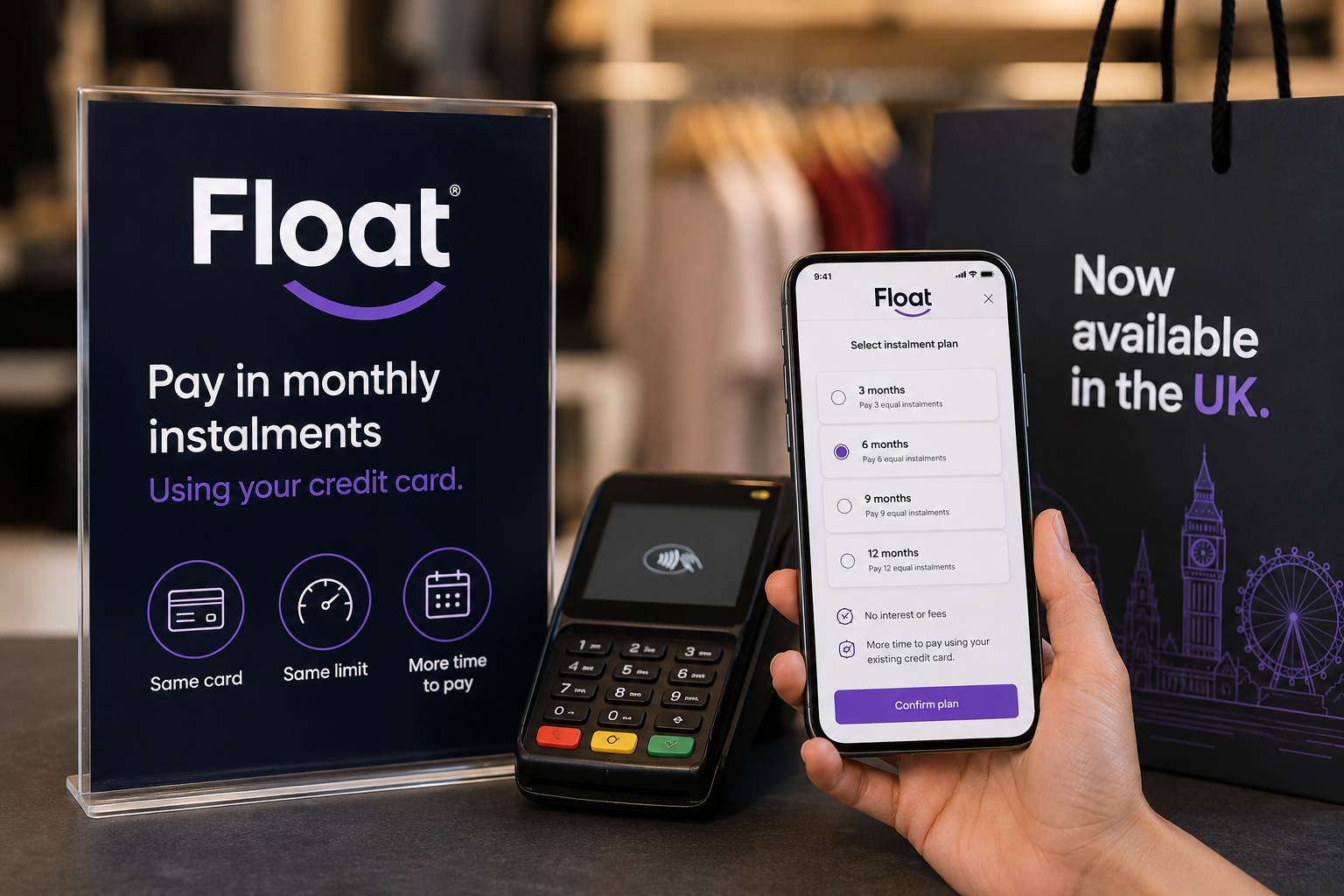
Float, a South African buy-now-pay-later fintech, has launched in the United Kingdom, marking its first international expansion as it seeks to replicate a model that allows credit card holders to split purchases into monthly instalments without taking on new debt.
Founded in South Africa four years ago, Float has built its business around a card-linked instalment product that enables shoppers to spread payments using their existing credit card limits, rather than applying for new credit. The company said the model has been adopted by more than 2,200 merchants in South Africa, where participating businesses have recorded an average 134% increase in order values based on Float’s internal merchant data.
The UK launch follows several merchant partnerships secured ahead of the official rollout, positioning Float to enter one of Europe’s largest e-commerce and consumer payments markets.
Unlike traditional buy-now-pay-later providers that extend separate lines of credit, Float integrates with existing credit cards, allowing consumers to convert eligible purchases into monthly instalments while keeping the same card and credit limit. The company says the service does not charge additional interest or fees beyond the terms of the customer’s existing credit card agreement.
The expansion represents a significant milestone for the Cape Town-founded fintech as it begins exporting a payments model developed in South Africa to international markets. The move also reflects growing confidence among African fintech firms seeking growth opportunities beyond their home markets after establishing product-market fit domestically.
Float said the UK rollout is part of its broader ambition to redefine how consumers use credit cards by giving shoppers greater flexibility while helping merchants increase basket sizes and conversion rates.
The company cautioned that performance metrics achieved in South Africa may not necessarily be replicated in the UK market, where merchant and consumer behaviour differ.