India’s SUN Mobility is entering Africa with a proposition that goes beyond putting more electric vehicles on the road, by building an open-architecture battery-swapping ecosystem serving multiple electric vehicle manufacturers and electric vehicle brands.
Sun Mobility’s open-architecture battery-swapping ecosystem, a first in Africa, with Kenya serving as the launch market for a broader continental expansion will operate in partnership with Vivo Energy, and the two have already deployed 35 battery-swapping stations across Nairobi and Mombasa.
The network supports electric motorcycles, scooters, passenger tuk-tuks and cargo three-wheelers, with more than 10 vehicle manufacturers represented at the Kenyan launch. The company says compatible vehicles from those manufacturers are being rolled out across Kenya in the coming weeks.
The strategy puts infrastructure at the centre of SUN Mobility’s African expansion. Rather than requiring each vehicle manufacturer to develop and deploy its own battery-swapping network, the company’s open architecture is designed to allow multiple brands and vehicle categories to operate on a common platform. For manufacturers, that creates a pathway to scale without having to build proprietary swapping infrastructure alongside their vehicles, while riders and fleet operators gain access to a network designed around multiple brands.
The infrastructure play
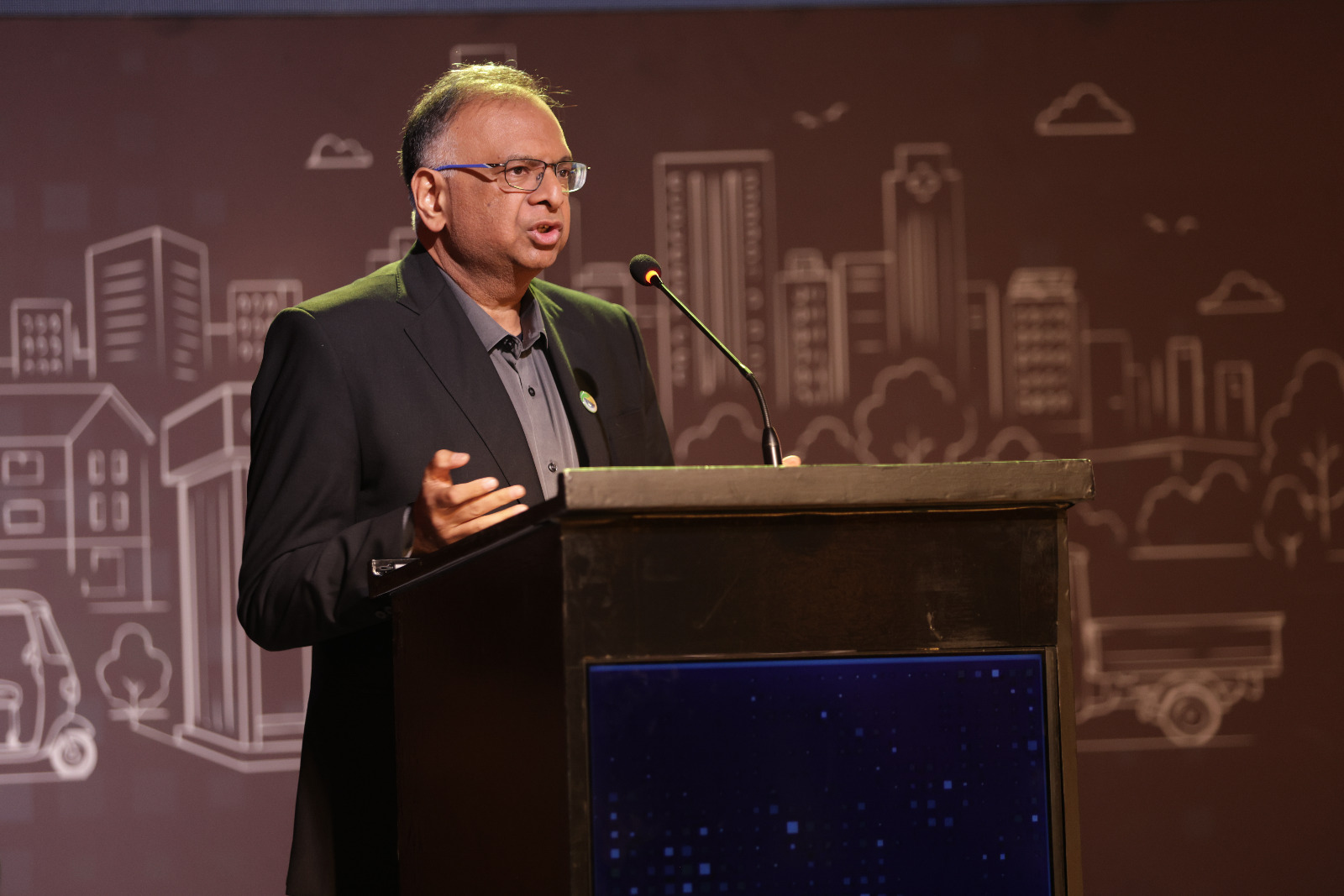
Ajay Goel, Co-Founder and CEO, International Business at SUN Mobility, said the company’s ambition is to create an infrastructure platform that can serve the broader electric-mobility ecosystem rather than a single manufacturer.
“By building an open architecture battery swapping ecosystem for multiple vehicle manufacturers and vehicle formats, we are giving riders greater choice, fleet operators more flexibility and financiers greater confidence that the vehicles they finance will remain supported by a reliable, independently operated battery-swapping network,” Goel said. “For vehicle manufacturers and ecosystem partners, our platform offers a capital-efficient pathway to scale.”
That capital-efficiency proposition is central to the company’s model. Electric-vehicle manufacturers entering a new market face not only the challenge of developing and selling vehicles but also the infrastructure question of how those vehicles will be powered. SUN Mobility’s approach separates the vehicle from the energy infrastructure, allowing manufacturers to concentrate on their vehicles while using a common battery-swapping network.
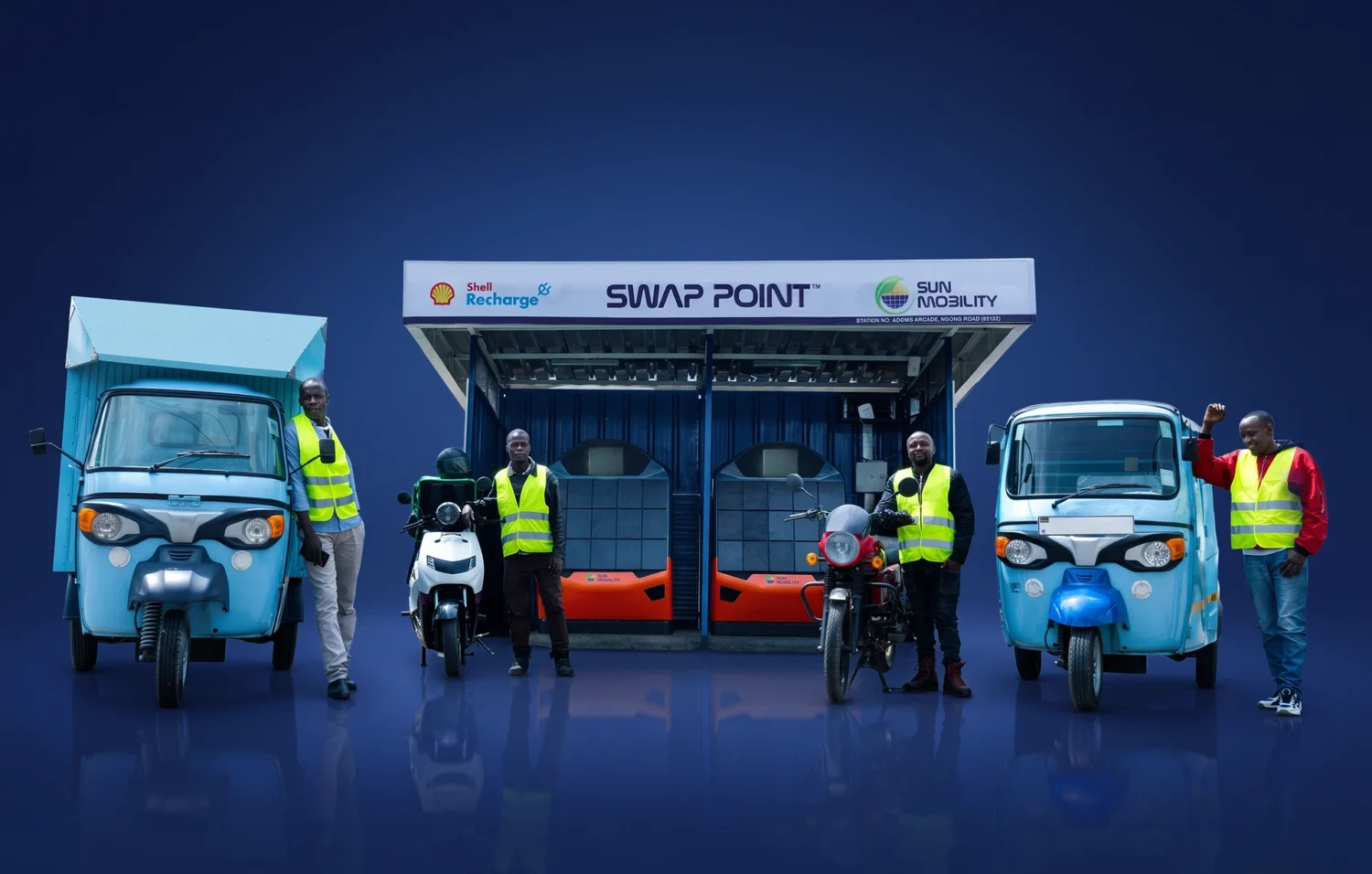
The model is designed to give riders greater choice while allowing fleet operators and financiers to participate in an ecosystem that is not dependent on a single vehicle manufacturer. For SUN Mobility, the network itself becomes the core infrastructure asset.
The competitive edge in Kenya
SUN Mobility is entering a Kenyan electric-mobility market that is already attracting companies building businesses around electric motorcycles, battery swapping and charging infrastructure. That makes differentiation important as the market develops and more players compete for riders, fleets, manufacturers and investors.
SUN Mobility’s proposition is differentiated by the architecture of its network. Rather than building an ecosystem around a single vehicle manufacturer, the company is introducing an open-architecture platform designed to support multiple vehicle manufacturers and vehicle formats. At its Kenyan launch, it showcased compatible vehicles from more than 10 manufacturers, including Afrina Neopower, BGauss, Fika Mobility, Motovolt, Odysse, Piaggio, QJ Motor, Sprocomm, VMoto and Wylex.
That gives the company a potentially broader infrastructure proposition. Its focus is not simply on putting electric vehicles on Kenyan roads, but on building the energy network those vehicles can share. For manufacturers, the attraction is the ability to use a common swapping infrastructure rather than having to develop and deploy a proprietary network of their own.
The Vivo Energy partnership adds another layer to the proposition. SUN Mobility is entering Kenya with an expansion model linked to a company that operates more than 4,200 Shell and Engen-branded service stations across 29 African markets. If deployed as planned, that footprint gives SUN Mobility a potential route to scale beyond Kenya while placing its battery-swapping infrastructure in locations that already form part of the continent’s mobility and energy infrastructure.
The company also has an established operating base in India. Through Indofast Energy, its 50:50 joint venture with Indian Oil, SUN Mobility says it operates more than 2,000 battery-swapping stations across 25 cities, powering more than 125,000 electric two- and three-wheelers. Those vehicles have completed more than 70 million swaps and covered more than 2 billion kilometres, according to the company.
That combination of multi-manufacturer compatibility, an established technology platform and access to Vivo Energy’s continental footprint gives SUN Mobility a distinctive proposition as it enters Kenya. It does not, however, guarantee market leadership. The company will still need to demonstrate that its network can scale commercially, that compatible vehicles are deployed quickly enough to generate demand and that its economics are compelling for riders and fleet operators.
SUN Mobility has not disclosed its Kenyan battery-swapping prices, subscription fees or other detailed commercial terms in the launch announcement. Those details will ultimately determine how its proposition compares on cost as competition in Kenya’s electric-mobility market develops.
The economics of going electric
The company is also positioning the model around operating economics. SUN Mobility says its solution can deliver 20% savings compared with petrol vehicles for riders travelling 100 kilometres per day, with savings rising to as much as 35% for riders travelling 150 kilometres a day.
Those figures are central to the company’s commercial proposition because the value of battery swapping is closely linked to how intensively a vehicle is used. SUN Mobility is targeting electric motorcycles, scooters and three-wheelers, including passenger and cargo applications, where the company’s stated savings are intended to demonstrate the potential operating-cost advantage of moving away from petrol.
The company has not disclosed Kenyan battery-swapping prices, subscription fees or other detailed local commercial terms in the launch announcement. That leaves the precise commercial structure still to emerge as the network moves into deployment.
At the Kenya launch, SUN Mobility showcased compatible vehicles from Afrina Neopower, BGauss, Fika Mobility, Motovolt, Odysse, Piaggio, QJ Motor, Sprocomm, VMoto and Wylex. The manufacturers are in the process of rolling out compatible vehicles across Kenya in the coming weeks.

The breadth of manufacturers is significant to the company’s open-architecture proposition because the network is being built to accommodate different vehicle brands and formats rather than being tied to a single product ecosystem. For riders, the proposition is centred on access to energy when it is needed, with battery swapping providing an alternative to waiting for conventional charging.
Vivo Energy’s continental advantage
The partnership with Vivo Energy gives the strategy a potentially significant physical footprint. Vivo Energy operates more than 4,200 Shell and Engen-branded service stations across 29 African markets, and the companies plan to leverage that network as SUN Mobility expands its battery-swapping infrastructure across the continent.
For Vivo Energy, the partnership also represents an evolution of its existing service-station model. Hans Paulsen, EVP East & Southern Africa at Vivo Energy, said SUN Mobility’s open architecture aligns with the way the company’s stations already serve multiple vehicle brands and categories.
“SUN Mobility’s model aligns closely with how our Shell service station network operates today, serving multiple brands and vehicle categories. Just as our stations serve vehicles across different brands and categories through a shared refueling network, SUN Mobility’s open-architecture battery swapping network can support multiple electric vehicle manufacturers and vehicle types through one common network,” Paulsen said.
The companies intend to use the existing service-station footprint to create convenient locations for electric-mobility users while transforming fuel stations into multi-energy hubs. The strategy gives SUN Mobility access to an established network of locations as it seeks to move beyond its initial Kenyan deployment and build a presence across multiple African markets.
For Vivo Energy, the partnership also provides a route into the emerging electric-mobility ecosystem while retaining the relevance of its existing service-station network. For SUN Mobility, the relationship provides an expansion platform that extends beyond the initial 35 stations in Nairobi and Mombasa.
From India to Africa
SUN Mobility is bringing its African expansion to market with an operating platform it says has already been proven at scale in India. Through Indofast Energy, its 50:50 joint venture with Indian Oil, the company operates more than 2,000 battery-swapping stations across 25 cities in India, powering more than 125,000 electric two- and three-wheelers.
According to SUN Mobility, those vehicles have completed more than 70 million battery swaps and covered more than 2 billion kilometres, avoiding more than 98,000 tonnes of carbon emissions. The company presents those figures as evidence of its ability to operate battery swapping at significant scale.
The technology behind the platform has been developed fully in-house over the past nine years, according to the company, and is backed by more than 450 patents, design registrations and trademarks. Its platform combines Smart Batteries, Quick Interchange Stations and a proprietary cloud-based Smart Network designed to manage the assets and customer touchpoints across the ecosystem.
SUN Mobility says its Smart Batteries are built to high safety standards and can be upgraded without requiring changes to vehicles. Its Quick Interchange Stations are designed for high throughput and thermal control to charge batteries before dispensing them, while the Smart Network provides connectivity, tracking and maintenance capabilities across the network.
The India experience is important to the African strategy because SUN Mobility is not starting with an untested concept. The company is bringing a platform that it says already supports more than 125,000 vehicles and has facilitated more than 70 million swaps into a new geographic market.
The five-year African ambition
The company now plans to take that technology and operating model beyond Kenya. Over the next five years, SUN Mobility says it plans to deploy more than 2,500 battery-swapping stations and power more than 160,000 vehicles across Africa, with Vivo Energy’s pan-African retail network providing a foundation for the expansion.
“Kenya is just the beginning of our long-term vision to build Africa’s largest universal battery swapping network for electric mobility,” Goel said.
That ambition places the company’s Kenyan launch within a much larger infrastructure strategy. The objective is not simply to increase the number of electric motorcycles, scooters and three-wheelers on African roads, but to establish a shared energy network capable of supporting those vehicles regardless of the manufacturer that produces them.
If the model scales as planned, SUN Mobility would be positioning its battery-swapping platform as an infrastructure layer connecting vehicle manufacturers, riders, fleet operators, financiers and energy providers. The open architecture is intended to allow that network to grow across brands rather than requiring a separate infrastructure ecosystem for each manufacturer.
For Kenya, the immediate focus will be on expanding the 35 stations already operating in Nairobi and Mombasa, bringing compatible vehicles from the launch partners onto the network and establishing the commercial model for riders and fleet operators. For SUN Mobility and Vivo Energy, however, the longer-term opportunity extends well beyond the Kenyan market.
The five-year target of more than 2,500 stations and 160,000 vehicles represents the scale of the company’s African ambition. Its strategy rests on an open network, multiple vehicle manufacturers, an established service-station footprint and technology already deployed at scale in India.
Kenya is the first market in that expansion, but the stated objective is considerably larger: to build a universal battery-swapping network capable of supporting Africa’s electric-mobility ecosystem across vehicle manufacturers, vehicle formats and markets.