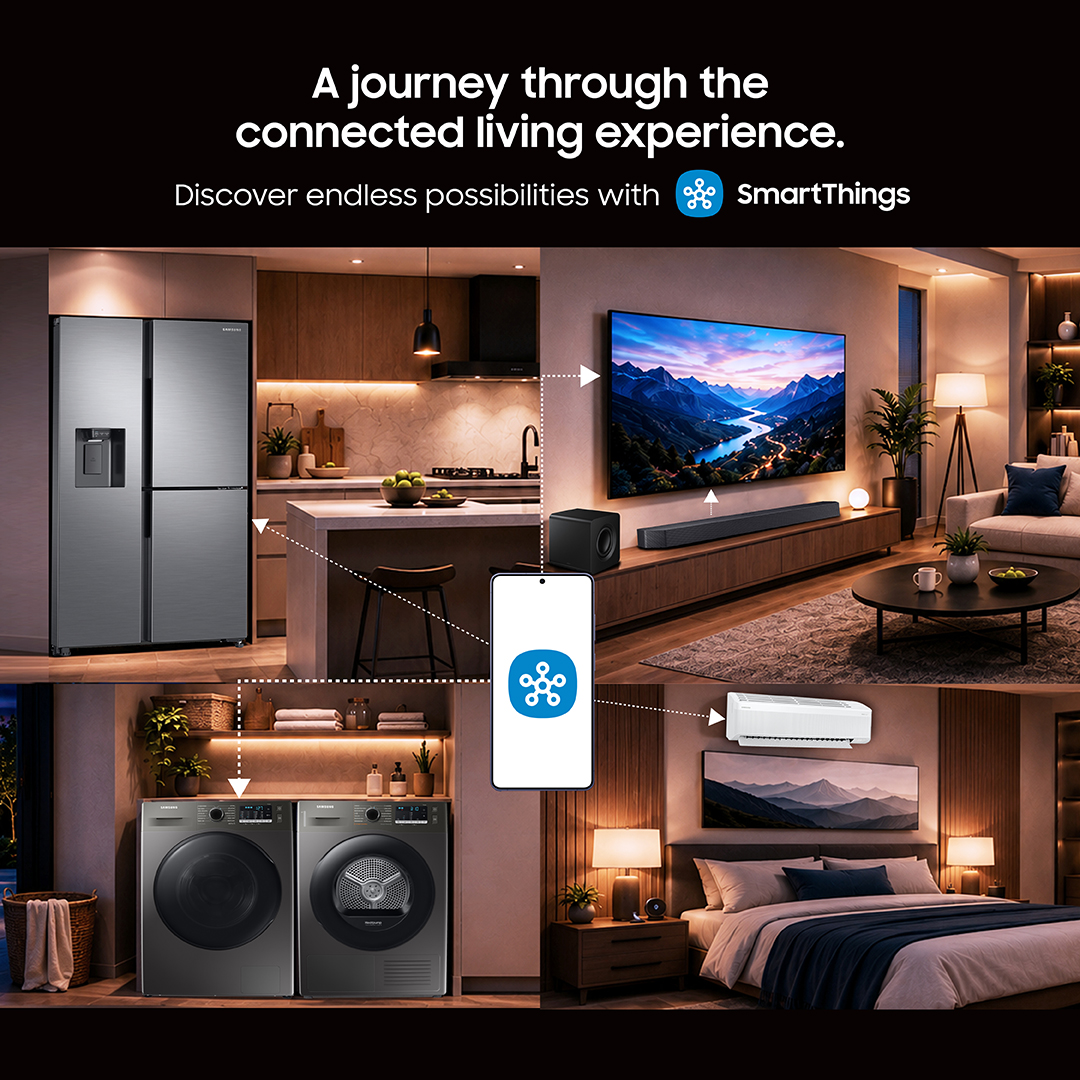
Samsung Electronics is taking its connected-home strategy directly to Kenyan consumers, using three Nairobi shopping malls to demonstrate how smartphones, televisions, wearables and AI-enabled appliances can operate as a single technology ecosystem rather than as standalone products.
The Korean electronics giant will launch its Connected Living Experience at The Junction Mall from August 28 to 30, followed by The Galleria Mall from September 4 to 6 and Sarit Mall from October 2 to 4.
The campaign is more than a conventional product showcase. It reflects Samsung’s broader attempt to shift consumers from buying individual devices to participating in an ecosystem built around SmartThings, its Internet of Things platform that connects and manages compatible devices across the home.
That shift has important implications for Samsung’s business in Kenya, where the company is competing not only on hardware but increasingly on software, artificial intelligence, connectivity and the recurring relationship it can build with consumers after a device is purchased.
Samsung says SmartThings had more than 430 million users globally as of December 2025, giving the platform a substantial installed base from which to expand connected-home services.
From gadgets to an ecosystem
For years, consumer electronics companies competed largely on specifications: the number of megapixels in a smartphone camera, the size of a television, refrigerator capacity or washing-machine efficiency.
Samsung is increasingly selling something different.
The proposition is that the Galaxy smartphone can become the control center for a home in which the television, refrigerator, washing machine, air conditioner and other appliances communicate with one another.
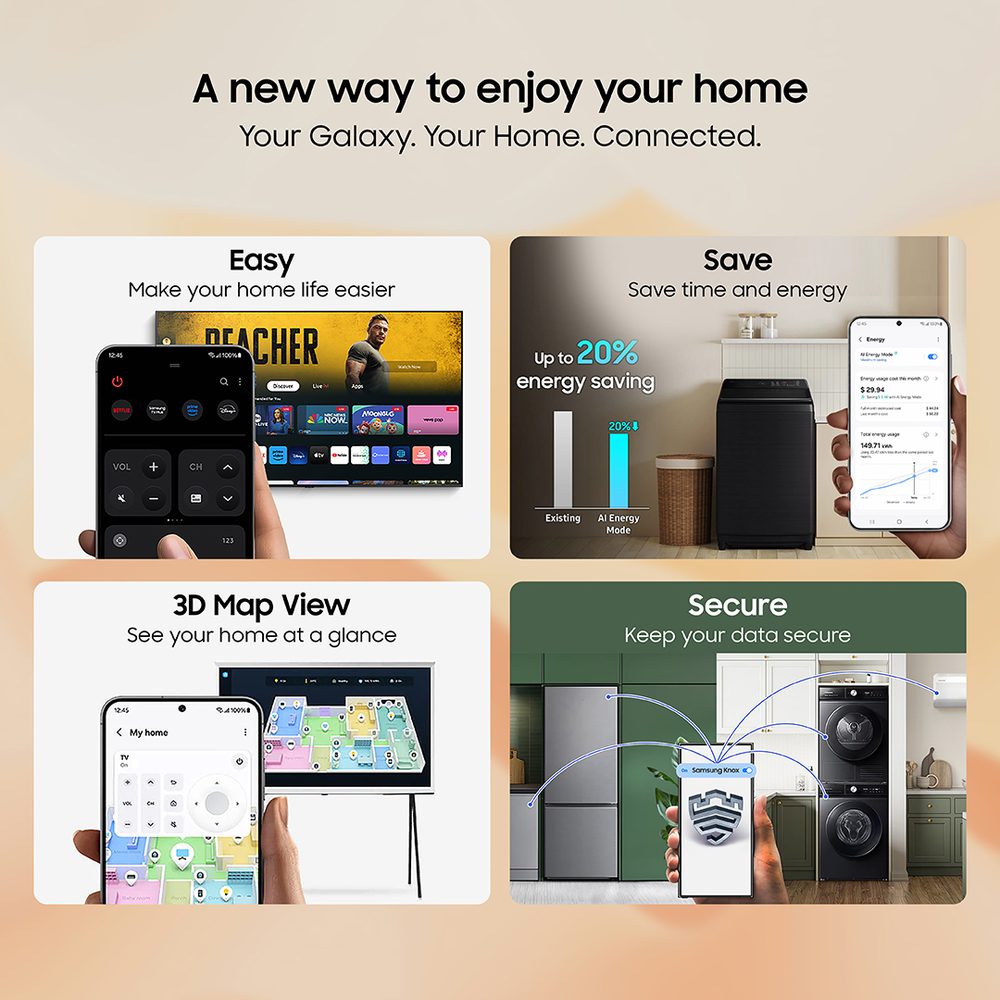
Its SmartThings platform allows users to remotely control compatible devices, create automations and monitor energy consumption. Samsung has also expanded the platform with features such as 3D Map View, device diagnostics, energy management and home routines.
The Nairobi activation is designed to make that proposition tangible.
Instead of placing a phone, television or refrigerator on separate display stands, Samsung will recreate living-room, kitchen and laundry environments where consumers can see how the products interact.
That distinction matters because connected-home technology can be difficult to sell when its benefits remain theoretical. A consumer may understand why a new television has a better display, but the economic and practical value of connecting that television to a refrigerator, smartphone or washing machine is less immediately obvious.
Samsung is effectively turning the mall into a live demonstration of its ecosystem strategy.
AI is becoming the connective layer
Artificial intelligence is central to the pitch.
Samsung’s latest connected-home strategy goes beyond allowing consumers to switch appliances on and off remotely. The company is increasingly using AI to interpret usage patterns, automate routines and optimize the operation of connected devices.
SmartThings’ AI Energy Mode, for example, is designed to analyze usage patterns and adjust connected appliances to reduce energy consumption. Samsung’s Africa platform highlights energy management as one of the core use cases for its connected-home ecosystem.
That is particularly relevant in Kenya, where electricity costs and household energy consumption are important considerations for consumers.
Samsung has also been extending AI deeper into individual appliances. Its AI-enabled refrigerators, for example, can use AI Vision to identify food items and support food-management and recipe functions, while connected cooking appliances can receive instructions through the SmartThings ecosystem.
The result is a shift in the definition of an appliance.
A refrigerator is no longer simply a machine that keeps food cold. A television is no longer simply a screen. A washing machine is increasingly positioned as part of an intelligent household system.
Kenya becomes an important test market
Samsung’s decision to take the experience into three major Nairobi malls also highlights the importance of physical consumer engagement in a market where smart-home adoption is still developing.
The company needs consumers to understand the value proposition before asking them to invest in multiple connected devices.
That creates a potentially important commercial cycle.
A consumer may initially purchase a Galaxy smartphone, then add a Samsung television, followed by an appliance. Each additional device increases the usefulness of the ecosystem and creates another opportunity for Samsung to retain the customer within its hardware and software environment.
The strategy is already visible in Samsung’s wider Kenyan business.
The company recently used a Nairobi event to promote SmartThings alongside its Galaxy A Series smartphones, demonstrating appliance and lighting controls as part of a broader push to make the smartphone an entry point into the connected home.
Samsung has also positioned its 2026 television lineup in Kenya around AI and SmartThings, turning the television into a dashboard for connected devices rather than simply an entertainment product.
The bigger opportunity is beyond households
The connected-home strategy could also give Samsung a pathway into Kenya’s commercial property market.
Samsung already markets SmartThings Pro as a business-focused IoT platform for residential developments, hotels, offices and other commercial environments. The platform allows businesses to remotely manage connected equipment, monitor energy consumption and automate building operations.
That creates a much larger addressable market than individual household appliances.
Property developers could use connected technology as an amenity in new apartments. Hotels could offer guests digitally managed rooms. Offices could automate heating, cooling and other building systems.
For Samsung, that means SmartThings can potentially become more than a consumer application. It can become infrastructure sitting behind homes, buildings and commercial spaces.
Retail promotions are part of the strategy
The Nairobi activation also combines technology education with retail incentives.
At The Junction Mall, Samsung says Azone Outlet will offer discounts of up to 60% on selected home appliances, while Carrefour will offer discounts of up to 25%. Quick Plug will offer discounts of up to 10% on selected Samsung mobile devices, alongside bundled accessories on selected products.
The commercial logic is straightforward: demonstrate the ecosystem, then reduce the friction involved in purchasing the hardware required to build it.
This is important because connected-home ecosystems face a classic adoption problem. The technology becomes more valuable as consumers own more compatible devices, but the initial cost of assembling those devices can be significant.
Retail promotions can help Samsung move consumers from curiosity to adoption.
The battle is moving from devices to relationships
Samsung’s Kenyan strategy reflects a broader change in consumer technology.
Hardware remains the foundation of the business, but the competitive advantage increasingly comes from what happens after the sale.
A smartphone that connects seamlessly to a television, refrigerator and washing machine is harder to replace with a competitor’s device if the consumer has already invested in the ecosystem.
That creates a form of customer lock-in driven not necessarily by restrictions, but by convenience.
Samsung is also not building its ecosystem entirely in isolation. SmartThings supports compatible third-party devices and industry standards such as Matter, broadening the potential range of products that can participate in connected-home environments.
The challenge will be converting the concept into meaningful mass-market adoption.
Kenyan consumers are likely to judge connected-home technology less by how futuristic it looks in a shopping mall and more by whether it saves time, reduces electricity consumption, improves convenience and justifies the additional cost.
Samsung’s three-city activation will give the company an opportunity to make that case directly.
For Samsung, however, the stakes are larger than a series of mall demonstrations. The company is betting that the next phase of consumer electronics in Kenya will not be defined by which device has the best specifications, but by which technology company can make all the devices in a consumer’s life work better together. And Samsung wants SmartThings to be at the center of that relationship.