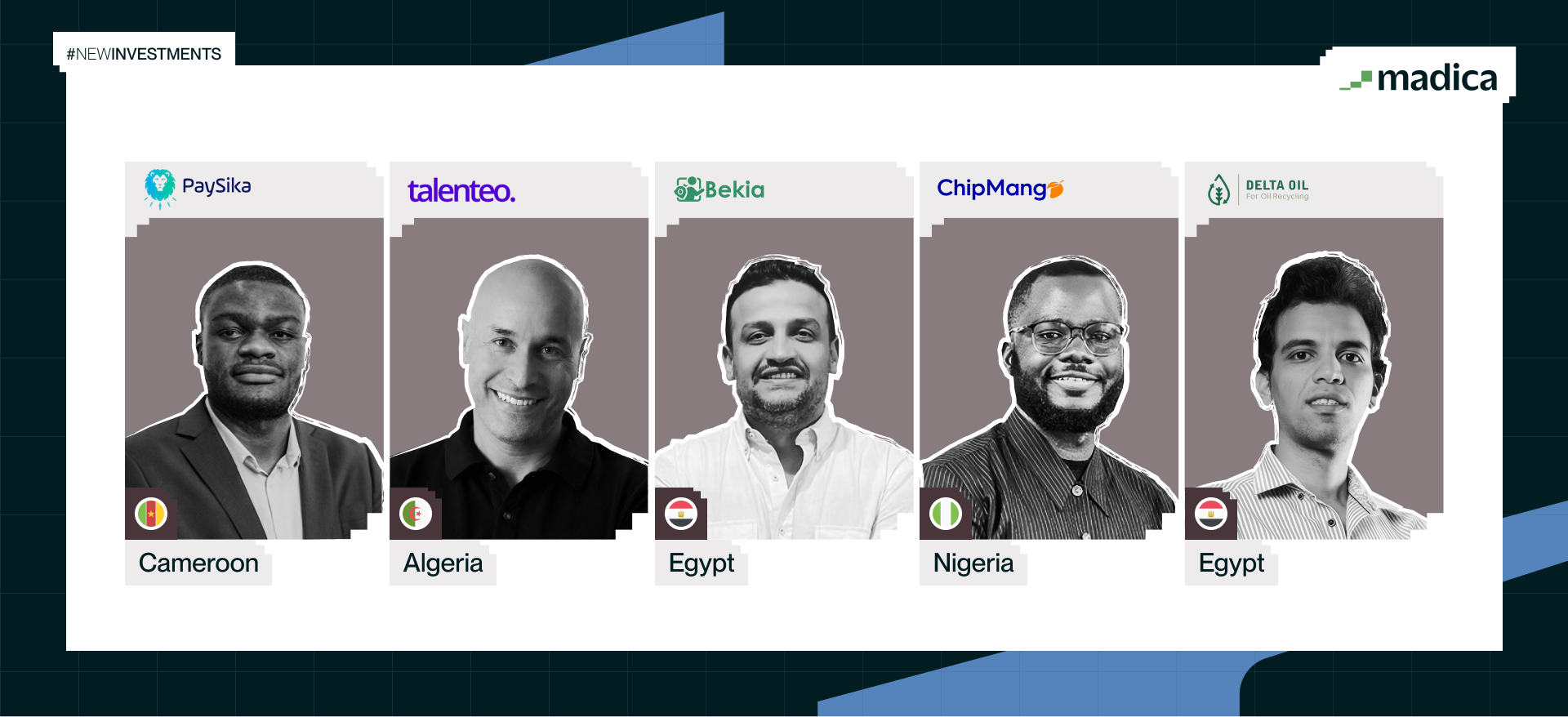
Madica has committed up to $1 million across five African startups, making its first investments in Algeria and Cameroon as the early-stage investment program after recently announcing a total of $600,000 across three African startups.
The investments span Algeria, Cameroon, Nigeria and Egypt and target companies working in human resources technology, digital financial services, semiconductors, renewable fuel infrastructure and recycling.
Each of the five startups will receive up to $200,000, putting the maximum value of the latest portfolio at $1 million. The companies will also join Madica’s 18-month investment program, which combines capital with operational support, executive coaching, founder immersion trips and access to its global investor network.
The investments extend Madica’s strategy of backing startups at the pre-seed stage in markets beyond Africa’s most established venture capital centers.
In Algeria, Madica has invested in Talenteo, an HR technology company co-founded by Louai Djaffer. The startup is developing an all-in-one human resources management platform for medium-sized and mid-market businesses, with plans to serve companies across Francophone Africa.
Madica’s investment in Paysika marks its entry into Cameroon. Founded by Roger Nengwe and Stezen Bisselou, the company operates a digital neobank providing virtual and physical payment cards to consumers and small and medium-sized businesses across Central Africa.
Paysika is targeting customers that require access to digital financial services and international payments, an area where fragmented financial infrastructure has created opportunities for fintech companies across the region.
“We’re building the financial infrastructure allowing banking services that are more accessible, practical and inclusive for consumers and businesses across Central Africa,” said Nengwe, Paysika’s co-founder and chief executive officer.
The portfolio also includes Nigerian semiconductor startup ChipMango, co-founded by Ola Fadiran and Jovan Andjelich.
ChipMango is building a business around chip design services, engineering education and localized Edge AI products as demand increases for semiconductor expertise and locally developed computing technologies in Africa.
In Egypt, Madica has backed Delta Oil, co-founded by Serag Moussa, which is developing infrastructure to connect fragmented used cooking oil collection networks with international buyers.
The company is seeking to turn used cooking oil into a commercially valuable feedstock for renewable fuels by improving the collection and aggregation infrastructure linking local suppliers to global markets.
Madica’s second Egyptian investment is Bekia, founded by Alaa Afifi. The company operates a digital platform connecting households and businesses that generate recyclable waste with industrial buyers.
The investments in the two Egyptian startups give Madica additional exposure to the circular economy, alongside its investments in financial and technology businesses.
The latest commitments come as venture funding in Africa remains concentrated among a limited number of markets and companies, leaving startups in less-established ecosystems with fewer sources of institutional capital at the earliest stages of development.
Madica, which was launched in 2022, was established to address that funding gap by investing in founders operating in underserved African markets. The sector-agnostic program is affiliated with Flourish Ventures, an early-stage fintech investment firm.
“At Madica, we’ve always believed that exceptional founders can be found in every corner of Africa, yet access to early-stage capital remains heavily concentrated in a handful of ecosystems,” said Emmanuel Adegboye, head of Madica.
“By making our first investments in Algeria and Cameroon, we’re continuing to prove that world-class businesses can emerge from markets that have historically been overlooked by venture capital.”
For Talenteo, the investment provides access to capital and networks that Djaffer said can be difficult for founders in less-developed venture markets to secure.
“Too often, founders in markets like ours have to work twice as hard to access the capital and networks needed to grow,” said Djaffer, who is also Talenteo’s chief executive officer.
Madica’s model combines financing with a longer period of company-building support. The five new portfolio companies will receive mentorship and executive coaching in addition to the investment, while founders will have access to international immersion programs and Madica’s investor network.
The expansion into Algeria and Cameroon also increases the geographic diversity of Madica’s portfolio at a time when investors are increasingly looking beyond established technology centers for new opportunities in Africa.
Madica said it continues to seek startups across the continent. Companies applying to the program must be headquartered in Africa, have a minimum viable product with some paying customers, have founders working full-time and have received little or no institutional funding.