Safaricom is positioning M-Pesa as the operating system for Kenya’s digital economy, expanding the mobile money platform into investments, savings, insurance and business services as it seeks to evolve beyond its traditional telecommunications business.
The strategy builds on a financial services business that generated KSh182.7 billion in revenue in the financial year ended March 2026, representing 13.4% growth from the previous year. M-Pesa accounted for 45.6% of Safaricom Kenya’s service revenue, making it the company’s largest revenue contributor.
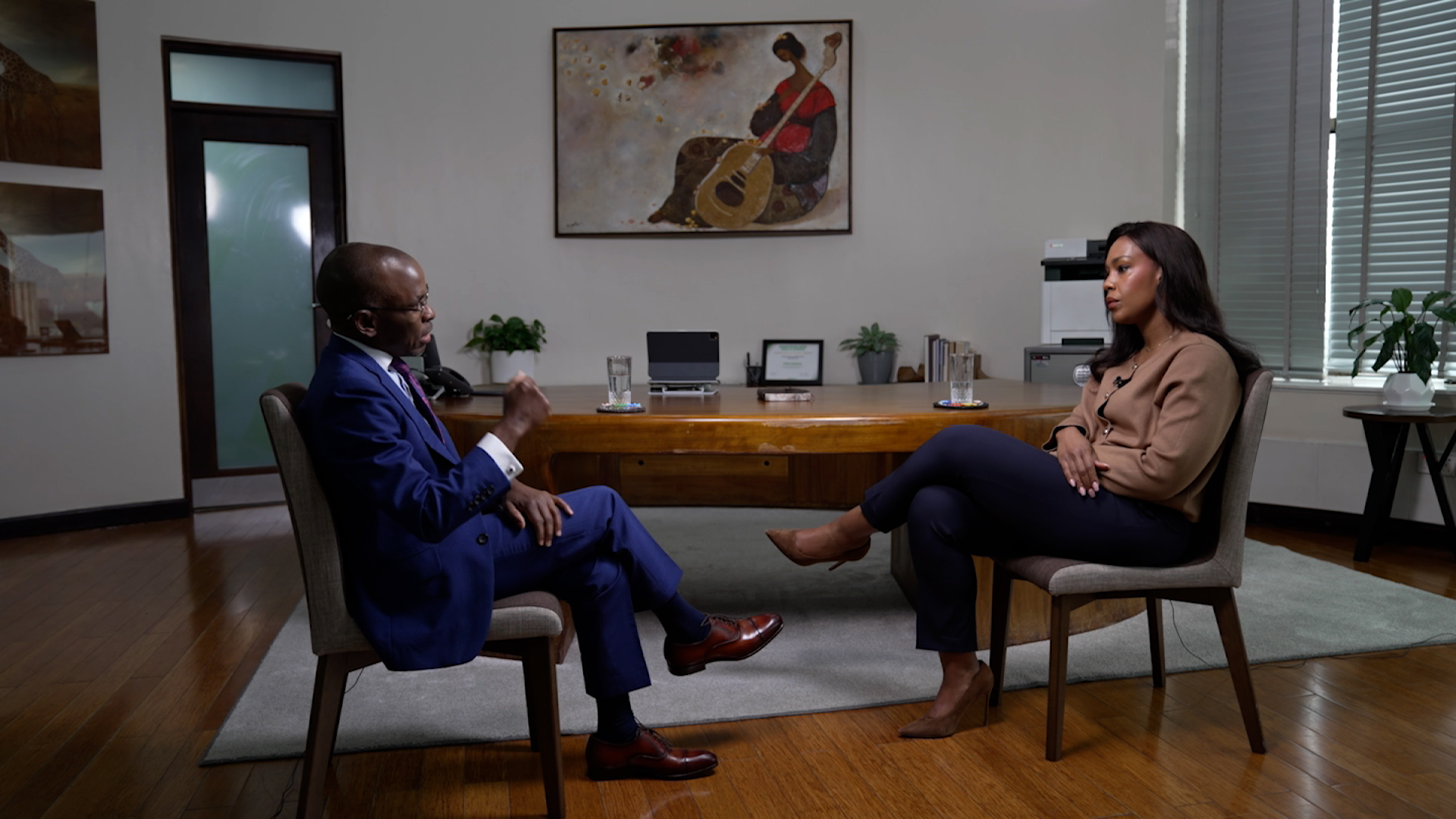
In an interview with CNN, covered by TechMoran, Chief Executive Officer Peter Ndegwa outlined plans to broaden M-Pesa beyond payments into a wider financial ecosystem connecting consumers, businesses and financial institutions. This a broader shift in Safaricom’s business model from providing connectivity and mobile payments to becoming a technology platform embedded in the financial and commercial activities of its customers.
Ndegwa identified Safaricom’s entry into Ethiopia, the expansion of M-Pesa into financial services and increased investment in connectivity as among the defining decisions of his tenure, which began on April 1, 2020.
M-Pesa expands beyond payments
Safaricom wants customers to use M-Pesa not only to transfer and receive money but also to save, invest and access insurance products.
“We want to broaden and democratise access so you can either pay, you can save, you can invest, you can insure using M-PESA,” Ndegwa said in the CNN interview. The expansion takes M-Pesa into markets traditionally dominated by commercial banks, investment firms and insurance providers, while allowing Safaricom to leverage its existing customer base and payment infrastructure.
The platform processed 46.4 billion transactions worth KSh41.68 trillion in FY2026, representing annual growth of 25.1% in transaction volumes and 8.9% in transaction value. That translates to approximately 127 million transactions daily, based on the full-year average.
Ndegwa has separately cited approximately 150 million daily transactions, highlighting the scale of the infrastructure Safaricom must maintain as it adds more financial products. One of the clearest examples of the expansion is Ziidi Trader, which allows customers to buy and sell listed securities through the M-Pesa app, with investments starting from as little as US$1.
Developed in partnership with the Nairobi Securities Exchange and Kestrel Capital, the service brings stock market participation closer to ordinary mobile money users and extends M-Pesa into personal investment management.
Credit, investments and merchant services drive growth
M-Pesa’s expansion is supported by a growing portfolio of financial products. Safaricom’s FY2026 investor presentation showed that the platform had 18 million total credit customers, an increase of 117.9% year on year.
Assets under management in wealth products reached KSh21 billion, up from KSh9.8 billion a year earlier, while active wealth management customers increased to 2.2 million. The company is also expanding M-Pesa’s role in business transactions, targeting small traders and larger merchants with payment acceptance, supplier payments and employee disbursement services.
Its merchant ecosystem grew to approximately 3.1 million merchants in FY2026, an increase of 81.5%. Merchant revenue rose 35.8% to KSh13.3 billion, reflecting the growing contribution of businesses to M-Pesa’s revenue base. The expansion places Safaricom in closer competition with banks and fintech companies, although Ndegwa sees opportunities for collaboration across the financial services industry.
“Financial institutions like banks and insurance companies are competitors, but they’re also partners,” he said.
For Safaricom, partnerships will be important as it expands into regulated financial services without necessarily having to build every product and capability independently.
AI powers Safaricom’s super app ambitions
Safaricom is consolidating its digital services through an AI-powered super app designed to bring consumer and business services into a single platform.
Its FY2026 investor presentation showed that the consumer app had 6.6 million active customers, up 40%, while the business app recorded 458,900 active merchants, an increase of 52.5%. The consumer app processed KSh3.1 trillion in transaction value, representing 38.3% growth. The business app handled KSh949 billion, up 5.9%.
Artificial intelligence is expected to help personalise services and improve how customers interact with the platform. Ndegwa has described the ambition as treating every customer as a “segment of one”, using data to deliver more tailored experiences. AI is also becoming central to Safaricom’s security infrastructure as transaction volumes increase.
“We can’t manually be able to prevent fraud if we didn’t have AI and we have a data layer,” Ndegwa said.
The approach reflects the growing importance of automated fraud detection and data analytics in protecting a financial ecosystem handling billions of transactions annually.
Network investment underpins digital expansion
Despite its growing financial technology ambitions, Safaricom’s strategy remains dependent on telecommunications infrastructure.
Ndegwa said the company invests between US$400 million and US$500 million annually in Kenya, with approximately half directed towards network infrastructure. Data consumption is growing by about 30% annually, increasing demand for network capacity, fibre connectivity and reliable broadband services.
Safaricom has expanded 4G coverage to more than 95% of Kenya’s population, compared with approximately 50% before the COVID-19 pandemic. The company is also investing in fibre connections for homes and businesses while considering satellite connectivity as a complementary option for underserved areas.
These investments support more than traditional voice and data services. Mobile payments, digital banking, investment platforms and AI-powered applications all depend on reliable connectivity and the capacity to process increasing volumes of data.
Ethiopia expansion tests regional ambitions
Safaricom’s ambitions extend beyond Kenya through its investment in Ethiopia, where it is building a second major telecommunications and financial services market.
M-Pesa’s 90-day active customers in Ethiopia increased 119.4% to 5.2 million in FY2026. However, the operation remains loss-making, although EBITDA losses narrowed 64.8% to KSh15.1 billion from KSh43 billion a year earlier. The Ethiopian investment illustrates the financial demands of expanding Safaricom’s platform model into new markets, where the company must build network infrastructure, acquire customers and establish digital payment ecosystems.
At group level, Safaricom reported service revenue of KSh414.1 billion in FY2026, an increase of 11.1%. Net income rose 67.3% to KSh99.7 billion, excluding the impact of hyperinflation accounting.
Safaricom’s technology company transition
The M-Pesa strategy is central to Safaricom’s ambition to become Africa’s leading purpose-led technology company, rather than remain primarily a telecommunications operator. Its existing mobile money infrastructure gives it a significant advantage in pursuing that transition. Millions of consumers and businesses already depend on M-Pesa for payments, creating an established distribution network for additional financial and digital services.
Moving into savings, investments, insurance, credit and merchant services could deepen customer engagement while creating new revenue streams beyond traditional connectivity.
However, the expansion also brings challenges around regulation, cybersecurity, competition and customer trust. Safaricom will need to maintain strong relationships with banks, insurers, investment firms and regulators as it moves further into their traditional markets.
The company’s next phase will therefore depend on whether it can turn M-Pesa’s extensive reach into a broader digital services ecosystem without compromising the reliability and trust that made the platform successful. The ambition is to make Safaricom increasingly central to how individuals and businesses participate in the digital economy, with M-Pesa providing the financial infrastructure connecting those activities.