


 The Kenyan government might be all over the world creating friendships, borrowing billions of shillings from China and trying to make more revenue at home through excise duties and taxes but analysts say its short-term thinking is fizzling innovation by the roots.
Erik Hersman, co-founder at iHub and Ushahidi speaking to TechMoran on the need for locally made hardware solutions in the country faulted the government for its short-sighted hand-to-mouth policies-(raising revenue for bills).
Hand-to-mouth
Hersman told TechMoran,”The government’s short-sighted focus on import duty for components we can’t even make here, to under-resourced schools and technical colleges” is killing hardware innovation.
” There are some ridiculous levies on imports of raw materials and electronic components that we can’t even find or make here. This doesn’t make any sense and is an indication of the Kenyan government’s short-term thinking on revenues,” said Hersman. “Is it better to make a little money now off import duties, or a lot of money later off of successful companies?”
Levies on imports of raw materials and electronic components
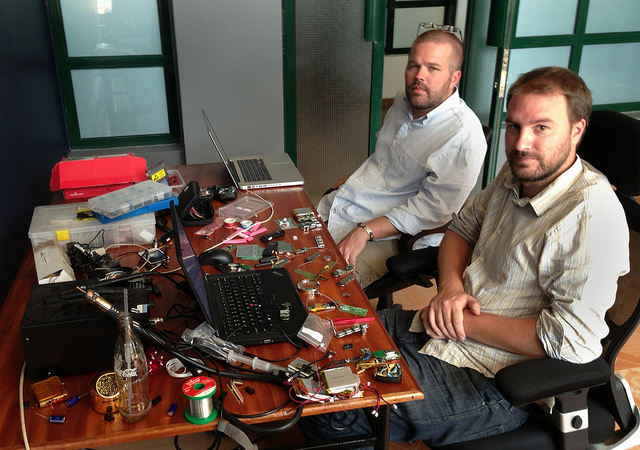
Just recently, the technologist had an ugly experience that shows how hard it is to get assembly parts into the country.
He writes on his blog, the WhiteAfrican,

FedEx called me with the news that a package we were waiting for had arrived. The true value of the components was listed on the package at $230. These were new plastic cases for the BRCK, as well as a couple modem and router components. The Kenya Revenue Authority decided that it actually should be valued at $300, and then charged 100% duty. To clear the package, we have to pay $300 (26,000 Ksh).
Pay 100 percent duty
The incident shows a classic example of an extremely hazardous government regulation that discourages local prototyping and local manufacturing. Ironically, in Nigeria’s 2013 budget, a country Kenya emulates and competes with, spelt zero import duty for any machines and equipment they import into the country for sugar manufacturing even when many citizens saw it as reward to Aliko Dangote, President Jonathan Goodluck’s close ally. Cement manufacturers and aviation and transportation firms were also promised zero percent duty and VAT for importing equipment, commercial aircrafts and spare parts imported into the country.
 Last week, the government impetuously turned its ear away from top mobile manufacturers in the country after they protested against the new VAT law. Kenya Revenue Authority, Kenya’s revenue body said mobile penetration has nothing to do with mobile phone penetration which stands at a sickly 30 percent but affordable airtime rates.
Do the math
The mobile manufacturers argued that mobile penetration in Kenya stands at a mere 30% and not at 78%, as stated by the Communications Commission of Kenya (CCK) latest sector statistics but instead of asking for verification, the Commissioner General Kenya Revenue Authority, Mr. John Njirani argued:
“Where is the evidence that penetration was driven by tax regime? In any case, in the mobile business, the purchase of airtime may over time cost many times more than the initial purchase of equipment.”
Njirani added that the increasing mobile penetration had been happening despite a 16 per cent VAT on mobile airtime and an additional 10 per cent excise tax on airtime.
“My hunch is that Kenya’s rapid growth in the mobile sector is more related to the drastic fall in airtime costs which over the last 10 years fell by over 90 per cent due to competitive pressure.”
Reap tomorrow, create today
Hersman on other hand has a different point of view.
“The revenue authorities would rather make quick money off of a component import than more money later off of a manufacturing industry, Hersman said. “I’d rather set up an assembly factory here in Kenya than one in another country, but that isn’t possible if component import isn’t changed.”
 Empty protectionism
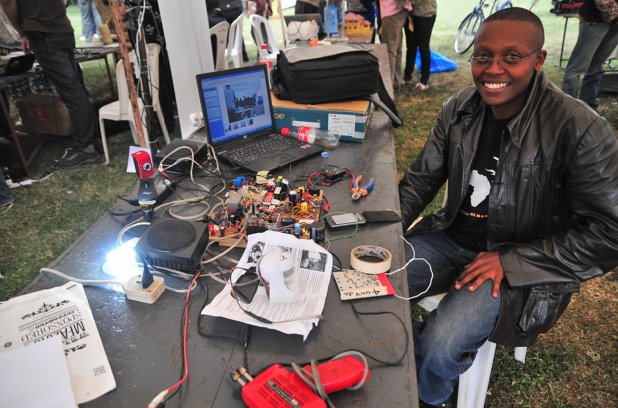
Apart from the country stifling a local manufacturer from setting up shop, young techies in the country who are making point of sale machines, wildlife tracking drones, remotely triggered (via text message) ugali machines, and home security systems will feel the abhorrent cost of raw materials. So will handset manufacturers and dealers and of course consumers.
Protectionism on raw materials suffocates the local assembly and manufacturing industry.
Image credits; 1-Freeafricanmedia.com 2.Techpresident 3.Businessdailyafrica 4.Kickstarter.com