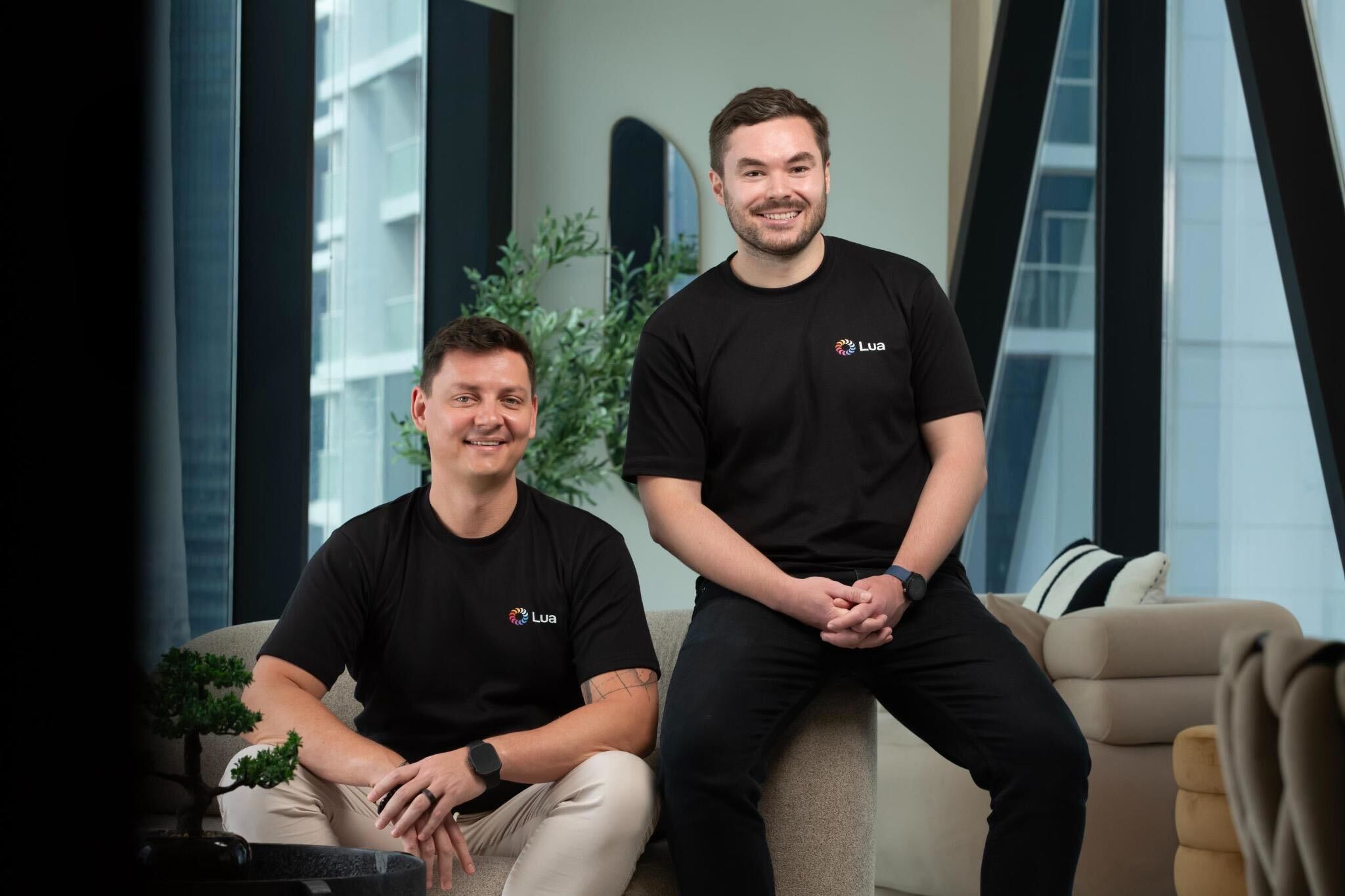
Lua, a London-based startup building an operating system for collaboration between human teams and AI agents, has raised $5.8 million in a seed funding round led by Norrsken22, the company said on Thursday.
The round also drew participation from Flourish Ventures, 20VC, P1 Ventures, Phosphor Capital and Y Combinator, alongside angel investors including Privy CEO Henri Stern, Opendoor executive Kaz Nejatian and Nuitee CEO Med Benmansour.
Founded by Lorcan O’Cathain and Stefan Kruger, Lua aims to enable companies to build, deploy and manage AI “agent workforces” without requiring deep technical expertise.
O’Cathain previously served as COO at Kenyan-based 4G Capital and is a co-founder of Money254, adding to the company’s roots in Africa’s fintech ecosystem.
The platform provides a full-stack system that handles infrastructure, model orchestration, data integration and monitoring, allowing teams to focus on business logic. It offers both developer tools and a visual interface, enabling technical and non-technical users to collaborate on the same AI agents.
Since launching its developer platform in October 2025, Lua says it has recorded revenue growth of nearly 30% week-on-week. In February alone, more AI agents were built on the platform than in the entire period since launch.
The company plans to use the new funding to expand its developer ecosystem and grow its “Lua Implementation Network,” a community of partners deploying agent-based systems across global markets.
“The companies that will win over the next few years are the ones that build their agent workforce with the same intentionality as their human workforce,” CEO Lorcan O’Cathain said.
Investor Lexi Novitske, a general partner at Norrsken22, said Lua’s global footprint across Africa, Asia, the United States and Europe, as well as its experience in deploying agent systems, positions it strongly in the emerging category of AI-enabled work platforms.
Lua joins a growing number of startups seeking to define how businesses integrate AI agents into everyday workflows, as companies increasingly look beyond standalone tools toward systems that combine human and machine collaboration at scale.