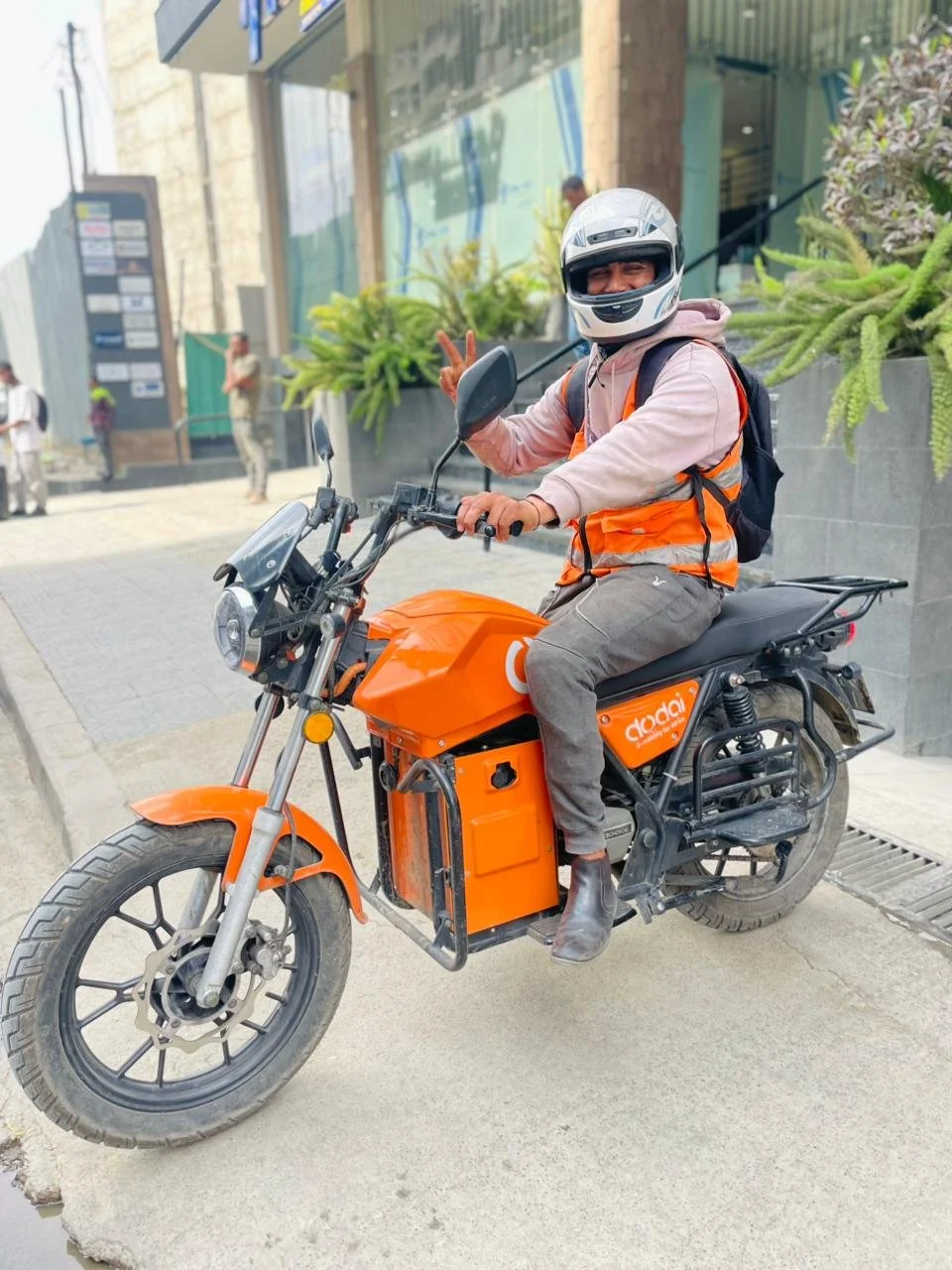
Ethiopia-based e-mobility startup Dodai has raised $13 million in a Series A funding round to accelerate the deployment of electric motorbikes and battery-swapping infrastructure across the country.
The round comprises $8 million in equity and $5 million in debt, with participation from the Value Chain Innovation Fund, IPC, Nagase, Persistent ACV Fund, For Seasons, CBC and ICJ, alongside British International Investment (BII).
The investment underscores growing investor confidence in Ethiopia’s emerging electric mobility sector, as the country positions itself as a frontier market for clean transport solutions.
Founded three years ago, Dodai has focused its operations in Addis Ababa, targeting unmet demand for affordable urban transport in a city experiencing rapid population growth and expanding e-commerce activity. The company’s bet on Ethiopia comes as the government enforces a ban on the import of fuel-powered vehicles, accelerating the shift toward electrification.
Dodai has so far assembled and deployed more than 2,000 electric motorbikes locally and built a workforce of around 100 employees, the majority of whom are Ethiopian.
With the new capital, the company plans to scale its battery-swapping network and user base over the next year. Dodai aims to reach 3,000 battery-swapping users supported by 30 stations across Addis Ababa within 12 months.
Over a three-year horizon, the startup is targeting 30,000 users and 1,000 battery-swapping stations in the Ethiopian capital, before expanding into other high-growth African cities including Abidjan, Kinshasa, Accra and Dar es Salaam.
“Ethiopia is emerging as one of Africa’s most compelling frontier markets for the clean mobility transition,” said Leslie Maasdorp, adding that the investment would help scale critical infrastructure and support job creation.
Dodai executives said the company has already enabled over 2,000 riders to earn a living through its platform, positioning electric mobility as both an environmental and economic opportunity.
“This investment reflects growing confidence in our ability to turn real-world constraints into scalable solutions,” said Hilina Legesse.
The company now plans to deepen its footprint in Ethiopia while laying the groundwork for regional expansion, as competition intensifies across Africa’s nascent electric mobility sector.