
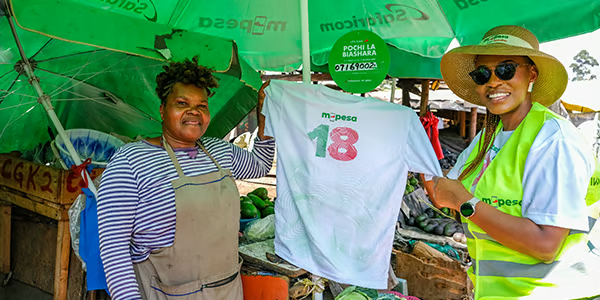
Safaricom’s merchant payments platform, Pochi la Biashara, generated 1.68 billion Kenyan shillings ($12.9 million) in revenue in the first half of fiscal 2026, as women micro-entrepreneurs emerged as the fastest-growing segment on the service, according to a new report by the GSMA and research partners IDinsight and YUX.
The report found that the number of women actively using Pochi grew about 92% between December 2024 and December 2025, compared with 78% growth among men. Women now account for just over 52% of active Pochi users, equivalent to more than 900,000 merchants.
The growth highlights Safaricom’s increasing focus on Kenya’s informal economy, where women dominate micro-trading businesses but often remain excluded from formal banking and digital financial systems.
Launched in 2020, Pochi la Biashara allows small traders to separate business and personal money through a dedicated M-PESA wallet. The product includes features such as non-reversible customer payments, mini-statements, airtime sales, savings tools and access to working-capital loans.
Researchers found that women traders were drawn to features addressing everyday risks in informal commerce, particularly fraud, payment reversals and financial discipline.
Many women users reported stronger savings habits and higher daily sales after adopting the platform. About 35.6% of new users said they were saving more money, while 24.2% reported increased sales.
“Pochi makes me feel like the CEO of my business,” one trader in Kajiado County said in the report. “I’m in control, I track my money, and I’m able to support my family.”
Safaricom has also benefited commercially from the expansion. The number of Pochi accounts rose 72.6% year-on-year to about 1.5 million accounts in the first half of fiscal 2026, while the broader merchant base expanded by more than 55%, according to the report.
The study, which surveyed 1,992 women micro-entrepreneurs across Nairobi, Murang’a and Kajiado counties, found that peer recommendations and face-to-face onboarding remained key drivers of adoption despite Kenya’s mature mobile money market.
Safety concerns also emerged as a major issue for women merchants using digital payments. Some traders reported harassment from customers who obtained their mobile numbers through payment stickers displayed at shops and market stalls. Safaricom has since removed phone numbers from payment notifications and is developing additional privacy features expected to launch in 2026.

 in revenue)