South African AI infrastructure startup Verascient has raised $1.2 million in an oversubscribed seed round as it builds technology designed to help businesses move from experimenting with artificial intelligence to deploying AI agents across everyday operations.
The round was led by Founder Collective, an early investor in companies including Uber, Airtable and Whoop. Andrena Ventures, Cambridge Enterprise and Summit Ventures also participated, alongside angel investors Alan Knott-Craig and Shayne Mann.
Verascient plans to use the capital to expand its engineering team, deepen its technology and support more enterprise deployments.
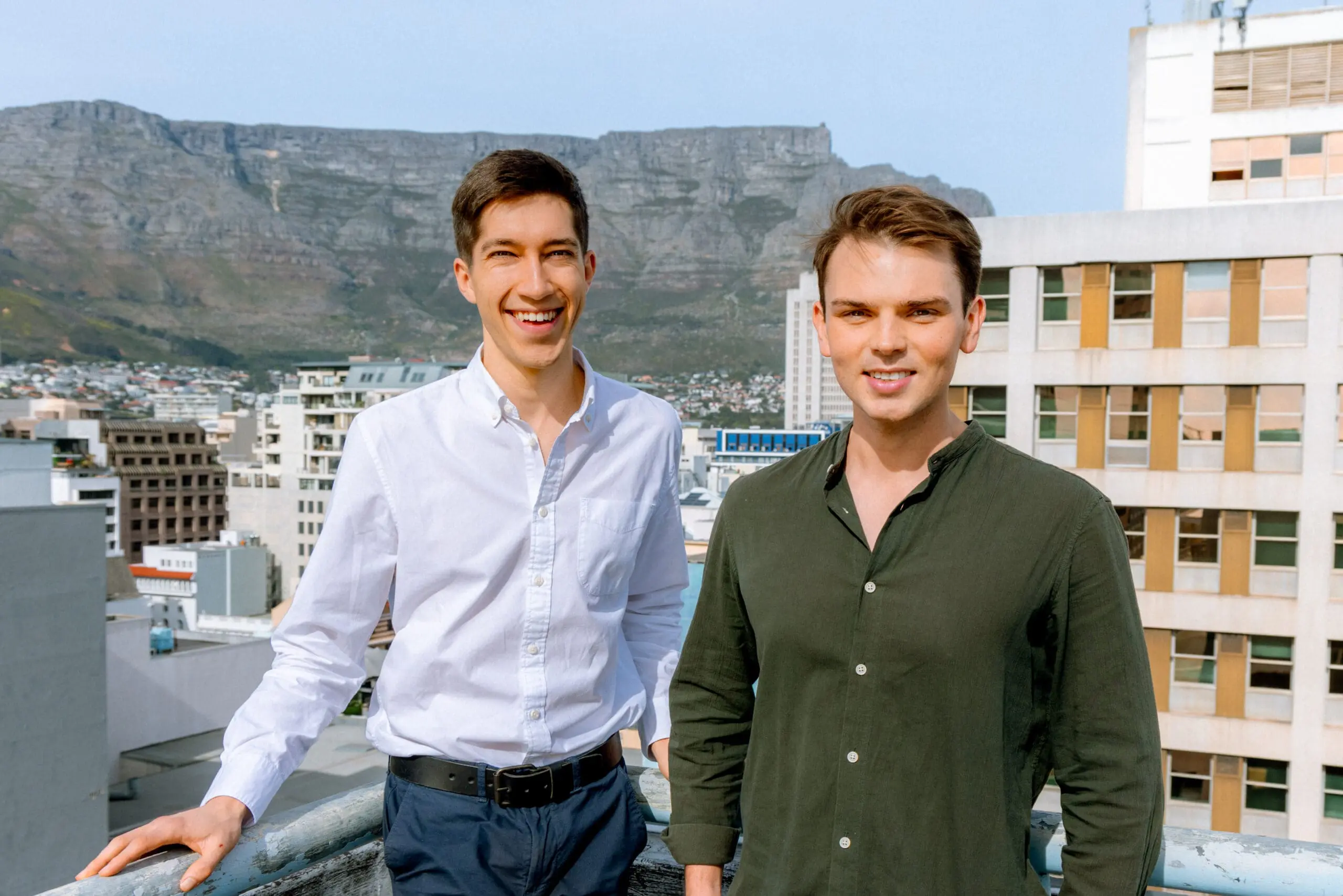
Founded by Keagan Stokoe and Emile Dos Santos Ferreira, the Cape Town-based startup is targeting financial services, insurance and logistics, industries where critical institutional knowledge is often scattered across emails, documents, meetings, spreadsheets and internal systems.
Building the infrastructure underneath enterprise AI
Verascient is positioning itself differently from the growing number of startups building AI assistants and applications. Its core technology is a temporal knowledge graph that maps an organization’s knowledge, workflows and history, allowing AI agents to operate with a deeper understanding of the business.
“At the centre of Verascient’s technology is a temporal knowledge graph designed to build and maintain a comprehensive understanding of an organisation,” said Ferreira, Verascient’s co-founder and CTO. The system is designed to preserve the history, permissions and provenance associated with information while making that knowledge available to AI agents.
The problem Verascient is targeting is increasingly important as businesses adopt AI.
Giving employees access to an AI model does not necessarily give that model an understanding of how a particular company works. Information may exist across dozens of systems, while key decisions and institutional knowledge can remain locked inside individual employees.
Ferreira argues that this creates a distinction between simply giving workers AI tools and building an organization capable of operating around AI.
“There is a significant difference between giving employees access to an AI tool and building a company that can operate intelligently with AI,” Ferreira said.
Verascient’s platform includes an agent-to-agent messaging protocol, background agents that can operate without continuous prompting, role-based access controls and more than 1,000 integrations with existing business systems. The company is also taking a hands-on approach to implementation.
Rather than leaving customers to determine how AI should fit into their operations, Verascient deploys AI engineers who work alongside company teams to identify inefficiencies and build workflows around specific business problems.
From hallucination detection to an AI operating system
Verascient initially developed technology for detecting hallucinations in AI models but it failed as large language models became more capable and fixed hallucination forcing the founders to push aside the standalone hallucination detector was becoming smaller. The company pivoted toward the infrastructure needed to make AI useful inside businesses. That shift has placed Verascient in a part of the AI market focused less on the model itself and more on the systems surrounding it. Stokoe said the opportunity is to rethink how businesses perform important functions rather than simply automate isolated tasks.
“AI is far more capable than most businesses yet realise,” Stokoe said. “The opportunity is to improve existing processes and, in many cases, rethink how the company works altogether.”
He said Verascient starts with areas including revenue, operations, customer experience, decision-making and delivery, then builds the systems and agents needed around those functions.
The objective, he said, is to create businesses that become progressively faster and more capable as they adopt more AI-enabled workflows.
South Africa becomes the talent bet
The funding round is also significant because Verascient intends to build its engineering organization in South Africa. The company is recruiting engineers and AI builders with the ambition of attracting the country’s highest-level technical talent.
Stokoe described the target as the “top 1%” of AI talent in South Africa, with an emphasis on people capable of taking ownership of difficult technical and commercial problems. That strategy comes at a time when African technology companies continue to compete with global technology firms for scarce engineering talent. For Verascient, however, South Africa is not simply a lower-cost engineering base. The founders are positioning the country as a source of technical talent capable of building products for international markets.
“We are looking for high-agency people with the curiosity, technical depth and ambition to build something meaningful to solve real-world problems,” Stokoe said.
He also sees AI as creating opportunities for South African engineers rather than simply eliminating jobs.
“AI will change the shape of many jobs,” Stokoe said. “It also creates a real opportunity for South Africa to develop more people who can build and deploy these systems in the real world.”
Founders bring deep AI and technology experience
Ferreira began programming at the age of 12 and later became an early developer at Replit. While still in high school, he built an on-device AI assistant that attracted more than 200,000 users and won Most Innovative Solution at the App of the Year Awards. He later completed an MPhil in Advanced Computer Science at the University of Cambridge and has worked on research involving enterprise AI costs and AI energy efficiency.
Stokoe was previously part of the founding team at Fibertime, a South African pay-as-you-go fiber provider that has grown to more than 1.5 million users per month. He also founded Purple Dorm, an AI consultancy that worked with organizations in South Africa and the UK. The founders are now attempting to turn that experience into a global enterprise AI company built from South Africa.
Why investors are backing the company
Founder Collective’s participation gives Verascient a notable early-stage technology investor, while Cambridge Enterprise adds a connection to the university ecosystem where Ferreira developed his technical background. The company is betting that as businesses deploy multiple AI agents, they will need a common layer capable of giving those agents access to reliable organizational knowledge and the ability to operate within established permissions and workflows.
That is the thinking behind Verascient’s “operating system” analogy. The temporal knowledge graph acts as the underlying information layer, while agent-to-agent communication allows different AI processes to work together. Background agents can perform tasks without being continuously prompted, while access controls determine what those agents are allowed to see and do.
“When running on our system, an agent doesn’t start from a prompt, it starts with the collective knowledge and established workflows of the company,” Ferreira said.
That distinction could become increasingly important as enterprise AI moves beyond individual productivity tools toward systems capable of carrying out multi-step business processes.
For now, Verascient is using its new $1.2 million to build the team and infrastructure required for that transition. Its larger ambition is to make South Africa a base for a company competing in one of the fastest-growing segments of the global technology industry: the infrastructure that allows businesses to operate with AI at their core.