

For decades, Kenyan banks competed on branch networks, lending products, interest rates and the strength of their customer service. However, things are a bit different today as customer loyalty is no longer shaped by customer service and branch networks but the cost and convenience of moving money.
This is partly due to the digital transformation amongst the banking sector Kenya and a digital payments revolution that has fundamentally changed how people interact with financial institutions from the banking hall to their mobile phones. Banking is no longer an occasional activity confined to branches as the mobile phone allows customers to transfer money, pay suppliers, settle school fees, receive salaries, shop online and move funds between accounts from almost anywhere in the world.
With the convenience of the mobile phone, the major issue has been the cumulative impact of transaction fees and not access to funds like it was a decade ago.
According to the World Bank’s Global Findex 2025, “Across low- and middle-income economies, 61 percent of adults, or 82 percent of account owners, made or received a digital payment in 2024, a 27 percentage point increase from 2014. Digital payments are the most popular formal financial service, used by twice as many adults as saved formally and by three times as many as borrowed formally.
Use of digital merchant payments to businesses in stores or online grew to 42 percent of all adults in 2024, up from 35 percent in 2021, with variations by region. The share of adults making such payments more than doubled in some economies, including Cameroon, the Kyrgyz Republic, Paraguay, and Viet Nam, and showed widespread adoption in Kazakhstan, Kenya, and Mongolia.
The numbers illustrate just how deeply digital finance has become embedded in everyday life. The report adds that mobile phones and the internet have revolutionized financial inclusion, enabling more people to access and use digital financial services to manage their financial lives. From mobile money accounts on basic phones to bank-account-linked wallets on smartphones, digital services are fulfilling their promise of being more accessible and affordable than alternatives that are not digitally accessible, bringing daily utility payments, savings, deposits, withdrawals, loan disbursements and repayments to them via apps.
The World Bank’s latest Global Findex data shows 94% of Kenyan adults own a financial account, while 89% made or received a digital payment during the previous year. Digital transactions are no longer simply an alternative to cash; for millions of consumers, they are the default way of managing money.
That shift has changed what customers expect from their banks and increasingly, people are not choosing a financial institution based solely on its loan products, branch footprint or savings rates but the cost of access to these funds.

Every Transaction Shapes Loyalty
Because of the need for instant access powered by technology, a successful transaction builds confidence while a delayed payment creates frustration. Also a recurring fee may appear insignificant, but when it is attached to dozens of transactional costs over a month, customers begin to notice.
This is where the cost of transaction becomes important and not just access to the funds. Consumers tend to notice frequent costs that recur on their deposits, withdrawals, utility payments, transfers, or remittance and start questioning access vs affordability on the cost of banking. Over time, those charges have influenced the loyalty of customers and how customers perceive the value they receive from their financial institution.
Recent PesaLink research highlights the changing priorities of Kenyan consumers. 64% of account-to-account payment users surveyed said affordability influences their choice of payment service, while more than 60% identified speed and convenience as important factors. The study also found that 57% of users maintain relationships with multiple financial institutions.
That last figure is particularly important for banks. Customers are increasingly comfortable maintaining several banking relationships. A salary may be paid into one bank, savings held elsewhere and everyday transactions handled through another institution or digital wallet. This gives consumers more choice and makes loyalty harder for banks to take for granted.
If another institution can provide the same service faster and at a lower cost, switching becomes increasingly easy.
The Digital-First Customer
Kenya’s financial ecosystem has produced a customer who is comfortable with digital financial services and increasingly unwilling to tolerate unnecessary friction. The modern customer may never visit a branch. Instead, their relationship with a bank is built through an app, a payment notification, an ATM or an account-to-account transfer.
They expect to pay a supplier while sitting in a café, send money to a family member from work, settle a bill from home or transfer funds between accounts late at night. The technology itself is becoming less important to the customer. What matters is the outcome like did the money arrive, how quickly did it arrive, was the transaction secure and most importantly how much did it cost?
These questions are becoming more important than the number of features a bank has added to its mobile application.
SMEs Feel the Difference
The impact is particularly significant for small and medium-sized enterprises. Speaking to TechMoran, Mbugua Njihia, a Kenyan technologist said cost is more important than access especially for SMEs which form the bulk of the Kenyan economy.
‘’An SME may make multiple payments to suppliers, employees, distributors and service providers every day,’’ he said. ‘’It may also receive hundreds of customer payments over the course of a week and for a business operating on tight margins, transaction fees can quickly become a recurring operating expense and it will soon be an issue of moving banks or payment service providers.”
To him, the banks of the future, therefore, need to remove those costs as they can have a major effect beyond customer convenience. The cost of access can keep a client as those little recurring transactions can help a business retain more working capital, simplify reconciliation and make digital payments more attractive. “Cashflow is key to SMEs,’’ he adds.’
The same principle applies to freelancers and independent professionals. A freelancer may receive payments from several clients, move income into savings, pay subscriptions and transfer money to suppliers or family members. Each transaction represents another point at which a bank can either create friction or remove it.
Families Are Changing Too
For households, digital payments have become equally important as most parents are using digital channels to pay school fees and household bills. Families send money to relatives in different towns. Young professionals move funds between savings, investment and spending accounts. In Kenya, these are not occasional banking activities but part of everyday financial life.
When a customer repeatedly pays for routine transactions, the cumulative cost becomes part of their perception of the bank. This is why zero-fee payments can have an impact beyond the immediate amount saved. They create a sense that the bank is working with the customer rather than charging them for every movement of their own money.
Real-Time Payments Raise the Bar
Kenya’s expanding instant-payment infrastructure is reinforcing these expectations. PesaLink, the country’s real-time account-to-account payment network, now connects more than 80 banks, SACCOs and financial institutions, serves more than three million users and has processed over KES 1 trillion in transactions.
That scale matters because it demonstrates how quickly consumers and businesses have become accustomed to moving money electronically. Once customers experience instant transfers, waiting for funds to clear becomes increasingly difficult to justify. Similarly, once consumers become accustomed to lower-cost transactions, recurring charges can start to feel outdated. The result is a new baseline for banking. Speed is expected. Security is expected. Convenience is expected. Increasingly, affordability is expected too.
How SBM Bank Kenya Is Responding
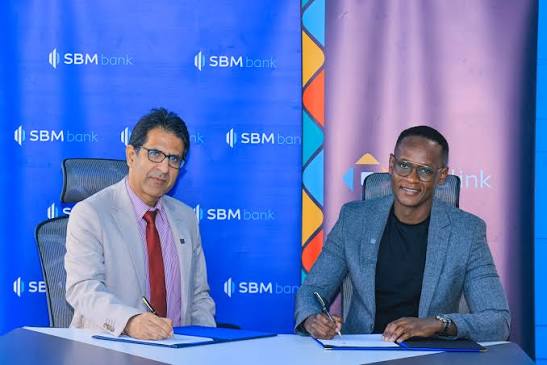
This changing behaviour is reflected in SBM Bank Kenya‘s approach to digital payments. Through its Mfukoni App and #TumaForFree campaign, the bank is offering customers free PesaLink and interbank transfers, removing transaction charges on eligible transfers and reducing the cost of moving money between financial institutions.
The significance is less about a single fee and more about the changing economics of customer engagement. Customers frequently need to move money between different banks, whether paying suppliers, sending money to family, settling bills or managing funds across accounts. Removing the transfer charge can make these everyday transactions more affordable while reducing friction.
For SMEs in particular, the savings can accumulate over time. A business making multiple payments to suppliers, employees and service providers can turn transaction charges into a recurring operating expense. A zero-fee transfer proposition can therefore help businesses retain more working capital while making digital payments more attractive.
For individual customers, the proposition is similarly straightforward: where a transfer qualifies under the offer, customers can move money without paying an additional transfer fee. The benefit is not that all banking services at SBM Bank are free, but that eligible PesaLink and interbank transfers can be made at zero transaction cost.
SBM’s broader performance also provides context for its digital strategy. In the first half of 2026, the bank reported profit before tax of KES 547 million, up 171% from KES 202 million a year earlier. Customer deposits reached approximately KES 94 billion, while total assets stood at about KES 126 billion.
The figures do not prove that zero-fee transactions alone drove the growth. Rather, they show the broader environment in which the bank is expanding its digital and customer-focused strategy.
The Global Shift
Kenya’s experience is part of a much larger transformation. Worldwide, consumers are moving rapidly towards digital and real-time payments. McKinsey has identified payments as one of the most important areas of financial services transformation, with customers increasingly demanding instant and seamless experiences.
PwC has projected strong growth in global non-cash payment volumes, driven by the adoption of digital wallets, account-to-account payments and real-time payment systems. Meanwhile, estimates from Africa’s payments industry suggest that the continent’s digital payments ecosystem could reach US$1.5 trillion by 2030.
For banks, this represents both an opportunity and a challenge. As payment infrastructure becomes more interoperable, customers gain more freedom to move money between institutions. The bank that retains the customer will increasingly be the one that provides the best overall experience rather than simply the institution where the customer first opened an account.
Loyalty Through Less Friction
For years, banks invested heavily in acquiring customers by having more branches, launching mobile applications, introducing loyalty programmes and expanded product portfolios but the next challenge is keeping those customers.
Zero-fee transactions are one way of doing that because they address something customers experience repeatedly. Every time a customer transfers money without an additional charge, the bank removes a small point of friction. Repeated hundreds of times, those experiences can shape perception.
That is why the economics of banking loyalty are changing. Customers may appreciate a sophisticated app, but they are likely to remember whether the bank made everyday financial tasks easier and more affordable. The competitive advantage may therefore shift from having more features to creating fewer obstacles.
For SBM Bank Kenya, the proposition is ultimately about reducing the cost of everyday money movement. The bank is positioning zero-fee eligible transfers not as a claim that banking itself is free, but as a way of removing one of the most frequent costs customers encounter when moving money between financial institutions.
As digital payments become the infrastructure of modern commerce, every transfer becomes an opportunity to reinforce or weaken the relationship between a bank and its customers. Making eligible transfers free can turn a routine transaction into a point of customer value.
The future of banking will not necessarily belong to the institution with the most products or the most elaborate app. It may belong to the bank that makes thousands of everyday financial decisions feel effortless, affordable and secure. For customers, zero-fee transfers are increasingly becoming part of that expectation.