

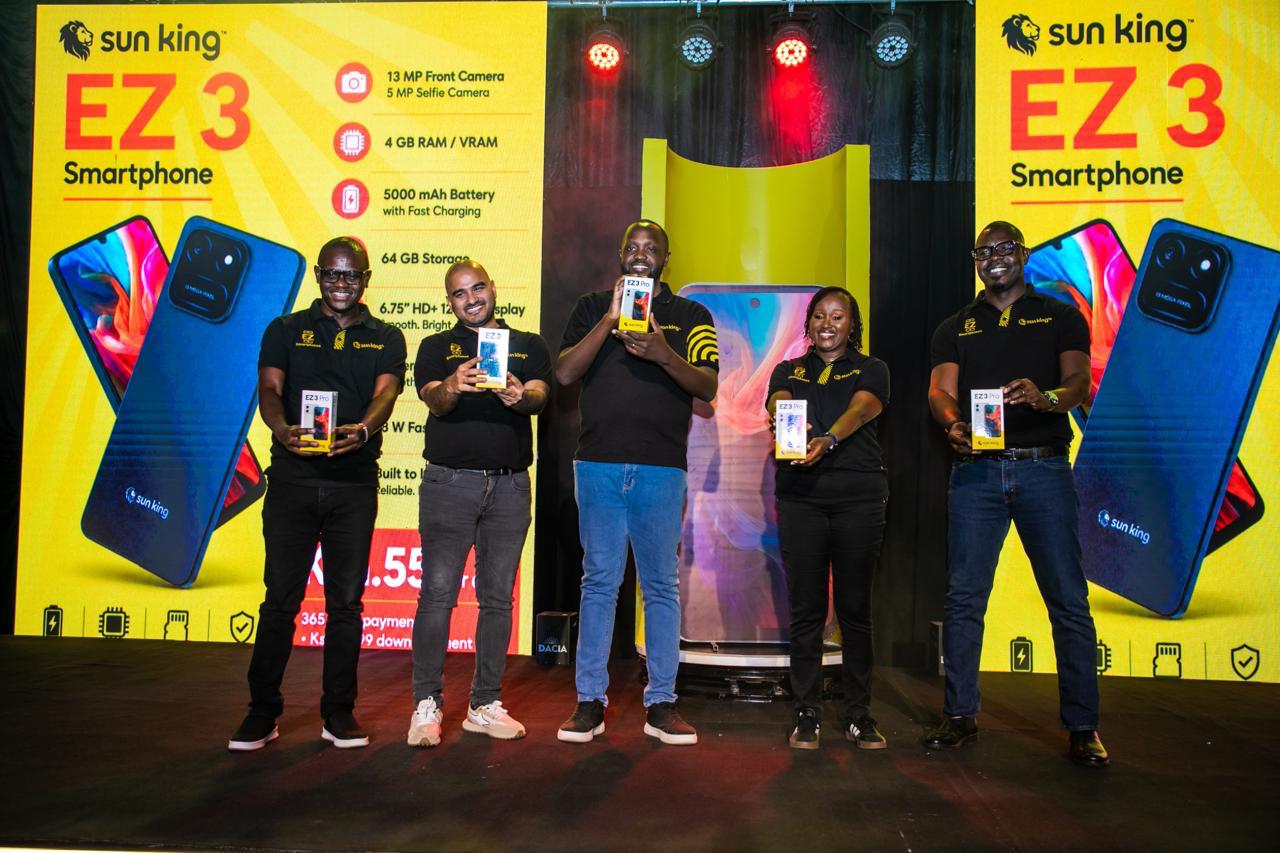
Sun King is expanding its smartphone business in Kenya, launching the EZ 3 and EZ 3 Pro less than a year after entering the market as the solar company looks to turn its distribution and financing infrastructure into a broader consumer technology business.
The company introduced the two devices Thursday, expanding its smartphone portfolio from one model to two. The EZ 3 starts at KES 55 a day with a KES 2,299 deposit, down from KES 60 a day and a KES 2,999 deposit for the EZ 1.
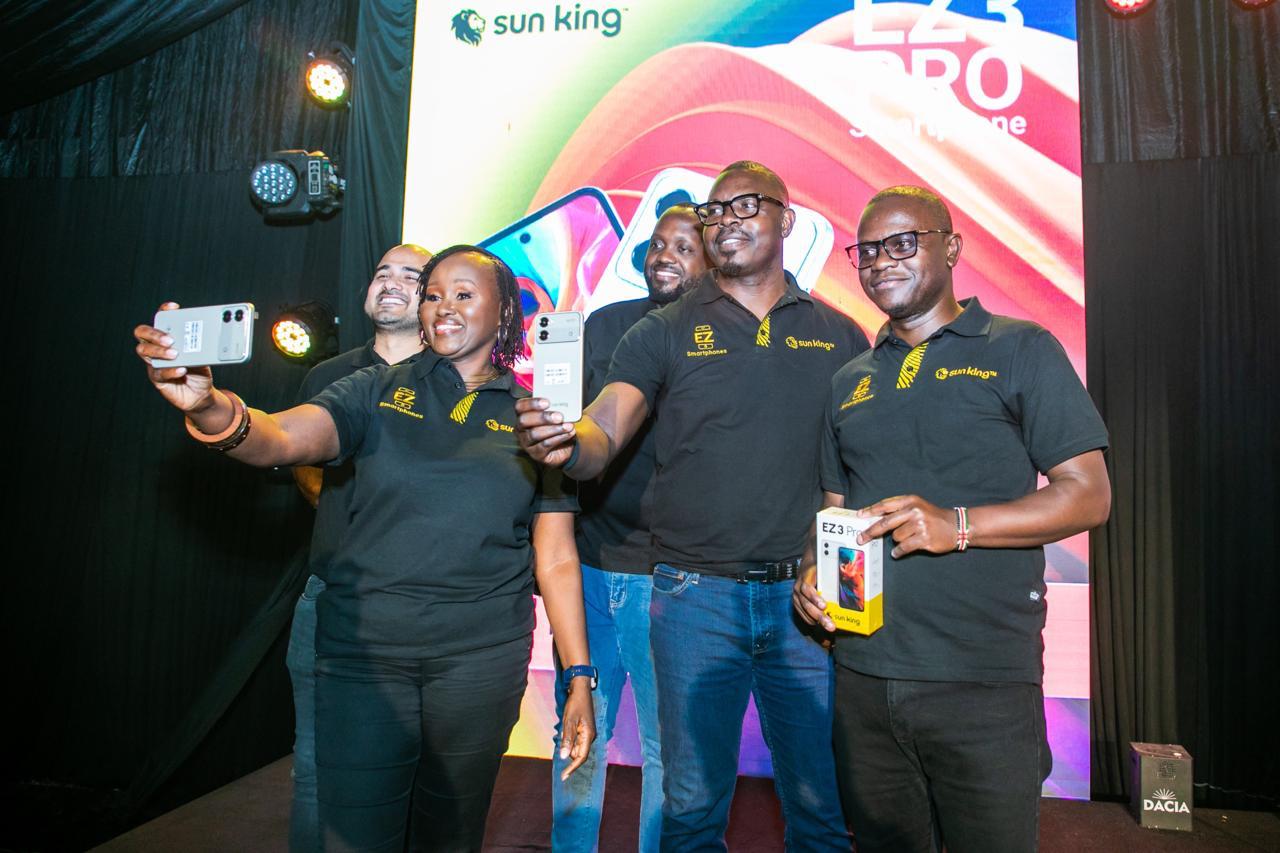
The EZ 3 Pro starts at KES 65 a day with a KES 3,099 deposit.
The launch marks a more deliberate phase of Sun King’s smartphone strategy. Rather than testing the market with a single device, the company is building a broader range while lowering the financial barrier to its mainstream model. Sun King has spent years building a distribution and financing network around affordable solar products in Kenya. Smartphones give the company another category in which to deploy that infrastructure.
Catherine Mudachi, Sun King’s global vice president for marketing, said at the launch that one in five Kenyan households has access to a Sun King product. She also said the company installs more than 330,000 solar kits every month across Africa. That scale gives Sun King a potential advantage in smartphones. The company already has agents, customers and experience managing recurring payments, allowing it to enter the device market without having to build an entirely new distribution model.
The challenge is converting that reach into smartphone sales in a market where established brands already compete aggressively on price, specifications and retail availability.
The EZ 3 is aimed at the mainstream market, with a 6.75-inch HD+ display, a 120Hz refresh rate, 4GB of RAM plus 4GB of virtual RAM, 64GB of storage expandable to 1TB, a 13-megapixel rear camera and a 5,000mAh battery. The EZ 3 Pro moves further up the range with a 50-megapixel camera, 6GB of RAM, 128GB of storage and a 6,000mAh battery supporting 18W fast charging.
The bigger strategic change, however, is the move from one device to a two-phone portfolio. Sun King launched the EZ 1 in February as its first Sun King-branded smartphone in Kenya. The company is now giving customers a choice between a mainstream model and a higher-specification Pro version.

That progression suggests Sun King is moving beyond an initial smartphone experiment and beginning to establish a dedicated device business.
Pay-as-you-go financing is not new to Sun King’s smartphone strategy. It was part of the EZ 1 proposition from the start.
What has changed is the combination of financing, product range and hardware.
The EZ 3 requires a lower deposit and daily payment than its predecessor while offering a larger display, faster refresh rate and expandable storage. The Pro model gives customers the option of paying more for higher specifications.
The approach builds on a model Sun King has used in its solar business: spread payments over time and use a network of local agents to reach consumers who may find conventional upfront purchases difficult.
For smartphones, however, the economics are more competitive. Sun King is competing against brands with established consumer recognition, extensive retail networks and increasingly capable devices at similar price points such as M-KOPA and mainstream phone manufacturers which also offer pay-as-you-go. Banking on affordability with the reach of its existing customer network is a plus.
Its solar products address access to electricity. Smartphones provide access to digital services, mobile money, e-commerce, online work and communication. For traders, smartphones can be used to market products and communicate with customers. For boda-boda riders, they provide navigation and access to digital payments. For creators, they are production and distribution tools.
That makes smartphones a logical adjacent category for a company that already has relationships with millions of consumers across its markets.
But the EZ 3 launch is not about introducing pay-as-you-go smartphones to Kenya. Sun King has already established that model with the EZ 1. Sun King is moving from a single smartphone to a two-device portfolio while lowering the entry payment for its mainstream model.
Sun King’s core business remains solar, but the scale of its distribution network gives the company an opportunity to build additional consumer businesses around the same infrastructure. The company says it has sold more than 31 million solar products globally, while Mudachi said it now installs more than 330,000 solar kits every month across Africa.
In Kenya, Sun King says one in five households has access to one of its products. The smartphone opportunity is to turn that existing reach into a broader consumer technology channel.
The EZ 3 series will test whether the company can do that in a market where smartphone adoption is growing but competition is intense. For Sun King, the significance of the launch is therefore bigger than the specifications of two new phones but a bet on its financing capabilities, distribution network and customer relationships that helped build its solar business.