

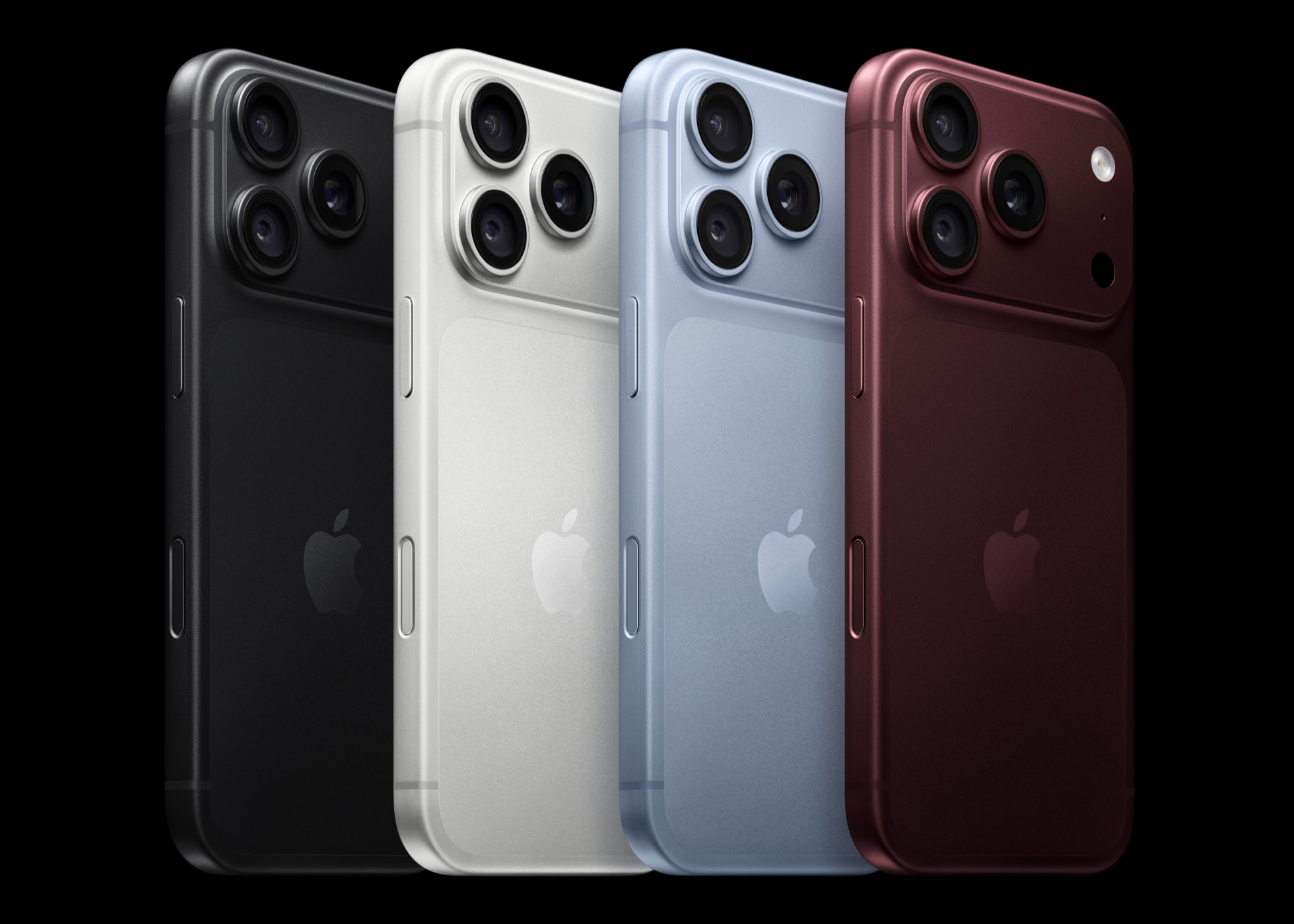
Apple has unveiled the iPhone 18 Pro and iPhone 18 Pro Max, adding a variable-aperture camera system, a new A20 Pro processor and deeper artificial intelligence capabilities as the company seeks to push its flagship smartphone further into professional photography, computing and personal AI.
The new models were announced Thursday and will be available for pre-order from September 12, with sales beginning September 18. The iPhone 18 Pro starts at $1,199 in the U.S., while the iPhone 18 Pro Max starts at $1,299.
The biggest hardware change is the new 48-megapixel Fusion Main camera, which introduces variable aperture to the iPhone for the first time.
Apple says the camera uses six laser-cut blades to adjust the aperture automatically or manually across four settings. The system can widen the aperture to ƒ/1.48 in low light while allowing users to control depth of field and exposure for more deliberate shots.
The company is also adding Pro controls to the Camera app, allowing users to manually adjust aperture, shutter speed and white balance, as well as use a histogram to monitor exposure.
That moves the iPhone further toward the controls traditionally associated with dedicated cameras, while Apple continues to rely on computational photography to process images.
Video capabilities have also been expanded. Users can apply Cinematic effects after recording video at up to 60 frames per second, while Time-lapse now supports 4K and Dolby Vision HDR. Apple has also updated Audio Mix with new algorithms designed to improve voice quality and separate music from other audio.
Another significant addition is Apple Reference Image, a system designed to help establish whether a photograph represents what the camera sensor captured.
In Reference mode, the iPhone captures signed sensor data that Apple says is developed through Private Cloud Compute into an unalterable reference image. Users can compare that reference with the finished photograph in the Photos app to identify changes.
Apple is positioning the technology as a tool for photographers, journalists and others dealing with the growing difficulty of distinguishing authentic photographs from AI-generated or manipulated images.
The iPhone 18 Pro also gets Apple’s new A20 Pro chip, built on a 2-nanometer manufacturing process.
The processor has a six-core CPU, seven-core GPU and a dual 16-core Neural Engine. Apple says the chip has 50% more memory bandwidth than the A19 Pro and that its GPU can deliver up to 40% higher performance.
The Neural Engine is designed to handle more demanding on-device AI workloads, while a redesigned thermal system aims to allow the processor to sustain higher performance for longer periods.
Apple has paired the chip with a next-generation vapor chamber with three times the surface area of the previous-generation system used in the iPhone 17 Pro. The company says this enables up to a 40% improvement in sustained performance.
The iPhone 18 Pro lineup also introduces Apple’s N1 wireless networking chip, supporting Wi-Fi 7, Bluetooth 6 and Thread, alongside the C2 cellular modem system.
Apple says C2 improves cellular reliability and delivers faster upload speeds while using 15% less energy than its predecessor. U.S. models also gain mmWave support.
Battery life is another area where Apple is claiming a major improvement.
The eSIM-only iPhone 18 Pro can deliver up to 36 hours of video playback, while the iPhone 18 Pro Max reaches up to 45 hours. Apple says the Pro Max can provide up to seven hours of video playback from five minutes of wired charging.
The larger battery in the Pro Max is partly enabled by the removal of the physical SIM slot in eSIM-only markets.
Apple is also making AI a more central part of the iPhone experience through iOS 27 and its new Siri AI system.
Siri AI, which will roll out in beta, is designed to use personal context across applications including messages, email and photos. It can also understand what is displayed on the screen and take actions based on that information.
Apple is extending the technology to the Camera app, where Siri can provide information about objects and scenes in front of the user.
The company is also adding AI-powered features to other parts of the operating system, including image editing tools and a more photorealistic Image Playground. Safari gains a Notify Me feature that can monitor webpages for changes such as product restocks or price reductions.
Apple says sensitive AI processing will continue to rely on a combination of on-device processing and its Private Cloud Compute infrastructure.
The iPhone 18 Pro and Pro Max will come in black, silver, glacier and a new burgundy finish.
Both models will be offered with 256GB, 512GB, 1TB and 2TB storage options.
The new lineup arrives as smartphone makers increasingly compete not only on camera hardware and processor performance but also on how deeply AI can be integrated into everyday mobile computing.
With the iPhone 18 Pro, Apple is combining those trends with more traditional professional camera controls, longer battery life and hardware designed specifically to sustain AI and graphics workloads.
For Apple, the move also strengthens the iPhone’s role as the company’s primary consumer platform for its broader artificial intelligence strategy.