Home Blog Page 19

MTN Joins $45 Million Funding Round for AI Telecoms Startup ODC

MTN Group has joined a $45 million Series A funding round for U.S.-based AI radio access network (AI-RAN) firm ORAN Development Company (ODC), as the telecoms operator seeks to embed artificial intelligence into its network infrastructure.

The round includes participation from Nvidia, Nokia, Cisco, AT&T, Booz Allen Hamilton and Telecom Italia, reflecting growing industry interest in integrating AI capabilities into telecom networks.

AI-RAN technology shifts data processing from centralised data centres to the edge of the network, enabling workloads to be handled closer to users via cell towers. The approach is designed to reduce latency, lower bandwidth costs and support real-time applications.

ODC’s platform, built on Nvidia’s AI Aerial software stack, allows telecom operators to convert base stations into edge computing hubs capable of running AI models locally.

MTN, which operates in more than 15 African markets, said the investment aligns with its “Ambition 2030” strategy to expand digital infrastructure and develop new services beyond traditional connectivity.

Telecom networks are becoming more complex as the industry transitions toward 5G and future 6G systems, increasing the need for automated optimisation. AI-driven RAN systems can manage network performance, predict congestion and dynamically allocate resources.

MTN is also exploring the development of AI-enabled data centres in key markets including Nigeria and South Africa, as part of a broader push to combine centralised and edge computing capabilities.

The company said direct investment in ODC would allow it to help shape AI-RAN solutions for African operating environments, where power supply constraints and infrastructure variability remain key challenges.

Industry peers are making similar moves, with operators globally seeking to reposition themselves as providers of digital infrastructure and computing platforms rather than connectivity alone.

Analysts say AI-RAN could open new revenue streams for telecom companies by enabling them to offer edge computing services to enterprises, while also improving network efficiency and reducing operating costs.

However, adoption may be slowed by high initial investment requirements, integration challenges with legacy systems and a shortage of specialised skills.

The global edge computing market is expected to grow rapidly over the coming years, driven by rising demand for low-latency data processing and AI-powered applications.

African Development Bank Commits Up to $15 Million to Alterra Fund to Back High-Growth African Firms

The African Development Bank (AfDB) has approved an equity investment of up to $15 million in the Alterra Africa Accelerator Fund (AAA Fund), a private equity vehicle focused on scaling high-growth businesses across the continent.

The investment is expected to help mobilise additional institutional capital while strengthening the fund’s ability to provide long-term financing to mid-sized African companies with strong expansion potential. The AfDB said the move will support businesses driving innovation, regional expansion and job creation.

The AAA Fund targets high-growth enterprises across multiple sectors, including telecommunications, consumer goods, logistics, financial services and healthcare. It also incorporates gender and social inclusion commitments, with a focus on increasing women’s representation in leadership and expanding procurement from women-led businesses.

The bank said the investment aligns with its strategic priorities, including improving access to capital, supporting demographic growth and promoting climate-resilient infrastructure and value addition across key industries.

Alterra is an independent private equity platform formed from the spin-out of the Carlyle Africa team and bolstered by professionals from Emerging Capital Partners. Its management team brings over two decades of private equity experience in Africa, with a cumulative track record of more than $2.2 billion invested across the continent.

The fund aims to partner with high-potential African companies, supporting their growth through operational improvements, technology adoption and regional expansion, while embedding environmental, social and governance standards throughout the investment lifecycle.

Novastar Ventures Closes $147 Million Africa-focused Impact Fund

0

Novastar Ventures has closed a $147 million fund to invest in African startups addressing climate and social challenges, the venture capital firm said on Tuesday, highlighting growing global appetite for impact-driven investments on the continent.

The Africa People and Planet Fund III is about 40% larger than the $105 million Novastar raised for its second Africa fund in 2020, and will target companies from pre-Series A to Series B stages that have demonstrated early product–market fit and are ready to scale.

The fund will deploy initial investments of between $1 million and $8 million under a broader pan-African mandate, expanding beyond the firm’s traditional East and West Africa focus.

Backers include returning development finance institutions such as British International Investment, Norfund, Swedfund, Proparco and Spain’s COFIDES.

A cohort of Japanese institutional investors also participated, including SBI Holdings, Sumitomo Mitsui Banking Corporation (SMBC), Mitsubishi Corporation, Mitsui O.S.K. Lines, and the Japan International Cooperation Agency (JICA), signalling growing Asian interest in Africa’s startup ecosystem.

Novastar said it is building a “Japan–Africa bridge” to deepen partnerships and offer co-investment opportunities with Japanese institutions seeking both strategic alignment and commercial returns.

The fund has already invested in six startups, including food delivery platforms Chowdeck and Breadfast, e-mobility firms ARC Ride and Greenwheels, and agritech and renewable energy company Sistema.bio.

Novastar’s previous fund backed at least 11 companies across sectors including healthcare, education, housing, transportation, fintech and energy.

Co-founder Andrew Carruthers said the new fund builds on more than a decade of investing in mission-driven businesses, with a focus on delivering financial returns alongside measurable social and environmental impact.

The close underscores rising investor confidence in Africa’s venture capital market, particularly in sectors aligned with climate resilience and inclusive economic growth.

Safaricom’s Decode 4.0 Aims to Shape Kenya’s Next Phase of Digital Growth

0

Kenya’s ambition to strengthen its position as a regional technology hub took centre stage on Tuesday as Safaricom opened its three-day engineering summit, Decode 4.0, in Nairobi.

The summit, convened in partnership with Microsoft, Google, Dell Technologies and Huawei, brings together developers, innovators and global technology leaders to help shape the country’s next phase of digital growth.

Held under the theme “Made for Kenya,” the event highlights the country’s growing reputation for mobile-first innovation and inclusive digital ecosystems, while creating a platform for collaboration among key players driving that transformation.

More than 100,000 participants are expected to take part both physically and virtually, underscoring the scale and influence of Kenya’s expanding technology ecosystem and the rising demand for accessible digital solutions.

“The Kenyan people are known for their ingenuity, grit and hustle — constantly pushing boundaries and experimenting,” Safaricom Chief Executive Peter Ndegwa said at the opening. “Decode gives that energy a place to come alive. By bringing developers, creators and problem-solvers together, we are creating solutions that can scale across Africa and beyond.”

The summit features hands-on builder labs, code labs and mentorship programmes aimed at equipping participants with practical skills to develop and scale solutions addressing real-world challenges.

Sessions are focused on emerging technologies such as artificial intelligence, fintech and creative technology, which are increasingly seen as key drivers of Kenya’s next phase of economic transformation.

Safaricom said it will extend the impact of the summit beyond the three-day event through year-round initiatives, including regional “Decode Cafés,” ongoing code labs and mentorship programmes targeting developers and educators across the country.

Participants will also earn certificates and digital badges as part of efforts to build a stronger digital talent pipeline.

Decode is Safaricom’s flagship technology forum, aimed at accelerating innovation through partnerships and talent development.

OpenAI Raises $122 Billion at $852 Billion Valuation to Power Next Phase of AI Growth

OpenAI has secured $122 billion in fresh funding at a post-money valuation of $852 billion, marking one of the largest capital raises in the history of the technology sector as it accelerates efforts to scale artificial intelligence globally.

The funding round was backed by a consortium of major global investors, including Amazon, NVIDIA, SoftBank, and Microsoft, alongside institutional players such as BlackRock, Sequoia Capital, and Fidelity. SoftBank co-led the round with venture firm Andreessen Horowitz.

The company said the capital will be used to expand its computing infrastructure, advance research, and scale its consumer and enterprise products amid surging global demand for AI systems.

OpenAI, the developer of ChatGPT, reported rapid growth across both usage and revenue. The platform now has more than 900 million weekly active users and over 50 million paying subscribers. Revenue has climbed to approximately $2 billion per month, with enterprise customers accounting for more than 40% of total income.

The company said its latest model, GPT-5.4, is driving increased adoption across enterprise workflows, while its Codex coding agent now serves more than 2 million weekly users. API usage has also surged, processing over 15 billion tokens per minute.

OpenAI highlighted compute capacity as a central pillar of its strategy, noting that access to large-scale infrastructure enables more advanced models while lowering the cost of delivering AI services. The company has expanded partnerships across cloud providers including Microsoft, Oracle, Amazon Web Services, and Google Cloud, while continuing to rely heavily on NVIDIA GPUs.

The firm is also diversifying its hardware base, working with AMD, Cerebras, and developing its own chip in collaboration with Broadcom.

In addition, OpenAI expanded its revolving credit facility to $4.7 billion, supported by major global banks including JPMorgan, Goldman Sachs, and HSBC, although the facility remains undrawn.

The company said it is building a unified “AI superapp” that integrates ChatGPT, browsing, coding, and agent-based tools into a single platform, aiming to simplify how users interact with AI across personal and professional tasks.

OpenAI said its rapid growth places it ahead of early trajectories seen in major internet and mobile companies, adding that AI adoption is increasingly driving productivity gains and reshaping business operations globally.

The company also opened part of the funding round to individual investors through bank channels, raising over $3 billion, and announced plans to be included in exchange-traded funds managed by ARK Invest.

“Moments like this do not come often,” the company said, describing the investment wave as foundational to building the infrastructure layer for the AI-driven economy.

Samsung Unveils KES 68,300 Galaxy A57 5G & KES 49,000 Galaxy A37 5G with AI Features

0

Samsung Electronics on Tuesday launched its latest mid-range smartphones, the Galaxy A57 5G and Galaxy A37 5G, as it pushes to expand artificial intelligence features and premium capabilities to a broader base of users at more affordable price points.

The new Galaxy A series devices introduce enhanced “Awesome Intelligence,” Samsung’s suite of AI-powered tools, alongside upgrades in camera performance, processing power and durability. The move underscores the company’s strategy to democratize AI across its smartphone lineup beyond flagship devices.

“The new Galaxy A series reflects our continued commitment to AI democratization by bringing the latest innovations to more Galaxy users,” said Evelyn Munene, Head of Product and Marketing, Mobile eXperience (MX) Division at Samsung Electronics East Africa.

The devices run on Samsung’s One UI 8.5 and include features such as voice transcription within the Voice Recorder app, AI-powered content selection, and improved photo editing tools like Object Eraser. The Galaxy A57 5G also introduces “Best Face” for optimized group photos and Auto Trim for video editing.

Both models feature a triple-camera system anchored by a 50-megapixel main sensor, with improved low-light photography capabilities branded as Nightography. Samsung said the A57 5G offers enhanced image processing and faster shutter speeds for clearer shots in challenging conditions.

The company is also integrating deeper AI functionality through its upgraded Bixby assistant and Google’s Gemini, enabling more natural voice commands and cross-app task execution.

In terms of performance, the Galaxy A57 5G comes with upgraded CPU, GPU and neural processing capabilities, alongside a 5,000mAh battery that Samsung says can last up to two days. The device also supports fast charging and improved heat management for sustained usage.

Both phones are rated IP68 for water and dust resistance and feature Super AMOLED displays with slimmer bezels for improved viewing experiences.

Samsung is offering up to six generations of Android OS and One UI upgrades, along with six years of security updates, positioning the devices as long-term options in the competitive mid-range segment.

In Kenya, the Galaxy A57 5G is priced at KES 68,300 for the 8GB/256GB variant and KES 60,900 for the 8GB/128GB model. The Galaxy A37 5G will retail at KES 60,200 for the 8GB/256GB version and KES 49,000 for the 6GB/128GB option. The devices are available through Samsung Experience Stores and authorized dealers nationwide.

Samsung did not disclose sales targets but said the new lineup is aimed at strengthening its presence in emerging markets, where demand for feature-rich yet affordable smartphones continues to grow.

Uber to Invest $260 Million in South Africa to Expand Electric Mobility & Food Delivery Services

Uber Technologies plans to invest 5 billion rand ($260 million) in South Africa over the next three years, the ride-hailing company said on Tuesday, as it seeks to expand electric mobility and food delivery services despite tightening regulations in one of its largest African markets.

The investment, announced at the South Africa Investment Conference in Johannesburg, will support the rollout of electric vehicles (EVs), charging infrastructure, and growth in Uber Eats, including expansion into township economies.

Uber said the figure includes a combination of new investment and previously committed capital expenditure.

The announcement comes as the company faces regulatory uncertainty after missing a March 11 deadline to secure an operating licence under amendments to South Africa’s National Land Transport Act.

The updated rules require e-hailing platforms to obtain licences, while drivers must hold individual permits and meet stricter vehicle standards. Non-compliance can result in fines of up to 100,000 rand or imprisonment.

Rival Bolt has already secured the necessary approvals.

“We continue to see long-term opportunity in South Africa,” said Deepesh Thomas, Uber’s general manager for Sub-Saharan Africa, adding that the company is engaging regulators as it adapts to the new framework.

A significant portion of the investment will go toward scaling Uber’s electric vehicle offering. The company currently operates more than 120 EVs in Johannesburg and plans to expand the fleet as demand grows.

Uber’s push into EVs aligns with its global target to become a zero-emission platform in key markets by 2030, though adoption in South Africa remains constrained by limited charging infrastructure and policy uncertainty.

The regulatory changes are also prompting a review of Uber’s business model. The company is considering simplifying its service offerings, including a potential phase-out of its UberX category in Gauteng later this year, according to industry reports.

South Africa is a key market for Uber in Africa, with thousands of drivers relying on the platform for income. The sector has seen increasing competition from rivals such as Bolt and inDrive, alongside growing pressure from regulators to improve safety, formalise the gig economy and ensure fair competition with traditional taxi operators.

Uber said part of its investment would support small businesses through Uber Eats by providing digital tools, logistics support and access to online marketplaces, particularly in underserved areas.

The company’s expansion plans come as South Africa seeks to attract investment and boost economic growth, with unemployment remaining above 30%.


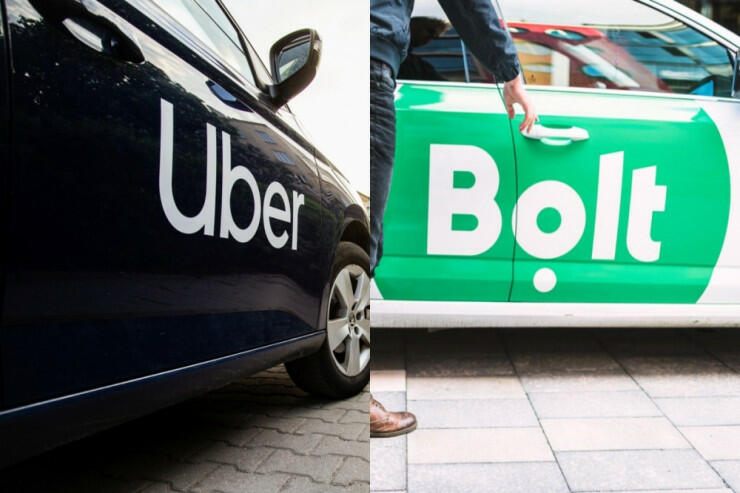
Uber, Bolt South Africa Drivers Demand Fare Hikes Amid Fuel Cost Surge

0

Uber and Bolt drivers in South Africa are calling for higher fares and reduced commission fees, citing mounting pressure from rising global fuel prices.

The demands were made by the National e-hailing Federation of South Africa (NEFSA), whose members staged app shutdowns in parts of KwaZulu-Natal over concerns including earnings, safety and platform policies.

NEFSA spokesperson Tella Makasale said drivers want a transparent pricing system that automatically adjusts fares in line with fuel price movements, alongside temporary commission cuts during periods of high operating costs.

“Our key demands include a transparent fare adjustment model linked to fuel price fluctuations, reduced commission percentages during high fuel cost periods, inclusion of driver representatives in pricing discussions, and protections against extreme cost volatility,” he said.

Drivers argue that while platforms occasionally introduce fare changes through surge pricing or limited adjustments, these are driven by algorithms and demand rather than reflecting sustained increases in fuel costs. These follows similar taxi driver strikes in Nigeria and Kenya.

Fuel is one of the largest expenses for drivers, and recent price increases have sharply eroded profit margins, forcing many to work longer hours to maintain income levels. Makasale said this has led to declining take-home pay, rising debt—particularly among drivers financing vehicles—and growing dissatisfaction with commission structures.

The federation warned that the situation risks triggering a broader industry fallout, including driver attrition, longer passenger wait times and increased likelihood of protests.

NEFSA said it has previously engaged both companies through protests, shutdowns and formal requests for fare reviews, but described progress as slow and lacking transparency.

“The rising cost of fuel is not just an economic issue. It is a livelihood crisis,” Makasale said. “If fuel prices rise, fares must respond — or the system will fail the people who keep it running.”

Sun King to Invest $150 Million in Ethiopia Solar Expansion

Sun King plans to invest up to $150 million in Ethiopia by 2030, targeting two million households and businesses as it expands into one of Africa’s least electrified markets.

The investment follows a memorandum of understanding with the Ethiopian Investment Commission, under which Sun King will establish a local subsidiary while authorities support licensing and regulatory approvals.

The move is part of the company’s broader $1.3 billion Africa expansion strategy through the end of the decade, driven by rising demand for off-grid energy solutions.

Despite having significant generation capacity, including power from the Grand Ethiopian Renaissance Dam, large parts of Ethiopia remain without reliable grid access, particularly in rural areas where extending transmission infrastructure is costly.

Sun King aims to fill this gap with distributed solar systems such as home kits and mini-grids, which are faster and cheaper to deploy.

The expansion comes amid broader efforts to improve electricity access across Africa, including the Mission 300 initiative backed by the World Bank and the African Development Bank, which targets connecting 300 million people by 2030.

Founded in 2007 as Greenlight Planet, Sun King operates in 14 African countries, offering pay-as-you-go solar products that allow low-income households to pay in instalments.

Africa remains the largest growth market for off-grid solar, with nearly 600 million people still lacking access to electricity, positioning Ethiopia as one of the last major untapped opportunities on the continent.

IFC Backs IPT PowerTech to Expand Solar Telecom Power Across Three African Markets

The International Finance Corporation (IFC) said on Monday it has invested in telecom energy firm IPT PowerTech to expand clean and reliable power for mobile networks in Ethiopia, Liberia and Sierra Leone.

The financing is aimed at improving power stability at telecom towers, many of which operate in off-grid or weak-grid areas, helping to reduce outages and improve mobile connectivity for households, schools, health facilities and businesses.

Under the project, IPT PowerTech will modernize, operate and maintain 2,235 telecom sites across the three countries, with solar and battery systems replacing diesel generators in most locations. IFC said more than 90% of the sites are in off-grid or weak-grid environments.

The transition to renewable-backed systems is expected to lower operating costs for telecom operators by up to 52% in Ethiopia, 30% in Liberia and 26% in Sierra Leone, while cutting emissions by more than 10,600 tonnes of CO₂ equivalent annually, according to IFC.

“Reliable and affordable power for telecom networks is a cornerstone of Africa’s digital transformation,” said Nathalie Kouassi-Akon, IFC Division Director for West Africa Gulf of Guinea.

IPT PowerTech chief executive Nabil Haddad said the partnership would help scale the company’s energy platforms and support the rollout of greener telecom infrastructure.

IFC said the $45 million financing package includes an A-loan and blended finance support from programs including the Canada–IFC Blended Climate Finance Program and the IDA20 Private Sector Window. It marks IFC’s return to direct infrastructure investment in Liberia in a decade and in Sierra Leone in six years.

The initiative also aligns with broader development efforts by the World Bank Group and the African Development Bank to expand electricity access across Africa, as well as digital economy strategies targeting underserved markets.

Mastercard, Scale Partner to Streamline Card Issuance in Five African Markets

0

Mastercard has partnered with South African fintech startup Scale to launch a unified card issuing platform across five African markets, aiming to simplify and speed up the rollout of payment card programs.

The initiative will initially cover Kenya, Senegal, Ivory Coast, Zambia and Zimbabwe, addressing longstanding operational hurdles that fintechs and non-financial companies face when launching card products.

Card issuance in many African markets has traditionally been complex and fragmented, requiring coordination with multiple stakeholders such as issuing banks, payment networks, BIN sponsors and regulators, often leading to high costs and long deployment timelines.

Under the partnership, Scale will provide core issuing technology, including customer onboarding, compliance systems and card program management, while Mastercard will contribute its global payments infrastructure and financial institution network.

The companies said the platform offers a single integration model that reduces complexity and allows businesses including fintechs, telecom firms and retailers to launch card programs without building extensive issuing capabilities.

“This collaboration removes key barriers for innovators looking to enter and scale in the card issuing space,” said Miranda Naidoo, co-founder and chief executive of Scale.

Mete Guney, executive vice president at Mastercard, said simplifying the issuing process would help expand access to digital financial services across the continent.

The partners said the platform is designed to adapt to varying market conditions. In Kenya, where digital payments are relatively advanced, the focus will be on accelerating time-to-market and enabling product innovation. In markets such as Senegal and Zambia, where card usage is still developing, the platform is expected to support use cases such as mobile wallet-linked cards, corporate expense cards and government payout solutions.

The announcement comes shortly after Scale raised $700,000 to support its expansion in Africa.

Africa’s financial services sector is projected to reach $230 billion in revenue by 2025, driven by increasing digitisation and smartphone adoption. Modern issuing platforms are also expected to account for a growing share of global card issuance in the coming years.

The companies said they will need to navigate differing regulatory frameworks and banking systems across the five markets as they scale the platform.

The partnership could help accelerate digital payments adoption and broaden financial inclusion across the continent if successfully implemented.

Hamilton Labs Secures AXIAN Backing to Expand Digital Dollar Access in Africa

0

Hamilton Labs has secured an undisclosed strategic investment from AXIAN Investment to accelerate the rollout of its dollar-pegged stablecoin across Africa, the companies said.

The funding will support the integration of Hamilton’s USDh stablecoin into fintech platforms, targeting consumers and businesses seeking access to dollar-denominated savings in markets where local currencies are often volatile.

The investment marks AXIAN Investment’s second bet on stablecoin infrastructure, underscoring growing investor interest in blockchain-based financial rails in emerging markets.

“For millions of people in Africa, access to stable dollars and reliable savings tools remains limited,” said Mo Kasstawi, co-founder and chief executive of Hamilton Labs. “We believe programmable dollars like USDh can expand access to global financial infrastructure and help people protect and grow their savings regardless of where they live.”

Hamilton’s USDh is a permissionless stablecoin pegged one-to-one with the U.S. dollar and designed to be fully redeemable. The company says the product connects users in emerging markets to sovereign yield opportunities typically available only to institutional investors, within a global sovereign debt market estimated at more than $100 trillion.

AXIAN Investment, the venture arm of AXIAN Group, said the deal aligns with its strategy of backing digital financial solutions that can broaden access to financial services.

“We believe digital asset currencies remain a key lever to support financial inclusion in Africa and beyond,” said Hassane Muhieddine, chief executive of AXIAN’s Financial Services cluster.

AXIAN Investment has backed 33 startups and participated in 38 investment funds, positioning itself as an active investor in Africa’s growing fintech ecosystem.

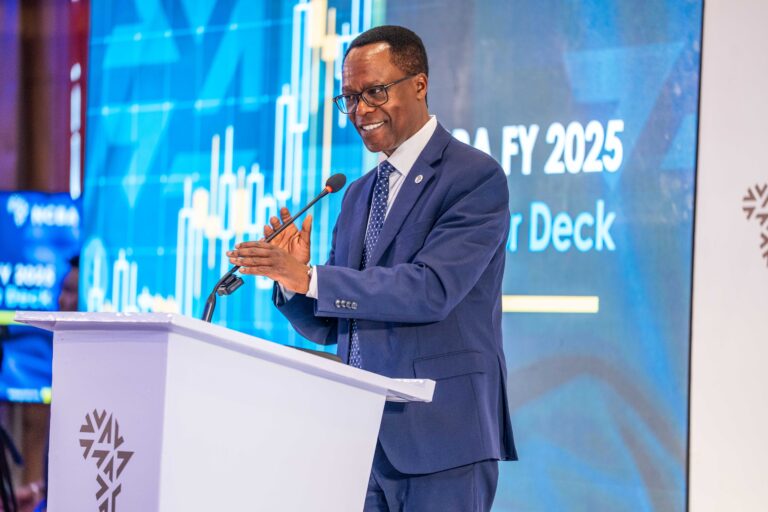
Inside NCBA’s Ubuntu Strategy: Banking on Belief to Drive 2026–2030 Growth

0

NCBA Group has unveiled its 2026–2030 Ubuntu strategy, a roadmap designed to strengthen its market position while exploring new avenues for growth. Building on six years of solid performance, the strategy introduces a refreshed organizational purpose: Banking on Belief – Empowering Ambitions. This purpose reflects NCBA’s conviction that belief in people, ideas, and possibilities can serve as a powerful catalyst for progress.

The strategy comes as NCBA reported robust financial results for the fiscal year 2025. The bank posted a net profit of KSh 18.7 billion, up 12% from KSh 16.7 billion in 2024, driven by growth across its corporate, SME, and retail segments. Total assets increased to KSh 780 billion, while customer deposits rose 10% to KSh 620 billion, reflecting continued confidence in the bank’s offerings.

NCBA aims to fortify its core operations by ensuring reliable services, leveraging data as a driver of growth, optimizing product management, and enhancing its corporate banking proposition. The bank is simultaneously accelerating high-potential segments, including Wealth, Consumer, SME, and Insurance, by sharpening customer propositions and deepening engagement.

Expansion into new markets and sectors is also central to the Ubuntu strategy, positioning NCBA for further growth and diversification. Equally, the bank is transforming its operating model to foster a more empowered, purpose-driven culture—a “FutureReady Ubuntu” that aligns employees, partners, and customers with long-term ambitions.

Through this integrated approach, NCBA positions itself not only as a resilient financial institution but as a forward-looking group ready to meet evolving client needs and drive sustainable growth across East Africa.


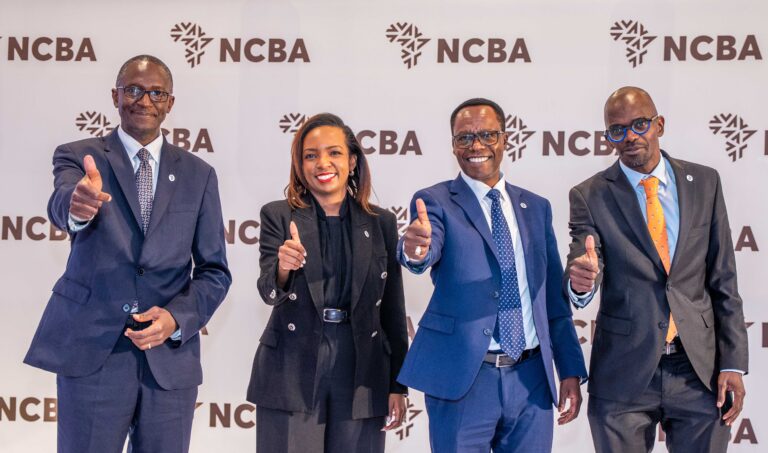
Nedbank Acquisition of NCBA Presents a Significant Opportunity – MD

0

NCBA Managing Director John Gachora said the proposed acquisition of a 66% stake in Kenya-based NCBA by South Africa’s Nedbank presents a “significant opportunity” to accelerate the bank’s strategic ambitions.

Gachora said the deal is expected to deliver value for shareholders by improving prospects for sustainable returns, unlocking liquidity, diversifying risk beyond East Africa, and strengthening NCBA’s capital position for regional expansion.

NCBA reported a strong financial performance for the year ended 2025, with net profit after tax of KES 12.3 billion, up 8% from the previous year, and total assets of KES 720 billion, reflecting steady growth across its retail and corporate banking segments. Earnings per share rose to KES 4.50, supported by increased lending and improved operational efficiency.

Customers are expected to benefit from enhanced product offerings and Nedbank’s international servicing and distribution capabilities in London, the Isle of Man, Jersey, and Dubai, along with access to larger-ticket funding for corporate and individual clients.

Commenting on the development, NCBA MD said: “We are proud of the progress we have made, excited about the Ubuntu strategy, and confident that the Nedbank transaction will accelerate our ambitions. I want to thank our customers, colleagues, shareholders, regulators, and partners for their continued trust as we deliver on our priorities and shape the next chapter of our organization.”

The acquisition highlights growing interest from international banks in East Africa, as institutions seek to expand their footprint in the region’s dynamic financial sector.


Samsung Unveils Galaxy A57 5G and Galaxy A37 5G

0

Samsung Electronics on Thursday unveiled two new mid-range smartphones, the Galaxy A57 5G and Galaxy A37 5G, as it seeks to bring advanced artificial intelligence features to a broader base of users while strengthening its position in the competitive mid-tier market.

The devices, part of Samsung’s popular Galaxy A series, introduce enhanced “Awesome Intelligence” capabilities powered by the company’s latest One UI 8.5 software based on Android 16. The move reflects a wider industry push to integrate AI tools beyond flagship devices and into more affordable models.

Samsung said the new phones include features such as voice transcription, AI-assisted photo editing, and improved on-device search functions. Users can convert voice recordings into text, remove unwanted objects from photos, and search multiple items within images simultaneously.

The Galaxy A57 5G, positioned as the more premium of the two, offers upgraded processing performance and enhanced camera capabilities, including improved image processing and faster shutter speeds. Both models feature a 50-megapixel main camera and upgraded low-light photography performance.

The company is also emphasizing longevity, offering up to six generations of operating system upgrades and six years of security updates — a notable extension for mid-range devices and a strategy aimed at increasing device lifespan and customer retention.

Both smartphones come with 6.7-inch AMOLED displays with refresh rates of up to 120Hz and are powered by 5,000mAh batteries designed to last up to two days under typical usage. The A57 supports faster charging and includes a larger cooling system to sustain performance during intensive tasks such as gaming or video recording.

Samsung has also incorporated IP68-rated water and dust resistance, along with its Knox security platform, as consumers increasingly prioritize durability and data protection.

The launch comes as global smartphone makers intensify competition in the mid-range segment, particularly in emerging markets where price sensitivity remains high but demand for premium-like features continues to grow.

The Galaxy A57 5G and Galaxy A37 5G will be available starting April 10 in select markets. Pricing details were not disclosed.


Key Specs

 Galaxy A57 5GGalaxy A37 5G
Display6.7” FHD + Measured diagonally, the screen size is 6.7″ in the full rectangle and 6.6″ accounting for the rounded corners.6.7” FHD + Measured diagonally, the screen size is 6.7″ in the full rectangle and 6.5″ accounting for the rounded corners.
Super AMOLED + Display
Up to 120Hz refresh rate
Vision Booster
Super AMOLED Display
Up to 120Hz refresh rate
Vision Booster
Dimensions & Weight161.5 x 76.8 x 6.9mm, 179g162.9 x 78.2 x 7.4mm, 196g
Camera12MP Ultra-Wide Camera
• F2.2
50MP Wide Camera
• F1.8
5MP Macro Camera
• F2.4
12MP Front Camera
• F2.2
8MP Ultra-Wide Camera
• F2.2
50MP Wide Camera
• F1.8
5MP Macro Camera
• F2.4
12MP Front Camera
• F2.2
Memory & Storage8+128 GB
8+256 GB
12+256 GB
12+512 GB
6+128 GB
8+128 GB
8+256 GB
12+256 GB
Battery5000mAh (typical)
4,905mAh.
OSAndroid 16
One UI 8.5
SecuritySamsung Knox
Water & Dust Resistance  IP68


BFA Global, FSD Africa Back East Africa Climate Startups with $273,000 Follow-on Funding

0

BFA Global and FSD Africa said on Thursday they will provide $273,000 in follow-on funding and venture-building support to four early-stage climate startups in East Africa, aiming to help them scale operations and attract investment.

The funding targets alumni of the Triggering Exponential Climate Action (TECA) programme, which supports climate-focused businesses from concept to commercial readiness. The selected firms operate in sectors including clean energy, waste-to-energy, cold storage and food systems.

The recipients are Africa Renewables Katalyst, which links renewable energy developers to global certificate markets; Plas-tech Energies, which converts plastic waste into cooking gas; Samaking, a solar-powered cold chain and fish distribution platform; and Sunwave, which provides solar-powered ice production and storage for fishers.

The companies will receive both capital and technical assistance, including operational support, business model refinement and preparation for raising external investment.

“Early-stage climate ventures face a critical funding cliff just as they are ready to grow,” said Tyler Ferdinand, director of the TECA programme at BFA Global.

Early-stage climate investment has tightened in recent years. A report by Sightline Climate found deal volumes fell about 20% in 2025 to a five-year low, as investors concentrated funding in fewer, more mature companies.

FSD Africa said the initiative aligns with its strategy to expand financing for small and growing businesses tackling climate risks. The agency, backed by the UK government, aims to mobilise £10 billion between 2025 and 2030, including £2 billion for climate adaptation projects.

4G Capital Secures $2 Million Investment from GIF Growth to Expand East Africa Lending


4G Capital said on Friday it has secured a $2 million investment from Global Innovation Fund’s growth-stage vehicle, GIF Growth, to expand lending to small businesses across East Africa.

The Kenya-based fintech, which provides loans and business training to micro and small enterprises (MSEs), said the funding will support the scaling of its hybrid “touch-tech” model combining digital lending with in-person support.

MSEs account for more than 80% of employment in East Africa but remain largely excluded from formal credit systems due to limited financial records.

Founded in 2013, 4G Capital said it has disbursed more than $800 million in loans to over 755,000 customers in Kenya and Uganda. The company has issued 6.8 million loans and expects to surpass $1 billion in cumulative lending later this year.

GIF Growth, which provides debt financing to early growth-stage businesses in Africa and Asia, counts development finance institutions backed by the United States, United Kingdom and Canada among its funders, alongside corporate partners including Unilever.

“This investment provides us with the right kind of capital to scale our model sustainably,” said 4G Capital founder and executive chairman Wayne Hennessy-Barrett.

The company said the funds will also be used to strengthen its digital infrastructure and partnerships as it seeks to expand financial inclusion among underserved entrepreneurs, particularly women and youth.

4G Capital added it is considering a Series D funding round to support further digital expansion.

The firm said it has generated more than $3 billion in economic impact to date.

NCBA Mobilizes KES 9.5 Billion in Green and Sustainable Financing Under “Change The Story” Strategy


In 2023, NCBA Group launched its ambitious “Change The Story” Sustainability Strategy, setting 15 targets to be achieved by 2030. The strategy aims to combine environmental stewardship, social impact, and economic empowerment across Kenya and the broader East African region.

Since its launch, the Group has reported significant milestones: mobilizing KES 9.5 billion in green and sustainable financing, planting over 1.3 million trees, empowering 70,536 women and youth in the creative economy through skills training and mentorship, and recycling 83.6% of waste in select offices. Staff engagement has been strong, with over 3,000 employees participating in the “I Change The Story” training program, while 6 EV charging stations have been installed across the region to support clean mobility.

NCBA has also strengthened inclusivity in procurement, onboarding an average of 20% of its supply chain from women- and youth-led businesses, supported 30,000+ participants in golf and cycling initiatives, and deployed KES 100 million annually towards community engagements. To date, the strategy has positively impacted 1.2 million livelihoods.

Nurturing Golf and Sporting Talent
The bank is marking five years of golf partnerships aimed at growing the sport, monetizing player talent, and building stronger community connections. Collaborating with the Junior Golf Foundation, Kenya Golf Union, and Professional Golfers of Kenya, NCBA has invested over KES 200 million, engaged more than 10,000 golfers annually, and supported over 400 tournaments. Emerging stars, including Njoroge Kibugu, now an NCBA contracted ambassador, have benefited from scholarships and international exposure, building a robust pipeline for professional golf careers.

Powering the Creative Economy
NCBA has also cemented its role in Kenya’s creative sector, strategically partnering with the ELEV8 Live music platform to empower young creatives. Through tailored mentorship programs and financial products developed with the HEVA Fund, artists and creative entrepreneurs have gained the tools to generate income, finance their work, and scale their enterprises.

The “Change The Story” strategy reflects NCBA’s commitment to sustainable growth, community engagement, and creating pathways for a more inclusive economy in Kenya and the wider region.

How Digital Became the Backbone of Customer Experience at NCBA

0


To many banks, digital banking is just a convenience way to serve their customers. But for  NCBA, digital innovation is the bank’s core strategy and is transforming its everyday service provision.

And the numbers don’t lie. According to the bank’s full year 2025 financial results, over 90% of NCBA’s transactions are now conducted through digital channels, marking a decisive shift away from traditional branch-based banking.

NCBA Group disbursed KES 1.4 trillion, 33 per cent up year on year via digital platforms and its digital business now contributes 32 per cent of Group profitability reaching Profit Before Tax of KES 9.0 billion. The Group’s investments in upgrading digital platforms, enhancing data capabilities and collaboration with telco partners have paid off, positioning
NCBA as the undoubted regional leader in digital financial services.

Flagship platforms such as the NCBA Mobile App and NCBA Connect (internet banking) continue to anchor this ecosystem, enabling customers to manage their finances anytime, anywhere.

Through M-Shwari and Fuliza, delivered in partnership with Safaricom, the bank has reached over 30 million customers, disbursing hundreds of billions of shillings in mobile loans annually. These platforms have become essential financial tools, providing instant access to credit, savings, and liquidity for millions of users.

For small and medium-sized enterprises (SMEs), digital banking is transforming how businesses operate. Today, over 80% of SME transactions in key segments are processed digitally, supported by seamless integration with M-Pesa, EFT, RTGS, and card payment systems. This enables business owners to receive payments, pay suppliers, monitor cash flow, and access financing in real time.

Consider a Nairobi-based entrepreneur running a growing retail business. Using NCBA’s digital platforms, they can reconcile accounts instantly, track incoming payments, and access short-term credit or asset finance solutions digitally, with turnaround times reduced from days to near-instant. This efficiency allows them to focus less on processes and more on growth.

For individual customers, the experience is equally transformative. From bill payments and fund transfers to expense tracking and loan management, NCBA’s platforms offer a simple, intuitive interface. The Loop app continues to attract a younger, digitally native audience, expanding the bank’s reach and redefining lifestyle banking.

Security remains a cornerstone of this digital growth. NCBA continues to invest in advanced cybersecurity infrastructure, including multi-factor authentication, real-time fraud monitoring, and transaction alerts. These measures ensure that as convenience increases, customer trust and protection remain uncompromised.

Beyond convenience, digital banking is driving financial inclusion at scale. Mobile-first solutions like M-Shwari and Fuliza have brought millions of previously underserved customers into the formal financial system, supporting savings culture and access to emergency credit across Kenya and the wider region.

The impact extends beyond transactions. With real-time visibility and control over their finances, customers are empowered to make smarter decisions, manage risk, and plan for the future with greater confidence.

NCBA continues to invest in platform enhancements, deeper ecosystem integrations, and data-driven innovation. As digital adoption accelerates, the bank remains focused on delivering a frictionless, secure, and customer-centric banking experience and for it, digital is not just a channel but the backbone of how customers experience financial services every day.

Kenya Says New USB‑C Port Rule Not Against Low-cost Devices

0

Kenya’s communications regulator said newly introduced requirements for mobile devices will not ban low-cost phones or force consumers to discard those already in use, seeking to reassure the public amid growing concern.

Earlier, Kenyan communincations regulator Communications Authority of Kenya (CA) had issued an immediate ban on the import and sale of mobile phones and tablets that lack USB Type‑C charging ports, move that could disrupt supply chains and push up costs for low‑income consumers.

However, in a new notice, the authority has clarified that devices already approved and either shipped or awaiting shipment into the country will not be affected by the updated rules. It added that all mobile phones must receive type approval before importation, a standard requirement that remains unchanged.

The regulator emphasized that the updated framework is based on technical specifications used to assess new applications for type approval, and therefore does not require a transitional period.

“For avoidance of doubt, the notice does not ban the use, importation or sale of affordable mobile phones,” it said. “It also does not require consumers to discard devices currently in use, nor does it target any specific category of users or income group.”

The authority said it remains committed to protecting consumer interests, including access to high-quality information and communications technology products and services, while aligning with global technological developments and best practices.

NCBA Posts 7% Profit Growth to KES 23.4B, Raises Dividend by 30%

0

NCBA Group Plc reported a 7% rise in full-year profit on Thursday, boosted by strong digital lending growth and higher operating income, while raising its dividend payout by 30%.

The Kenyan lender posted a net profit of 23.4 billion shillings for the year ended December 2025, up from 21.9 billion shillings a year earlier. Profit before tax rose 10.9% to 27.9 billion shillings.

Total dividend payout increased to 11.7 billion shillings from 9.1 billion previously, with shareholders set to receive 7.10 shillings per share.

Operating income climbed 17% to 73.3 billion shillings, while operating expenses rose at the same rate to 37.5 billion shillings. Provisions for credit losses jumped 46.3% to 8.0 billion shillings.

Digital lending remained a key growth driver, with disbursements rising 33% to 1.4 trillion shillings over the year. Customer deposits increased 6% to 532 billion shillings, while total assets grew 8% to 716 billion shillings.

“The 2025 outcomes are a great milestone to close out our 2020–2025 strategy,” Group Managing Director John Gachora said, citing improved diversification and resilience.

NCBA said its Kenyan banking unit remained the main profit engine, contributing 82% of profit before tax, while regional subsidiaries and non-banking units posted steady gains.

The group also unveiled its 2026–2030 “Ubuntu” strategy, which will focus on strengthening core operations, scaling high-growth segments such as retail, SME and insurance, and expanding into new markets.

It added that a proposed acquisition by South Africa’s Nedbank of a 66% stake in the lender could accelerate growth by improving access to capital, diversifying risk and expanding international reach.

NCBA said the combination of its new strategy and the potential deal positions it for sustained long-term growth.

Cascador Appoints Former ARM Labs, Techstars Exec Oyin Solebo as COO

Africa-focused entrepreneurship platform Cascador has appointed Oyin Solebo as chief operating officer, the company said on Thursday, as it moves to strengthen its operational capacity and scale high-growth ventures across the continent.

Solebo, an investor and ecosystem builder, previously held leadership roles with ARM Labs and Techstars, where she worked with startups across multiple sectors, supporting their growth and investment readiness.

Her appointment marks a shift for Cascador toward building the systems and infrastructure needed to help companies move from early traction to sustainable scale.

“Oyin is a force multiplier,” said Trish Thomas, chief executive of Cascador. “As we expand our focus from developing founders to scaling companies, her operational expertise will be instrumental in helping us deliver on that vision.”

Cascador’s model centres on backing founders capable of translating training and capital into long-term economic and social impact, particularly through its ScaleUp Programme, which targets growth-stage businesses.

“In Africa, we don’t have a shortage of founders; we have a shortage of companies that successfully scale,” Solebo said. “The difference lies in systems, discipline and the ability to deploy capital effectively.”

In her new role, Solebo will focus on strengthening Cascador’s operational infrastructure, including programme delivery, alumni support and platform development, aimed at helping founders transition from learning to execution and from execution to scale.

A key priority will be advancing Cascador’s ScaleUp Programme and its Catalytic Fund, which deploys between $2 million and $5 million annually into selected high-performing ventures.

Dave DeLucia, founder of Cascador, said the appointment would strengthen the organisation’s ability to convert support and capital into “scaled, enduring businesses.”

Cascador said it has supported more than 70 entrepreneurs since 2019, whose companies have collectively raised over $125 million and created nearly 40,000 jobs in 2025 alone.

Solebo said the organisation aims to position itself as a long-term scaling partner for entrepreneurs. “We are building more than a programme. We are building a platform,” she said.

Cascador’s move comes as investors increasingly focus on Africa’s startup ecosystem, where improving execution and access to capital remain key to unlocking growth at scale.

Mobile Money Transactions Hit $2 Trillion in 2025 As Usage Surges – GSMA Report

0

Mobile money transactions topped $2 trillion globally in 2025, doubling in value in just four years as adoption and usage accelerated, according to a new industry report released on Tuesday.

The milestone, highlighted in the GSMA’s State of the Industry Report on Mobile Money 2026, underscores the rapid expansion of a service that has become a cornerstone of financial access for underserved populations.

It took two decades for mobile money to reach $1 trillion in annual transaction value, but only four years to double that figure, reflecting what the report described as “exponential growth” in the sector.

Mobile money accounts rose to 2.3 billion in 2025, an increase of 268 million from the previous year, while active users — defined as those transacting within 30 days — climbed 15% to 593 million, the fastest growth since 2021.

“What began as a simple way to move money has evolved into a global financial ecosystem,” GSMA Director General Vivek Badrinath said, adding that the industry is reaching “new heights and greater maturity.”

Africa leads growth

Sub-Saharan Africa remained the primary driver of new accounts and activity, though most regions offering mobile money recorded gains. Monthly account usage rose to 25.7%, its highest level in four years.

Despite the growth, nearly three-quarters of registered accounts remain inactive on a monthly basis. The report cited fraud risks and transaction taxes in some markets as key factors discouraging regular use and pushing some users back to cash.

Expanding financial services

The report noted that increased usage is helping improve users’ financial resilience by enabling access to services such as credit, savings and insurance.

Mobile-enabled credit remains the most widely offered service, closely followed by savings products, while the number of providers offering insurance grew by about one-third in 2025.

Regulation both helps and hinders

Regulatory frameworks have played a significant role in expanding mobile money, with more than 60% of providers saying rules around interoperability, customer verification and consumer protection have supported their operations.

However, challenges remain. Nearly a quarter of providers reported that restrictions on cross-border data transfers have hindered growth, highlighting the need for greater regulatory harmonisation.

Inclusion gaps persist

While mobile money has improved financial inclusion overall, gender disparities remain widespread. In seven out of ten countries surveyed, women are less likely than men to own or actively use mobile money accounts, with a few exceptions including Kenya, Ghana and Nigeria.

Broader impact

Beyond financial services, mobile money is increasingly used to deliver humanitarian aid and emergency payments, particularly in remote areas.

The report emphasised that continued growth will depend on improving digital financial literacy, strengthening fraud protections and fostering cross-border interoperability.

“As the industry scales, it must also take on greater responsibility,” Badrinath said.

Kenya Mandates USB‑C Ports on Phones & Tablets, Raising Concerns on Cost & Access

0

Kenya has issued an immediate ban on the import and sale of mobile phones and tablets that lack USB Type‑C charging ports, a sweeping regulatory move that could disrupt supply chains and push up costs for low‑income consumers.

The Communications Authority of Kenya (CA) said on Friday that devices without the standardized USB‑C interface will be barred from entry into the country with no transition period for compliance, forcing importers and retailers to sell only compliant models from now on.

The regulator said the measure aims to align Kenya with global technology standards, reduce electronic waste and improve device interoperability, noting that USB‑C ports have become the norm for modern mobile devices. Non‑compliant devices will be blocked at the border, including many cheaper and older models that still use legacy charging ports.

Kenya has one of the highest mobile penetration rates in Africa, with about 75 million mobile phones connected to networks, a figure that exceeds the population due to widespread multiple SIM ownership. Around 60% of those connected devices are smartphones, according to the latest data from the Communications Authority.

While smartphone adoption has grown rapidly, a 2023/24 Kenya National Bureau of Statistics survey found that just over half of the population actually owns a mobile phone, with ownership markedly lower in rural areas than urban centres.

Pressure on affordable devices

Industry analysts and consumer advocates say the sudden enforcement will hit budget‑conscious buyers hardest, particularly those who rely on second‑hand or low‑cost imports. Such devices often lack the latest hardware standards but have been a lifeline for many Kenyans who depend on mobile connectivity for online banking, social services, and communication.

“Low‑end devices without USB‑C are widely sold at low margins, and eliminating them overnight risks pushing up prices for the most affordable phones,” said a local mobile retailer who declined to be named.

For many households, particularly in poorer and rural areas, the cost of upgrading to a newer, compliant smartphone could be substantial. Mobile phones are not only communication tools but gateways to mobile money services such as M‑Pesa, healthcare information, job opportunities and education resources.

Consumer groups warned that without measures to cushion the shift, the policy could widen digital inequality. “There needs to be a thoughtful phase‑in or subsidy if the aim is inclusive connectivity,” said an ICT sector analyst.

Regulatory rationale and market impact

CA officials said standardizing charging ports will improve safety, reduce electronic waste from obsolete cables and chargers, and align Kenya with regional and international norms. Devices that meet Kenya’s type‑approval requirements will continue to be imported and sold.

The ban comes amid broader tightening of mobile device rules by the CA, including the barring of certain uncertified brands earlier this year for failing to meet performance and safety standards.

Market watchers said enforcement logistics and how swiftly customs and regulators will act remain key uncertainties. In the short term, prices for compliant devices could rise as supply adjusts, but over time the standardization could simplify charging ecosystems and reduce waste.

Ethio Telecom Expands 4G LTE Coverage to 21 Additional Cities

0

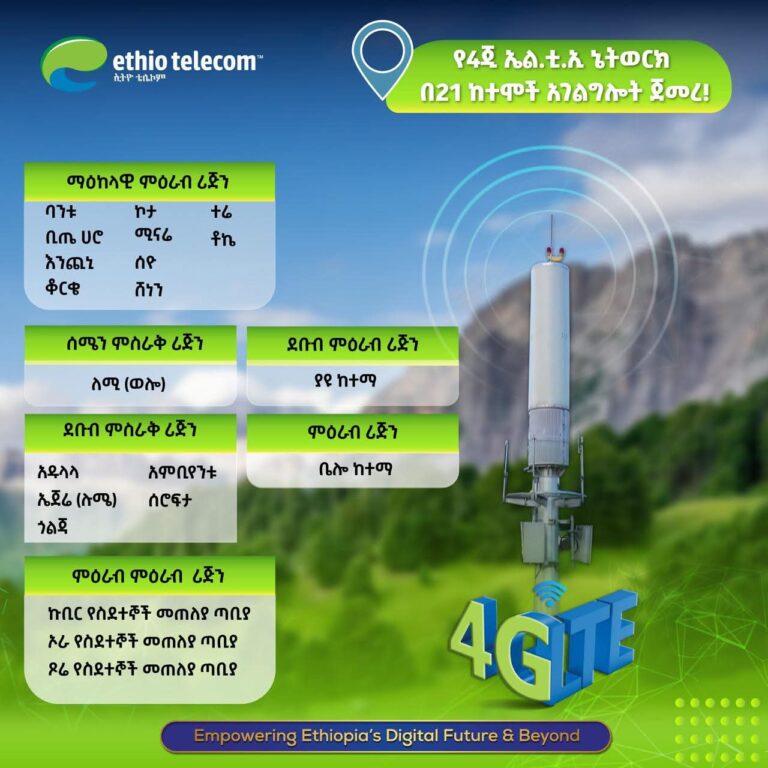
Ethio Telecom has expanded its 4G LTE mobile network to 21 additional cities across Ethiopia, significantly extending high-speed mobile broadband access to a broader range of urban populations and economic zones.

The rollout introduces enhanced mobile data capabilities in a mix of regional capitals and fast-growing secondary cities, reflecting the operator’s continued push to bridge connectivity gaps beyond the country’s primary metropolitan areas such as Addis Ababa. By targeting emerging urban centers, Ethio Telecom is positioning itself to support Ethiopia’s decentralizing economy, where growth is increasingly driven by regional trade, manufacturing hubs, and digital entrepreneurship.

This expansion is expected to improve access to faster, more reliable internet services for both consumers and businesses. For individuals, it enhances everyday digital experiences such as streaming, mobile banking, e-learning, and social connectivity. For enterprises—particularly small and medium-sized businesses—it unlocks opportunities for e-commerce, cloud-based operations, and digital payments, all of which are becoming critical to competitiveness in a rapidly digitizing economy.

The deployment builds on Ethio Telecom’s broader network modernization strategy, which includes continuous upgrades to infrastructure, increased investment in fiber backhaul, and optimization of existing mobile sites. By strengthening its 4G LTE footprint, the operator is enhancing network capacity and reducing congestion, ultimately improving service quality and user experience as mobile data consumption continues to surge nationwide.

The expansion also comes at a time when Ethiopia’s telecommunications sector is undergoing gradual liberalization and increased competition, prompting incumbents like Ethio Telecom to accelerate innovation and service delivery. Strengthening 4G coverage not only helps retain and grow its subscriber base but also lays the groundwork for future technologies, including 5G, which will rely on a strong and widespread 4G foundation.

While Ethio Telecom retains a dominant position with a significantly larger subscriber base and nationwide footprint, Safaricom has been steadily building out its network with a strong focus on modern infrastructure and high-quality urban coverage.

Backed by the Vodafone Group and global partners, Safaricom Ethiopia has positioned itself as a digital-first operator, emphasizing data performance, customer experience, and innovation in mobile financial services. Its rollout strategy has largely prioritized major cities and high-traffic economic corridors, creating pockets of strong competition in areas where both operators are active.

In contrast, Ethio Telecom’s strength lies in its scale and legacy infrastructure, enabling faster expansion into secondary and regional cities. The extension of 4G LTE to 21 additional locations reinforces this advantage, particularly in areas where competitor presence remains limited. However, ensuring consistent service quality across such a broad footprint remains a key operational focus.

Across East Africa, similar dynamics are shaping telecom strategies. In Kenya, Safaricom PLC continues to deepen 4G coverage while accelerating 5G deployment in urban centers, leveraging its mature mobile money ecosystem to drive data consumption. Meanwhile, operators such as MTN and Airtel in Uganda and Rwanda are aggressively expanding 4G networks, often focusing on affordability and rural inclusion to capture the next wave of users.

Compared to its regional peers, Ethio Telecom is operating at a unique inflection point—transitioning from a state monopoly to a competitive market player. Its current expansion strategy reflects a dual approach: defending market share in high-density urban areas while rapidly scaling coverage in underserved regions to secure early adoption.

As competition deepens, differentiation is likely to extend beyond coverage to pricing, network quality, and digital ecosystems—particularly in mobile money and enterprise solutions. In this evolving landscape, Ethio Telecom’s ability to combine scale with service innovation will be critical in sustaining its market leadership.

Beyond competition, the broader impact of expanded 4G access is expected to contribute to Ethiopia’s national development agenda. Increased connectivity in regional cities can accelerate digital inclusion, support e-government services, and expand access to online education and healthcare. It also creates a foundation for local innovation ecosystems to emerge outside traditional urban centers.

As demand for data continues to rise across East Africa, Ethio Telecom’s latest expansion signals a sustained commitment to strengthening digital infrastructure and supporting Ethiopia’s transition into a more connected, digitally enabled economy.


GoSwap Secures Seed Funding to Expand Battery-swapping Network in Morocco

0

Moroccan electric mobility startup GoSwap has secured its first round of funding from Azur Innovation Fund to expand its battery-swapping infrastructure for electric scooters, the company said on Tuesday.

The investment will support the rollout of additional swap stations across major cities, including Casablanca and Marrakech, as GoSwap seeks to scale its network and accelerate adoption of electric two-wheelers in urban transport.

Founded by Hamza Slimani, GoSwap operates a model that allows users to exchange depleted scooter batteries for fully charged units in under 10 seconds at connected stations located at fuel retailers and partner outlets. The company said about 20 swap cabinets are already operational in Casablanca.

GoSwap sells scooters without batteries, offering battery access through a pay-as-you-go system, a structure it says lowers upfront acquisition costs and reduces total cost of ownership for users, including delivery riders and fleet operators.

The company estimates its system can reduce operating costs by up to 60% compared with petrol-powered motorcycles, while also cutting carbon emissions by around the same margin due to the use of electric power.

The funding comes as African cities grapple with rising urbanization and growing demand for affordable mobility solutions, with electric two-wheelers increasingly viewed as a practical alternative for last-mile transport and delivery services.

GoSwap said the new capital will also support the integration of additional electric motorcycle models compatible with its swapping system and the continued expansion of its station network nationwide.

Azur Innovation Fund said it backed GoSwap for its integrated approach to mobility, combining infrastructure, hardware and a usage-based business model aimed at addressing both economic and environmental challenges in urban transport.

GoSwap did not disclose the size of the funding round but said it is targeting to raise more than 20 million dirhams as part of its broader financing strategy.

AkiraChix Expands to Zambia, Zimbabwe, and Eswatini

Kenyan technology training and talent development organization AkiraChix has expanded its footprint into three additional Southern African markets, establishing presence in Zambia, Zimbabwe, and Eswatini as part of its regional growth strategy aimed at widening access to digital skills and career opportunities.

The expansion marks a significant milestone for the organization, which has been working to bridge the gender gap in technology by equipping young women with practical skills in software development, product design, and entrepreneurship.

AkiraChix said the move is driven by increasing demand for tech talent across Africa and a commitment to identifying and nurturing skilled individuals regardless of geography. The new markets will enable the organization to reach a broader pool of learners while strengthening cross-border collaboration within the continent’s growing digital ecosystem.

With $1 million it raised from the Steele Foundation for Hope into its codeHive program to build the best female tech talent in Africa, Akirachix aims to see more young women in underserved communities across East Africa, unravel years of the odds stacked against them, through education.

According to the organization, the expansion will also support partnerships with local institutions, industry players, and community stakeholders to deliver training programs tailored to each country’s evolving technology landscape.

Industry observers note that Africa’s digital economy continues to grow rapidly, creating opportunities for training institutions to scale regionally as demand for software engineers, designers, and digital professionals outpaces supply. Initiatives like AkiraChix’s expansion are seen as critical in addressing the continent’s skills gap while promoting inclusive participation in the tech sector.

The organization has previously focused on building strong talent pipelines through intensive training programs, mentorship, and community-driven learning models. Its regional expansion is expected to further strengthen these efforts while contributing to workforce development across multiple markets.

As AkiraChix deepens its presence in Southern Africa, it joins a growing number of organizations looking beyond national borders to tap into Africa’s interconnected talent base and support the continent’s broader digital transformation agenda.

Moniepoint Completes Acquisition of 78% of Kenya’s Sumac in East Africa Expansion Push

0

Nigeria-founded fintech Moniepoint Inc. has completed the purchase of a 78% stake in Sumac Microfinance Bank Kenya Limited, entering Kenya in a deal that underscores rising cross-border expansion by African digital lenders.

The acquisition, which closed on Feb. 27 after approvals from the Central Bank of Kenya and the Competition Authority of Kenya, gives Moniepoint a foothold in one of Africa’s most competitive mobile money and SME lending markets.

Founded in 2015 by Tosin Eniolorunda and Felix Ike, Moniepoint processes more than $22 billion in monthly transactions and serves over 10 million users, largely small businesses.

The move signals a strategic shift as fintech firms scale beyond domestic markets to tap East Africa’s high digital finance adoption and large underserved SME base.

Sumac, established in 2002, provides loans, deposits, insurance and foreign exchange services, with operations across Nairobi, Kiambu and Nakuru. Its banking licence and branch network offer Moniepoint an immediate route to market.

Sumac Chairman Kibatha Njoroge said the deal would combine local market knowledge with advanced technology to expand access to financial services.

Moniepoint CEO Tosin Eniolorunda, said Kenya’s digital ecosystem made it a priority market, positioning the acquisition as a step toward building a broader pan-African financial platform.

The companies said operations would continue unchanged, with customer accounts and services unaffected.

Analysts say the deal could intensify competition in Kenya’s crowded fintech sector, where banks and mobile money providers are racing to capture small business customers.

Just yesterday Moniepoint acquired restaurant platform Orda Africa in a move aimed at strengthening its position in Africa’s fast-growing food services and small business technology market.


National Bank of Kenya Profit Rises Sharply in First Year Under Access Bank

0

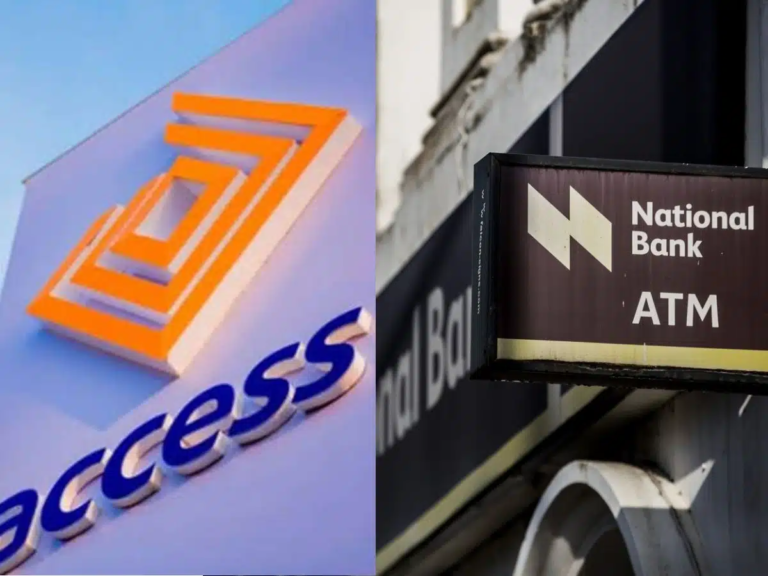
National Bank of Kenya (NBK) posted a sharp rise in full-year pretax profit for 2025, signalling a strong turnaround in its first year under Access Bank Plc ownership, as the lender cut costs and improved asset quality.

Pretax profit rose 178% to 2.91 billion Kenyan shillings from 1.05 billion shillings a year earlier, while net profit climbed 125% to 2.39 billion shillings, the bank said.

The results mark NBK’s first full financial year since Access Bank completed its acquisition in May 2025 as part of its expansion into East Africa.

Managing Director George Odhiambo said the performance reflected “disciplined execution” of the bank’s turnaround strategy, including strengthening the balance sheet, improving asset quality and enhancing efficiency.

Net interest income rose to about 10.3 billion shillings, supported by a sharp decline in funding costs, while operating expenses fell to 8.49 billion shillings from 9.18 billion. Loan-loss provisions dropped 37% to around 1.5 billion shillings, pointing to improved credit quality.

The lender also reduced its loan book to 51 billion shillings from 75 billion shillings, reflecting asset transfers following the acquisition and a shift toward more risk-adjusted lending.

Customer deposits rose to about 106 billion shillings, while shareholders’ funds increased to 17 billion shillings, strengthening the bank’s capital position and bringing it into full compliance with regulatory requirements.

NBK said the improved performance underscores early gains from its integration into Access Bank, as it focuses on rebuilding its balance sheet and positioning for sustainable growth.

Looking ahead, the bank expects momentum to continue in 2026, supported by efforts to grow a higher-quality loan portfolio, expand digital services and deepen its presence in Kenya’s banking sector.

Kenya’s Lewa Safari Marathon Targets KSh15 Million for Conservation

0

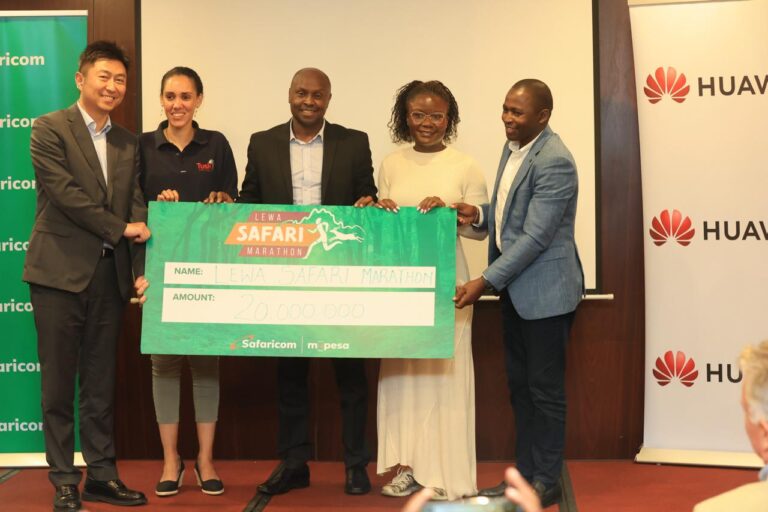
Kenya’s flagship conservation race, the Lewa Safari Marathon, is targeting more than KSh15 million ($100,000) this year as organisers deepen the use of technology and corporate backing to protect endangered wildlife and support rural communities.

The marathon, held annually at Lewa Wildlife Conservancy, has raised KSh1.3 billion since its launch in 2000, funding conservation programmes that have helped double populations of hawksbill turtles and significantly grow numbers of Grevy’s zebras and rhinos.

Organisers Tusk and Lewa Wildlife Conservancy said this year’s edition, scheduled for June 27, is expected to draw hundreds of participants from dozens of countries, with international entries already open and regional registrations beginning March 27.

Beyond conservation, funds raised have supported over 40,000 clinic visits, education programmes and rural enterprises, including pastoralist and women-led businesses, underscoring the event’s role as a hybrid model for conservation financing and community development.

Corporate sponsors are increasingly embedding technology into conservation efforts tied to the marathon. Safaricom said it will contribute KSh10 million this year while enabling digital connectivity across the conservancy to support wildlife monitoring and protection.

“As a purpose-led technology company, we are enabling conservation through connectivity,” said Peter Ndegwa, adding that digital tools are helping improve surveillance and response to wildlife threats.

Huawei said its long-term involvement reflects a broader push to apply digital infrastructure and innovation to environmental protection.

“Huawei is delighted to have been a long-standing supporter of the Lewa Safari Marathon… an initiative that closely aligns with our #Tech4All commitment to applying technology to solve some of the world’s most pressing challenges,” said Jason Feng Shen. “We are proud to continue supporting this remarkable event with innovative solutions that help advance conservation efforts for future generations.”

The race, which includes full and half marathons, a 10K and a children’s run, has attracted more than 25,000 runners from over 40 countries, including elite athletes such as Eliud Kipchoge, Paul Tergat and Catherine Ndereba.

Recognised among the world’s top amateur races by Runner’s World, the event is staged across savannah, riverbanks and woodland terrain, with runners often sharing the course with wildlife.

Lewa, a UNESCO World Heritage Site, hosts more than 70 mammal species and over 500 bird species, and remains one of Kenya’s most important conservation areas, particularly for black rhinos and the endangered Grevy’s zebra.

Funds from the marathon are distributed to a network of conservation organisations including Grevy’s Zebra Trust, Big Life Foundation and Mount Kenya Trust, among others.