Inside a clinic at Kenyatta National Hospital in Nairobi, a nurse opens a patient file on a tablet. The record loads instantly, pulling the patient’s full cancer treatment history, drug dispensing schedule, and upcoming chemotherapy sessions. The connection is stable. A few years ago, none of this would have been possible.
The clinic is one of thousands of facilities that rely on Kenya Electric Medical Record (KenyaEMR), the national electronic medical records system now running in more than 2,300 health facilities across Kenya and covering all chronic disease management. It gives clinicians what paper records could never do; provide a complete, longitudinal view of a patient that follows them across different facilities and across years.
A patient can be registered once and seen consistently across every service point in a facility, from outpatient to laboratory to pharmacy, with their full history available at each stage. KenyaEMR connects directly to the national data warehouse, enabling real time reporting of health indicators from individual facilities to national systems, while keeping patient level records where they belong, at the facility.
Delivering that visibility consistently across thousands of facilities and 47 counties is not a simple undertaking. Health facilities across East Africa operate in environments where internet access can be variable, electricity intermittent, and technical capacity stretched.
At the same time, governments are increasingly firm about where national health data can be stored and who governs it. The cost of maintaining digital infrastructure at scale, within public sector budgets, adds another layer of complexity. Palladium, a global development and management consulting company, has spent years working at precisely that intersection. Its deployment of an AWS Outpost in Kenya is designed to address this.
What is an AWS Outpost, and why does it matter here?
An AWS Outpost is a fully managed infrastructure solution delivered as physical hardware and software installed directly at a local facility, fully integrated with the global AWS cloud network. It runs the same hardware, software, application programming interfaces, and operational model as AWS data regions worldwide.
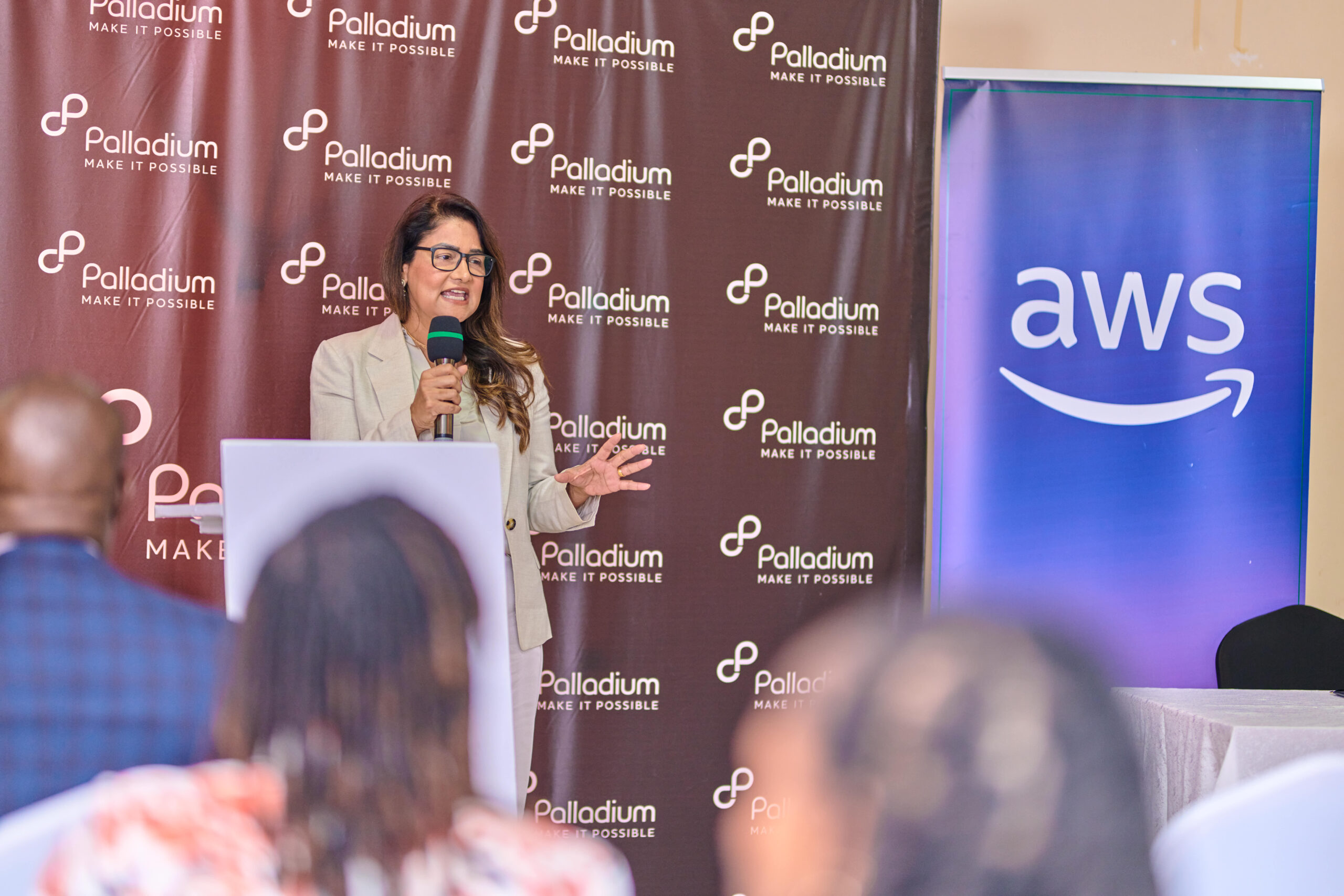
“AWS Outposts allow institutions to bring the cloud physically closer to where critical data and services operate. It is a model that combines the innovation of global cloud infrastructure with the sovereignty and performance requirements of local digital economies,” explains Teddy Berihun, VP of Digital Technology and Delivery at Palladium.
“With AWS Outposts, you can run AWS services in Kenya and seamlessly connect to a broad range of services available in your nearest AWS Region for management and operations,” Jyoti Ball, General Manager for Sub-Saharan Africa adds. “You can run applications and workloads using familiar AWS services, tools, and APIs with the same reliability and stability as customers benefiting from Region services. Outposts support your workloads and devices requiring low latency, local data processing, data residency, and application migration with local system interdependencies.”
This means organizations can access native cloud services such as scalable compute, managed databases, and AI tools locally, without managing the underlying infrastructure themselves. AWS retains responsibility for hardware maintenance, security patching, and software updates, and the Outpost remains a connected extension of the broader cloud rather than a standalone on-premises server.
Global cloud innovation has historically come at the cost of local control, with data leaving national borders the moment it enters a cloud environment. Palladium’s deployment changes that equation. The KenyaEMR and KeHMIS III (Kenya Health Management Information Systems III) ecosystem, which consolidates data from thousands of health facilities into a national data warehouse, now runs on global cloud infrastructure that is physically present in Kenya, legally bound to Kenyan regulation, and is fast enough to be genuinely useful to the clinicians who depend on it.
The national data warehouse can process routine service and surveillance data faster, because it is no longer routing requests to cloud servers thousands of kilometers away. The Ministry of Health can also point to a physical, locally hosted infrastructure that satisfies its data residency obligations under Kenyan law.
What does this mean at the clinic level?
The local AWS Outpost means that clinicians in facilities with inconsistent internet connectivity can still access and update patient records, because the compute is local.
For patients, the practical consequence is continuity of care. When a malaria patient moves between counties, or when a pregnant woman is referred from a community health promoter to a facility-based clinic, a national interoperable record means the receiving clinician sees the full history, not a blank file.
It is about whether a health system can track its own patients across time and geography, which is the foundational requirement for managing any chronic condition at population scale.
How secure is this system?
When national health data for millions of patients sits in one place, security cannot be an afterthought. Palladium has built multiple layers of protection into the architecture from the ground up.
“Patient information is encrypted at every stage, access is restricted to authorized personnel, and every interaction with the system is logged and audited,” expounds Berihun.
Those protections are backed by AWS’s global security infrastructure, which continuously monitors, updates, and maintains the Outpost using the same systems that protect AWS deployments worldwide. The entire architecture is compliant with Kenyan law, which is anchored by the Data Protection Act 2019.
What does this mean for other industries and the rest of Africa?
While the health sector provides the most fully developed illustration of Palladium’s hybrid cloud model, the architecture extends across every sector where data residency, strict regulations, performance pressures, and institutional sustainability matter.
In financial services, African banks and fintechs face the same data sovereignty pressures as health systems, compounded by regulatory requirements from the Central Bank of Kenya and equivalent institutions in Uganda, Rwanda, and Tanzania.
A locally deployed AWS Outpost model allows regulated financial institutions to keep sensitive transaction data within national borders while still accessing the plethora of wider AWS services such as AI, Analytics and fraud detection capabilities. For government services more broadly, the pattern is identical. Kenya’s digital economy is expanding rapidly, with national ID systems, digital tax platforms, social protection registries, and land records systems all generating data that governments are increasingly determined to keep under domestic jurisdiction.
Kenya as a blueprint
Berihun sees the deployment as the beginning of something larger.
“Palladium’s investment is not simply about Kenya. It is about demonstrating that a standardized, repeatable hybrid cloud architecture can be deployed across sectors and the region, reducing the fragmentation that has historically made East African digital infrastructure so difficult to scale,” he says. “The same hybrid architecture that works for Kenya’s national health data warehouse can be adapted in any country in Africa. The same governance and security model can be applied across sectors within a single country.”
The AWS Outpost is not a one-off project but a model for regional digital sovereignty that avoids each country starting from scratch.
“Our collaboration with Palladium demonstrates AWS’s commitment to accelerating digital transformation across Africa’s priority sectors. By combining Palladium’s deep development expertise with AWS’s secure, scalable cloud infrastructure, we’re enabling governments and organizations to modernize systems, improve service delivery, and drive measurable impact for communities,” said Ball.