

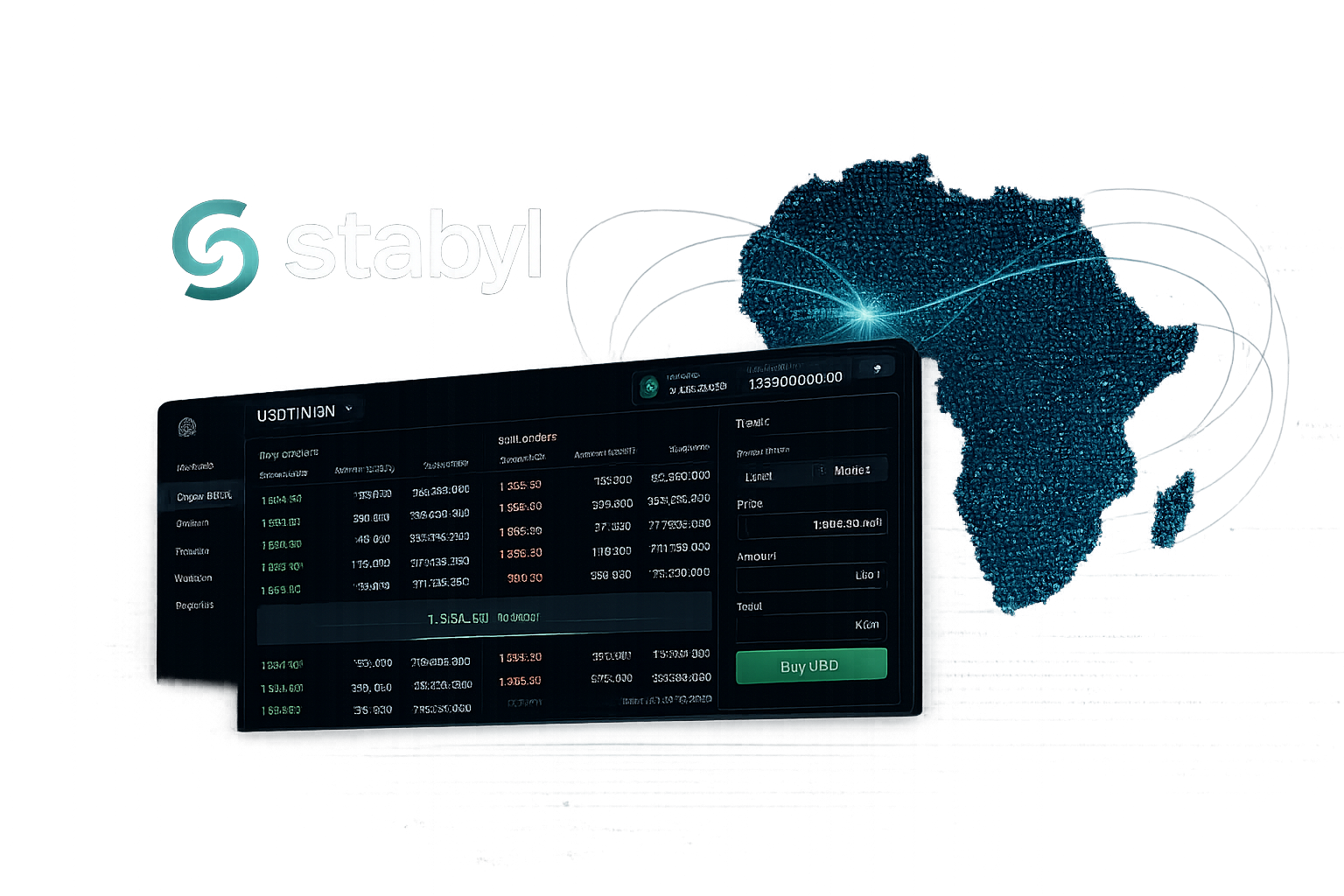
Stabyl, an Africa-focused financial infrastructure startup, has raised $2.7 million in pre-seed funding to build a foreign-exchange liquidity platform aimed at banks, payment firms and institutional clients seeking faster cross-border settlement.
The funding round was led by , which will also serve as Stabyl’s first commercial deployment partner through its payments unit, KongaPay, providing naira settlement capabilities.Founded by , and , Stabyl is positioning itself as an infrastructure provider rather than a consumer payments business.
The company plans to help financial institutions source foreign exchange and complete settlements more efficiently across African markets.The startup initially targets the naira-dollar corridor, one of Africa’s largest and often most volatile foreign-exchange routes, with plans to expand into additional currency pairs over time.
Stabyl’s platform uses a central limit order book that automatically matches buy and sell orders for foreign exchange transactions. The system seeks to replace fragmented treasury operations that often require payment companies and banks to negotiate rates manually across multiple liquidity providers.
The platform also supports settlement through both conventional banking channels and digital assets, including and . Wallet infrastructure is provided by .The company said proceeds from the financing will be used to strengthen compliance systems, secure regulatory approvals and build technology infrastructure as Nigeria’s digital-asset framework evolves.
The raise comes as policymakers in Nigeria move toward formalizing oversight of virtual assets, creating new opportunities for firms attempting to bridge traditional financial systems with blockchain-based settlement rails.For African fintech companies, access to liquidity remains a persistent challenge. While many firms have developed efficient payment and money-transfer systems, obtaining reliable foreign exchange for settlement continues to create operational bottlenecks.
Stabyl is betting that greater transparency and automated liquidity matching can reduce friction in cross-border transactions. The broader challenge will be achieving sufficient scale and trust — requirements that typically determine whether market infrastructure platforms become foundational financial networks or remain niche services.